How to Organize a Tool Chest So You Can Find the 10mm
Lay out a tool chest so each tool has one place: daily tools at waist height, sockets on rails in size order, and an end-of-job routine that keeps it sorted.

On this page
It's Saturday, the car is up on ramps, and the 10mm socket is gone. It isn't in the drawer it belongs in, or the tray on the floor, or the pocket of the jacket you wore last weekend. Twenty minutes later you find one at the bottom of the wrong drawer, next to a set of hex keys you forgot you owned. On Monday you buy another at the parts store anyway, because by then you've forgotten both.
A tool chest fails in a predictable way. Drawers fill in the order tools come home, not the order you reach for them, and the top of the chest becomes a landing zone for whatever was in your hand last. Here's how to lay one out so each tool has one place, how to handle sockets and the small parts that cause most of the mess, and how to keep it that way once the next project starts.
Empty it and sort by job
Pull every drawer and lay the contents out on a workbench or a tarp. It's the only way to see the duplicates, and there are always duplicates. Sort into piles by what each tool does:
Sockets, ratchets and extensions
Wrenches: combination, ratcheting and adjustable
Screwdrivers and bits
Pliers, cutters and crimpers
Hex keys and star keys
Measuring and marking: tape, calipers, a square, a scribe
Electrical: a tester, a multimeter, wire strippers
Specialty tools you use for one job a year
Then make one more pile for tools that don't belong in the chest at all: the broken, the seized, and the cheap duplicate you bought in a hurry halfway through a repair. A tool you haven't touched in three years and can't name a job for is taking up a drawer your daily tools could use.
Lay out the drawers by how often you reach for them
The rule that makes a tool chest work is short. The tools you use most go at waist height, and the heavy ones go at the bottom.
Top drawers: the daily set. Your most-used ratchet and sockets, a set of combination wrenches, screwdrivers and pliers.
Middle drawers: the remaining sockets and wrenches, hex keys and measuring tools.
Bottom drawers: the heavy tools, such as a breaker bar, impact sockets, a torque wrench in its case, and a cordless drill with its batteries.
The top tray or lid: only the tools for the job in front of you.
Heavy at the bottom isn't only about comfort. A rolling chest with loaded top drawers is top-heavy, and pulling two full drawers open at once can tip it toward you. Many chests have a lock or a one-drawer-at-a-time catch for that reason, so use it.
Keep the fourth rule strict. The top of the chest is where tools go to get lost, because it's flat and it's within reach. Clear it at the end of each job and it stays a workspace instead of becoming a ninth drawer.
Sockets decide whether this works
Loose sockets are where the lost 10mm comes from. Put them on rails or in a socket tray, sorted three ways:
By drive size: 1/4-inch, 3/8-inch and 1/2-inch
By system: metric in one row and SAE in another, never mixed
By depth: shallow and deep on separate rails
Lay each row out smallest to largest, left to right, and leave the gap when a socket is missing. A gap in a row is visible from across the garage. A missing socket in a pile isn't visible at all.
Wrenches get the same treatment: a wrench rack or a foam insert, in size order, metric and SAE in separate rows. If you cut foam drawer liners, trace each tool before you cut, so an empty slot shows exactly which tool hasn't come back.
Small parts, fluids and spares
Fasteners, fuses, hose clamps, spare bulbs and filters make more mess than the tools do. They arrive a few at a time, they never get a home, and they end up rolling around the bottom of whichever drawer was open.
Fasteners
Use a compartment organizer with one size per compartment, labeled on the front edge rather than the lid, so you can read it without lifting it. Sort by type first, bolts, nuts, washers and screws, and by size second. Keep the organizer on a shelf next to the chest rather than inside it. A drawer of loose nuts weighs more than it looks, and it's the drawer that ends up off its slides.
Fluids, filters and spare parts
The question here is always the same: did I already buy that filter? Keep spare parts for each vehicle together, on one shelf or in one labeled box with the vehicle written on the front, and write the part number on the box as well as on your list. Fluids live on a shelf, not in the chest, upright, capped and in their original containers.
Brake cleaner, carb cleaner, starter fluid and spray paint are flammable. Keep them away from a water heater, a furnace or any appliance with a pilot light, and read the storage temperature printed on each can.
Keep it organized after the next job
A freshly sorted chest stays sorted for about one project. What keeps it that way is a short routine at the end of each job, not a better layout:
Wipe each tool and put it back in its slot before you put the car back down.
Scan the socket rails and the foam for gaps.
Clear the top tray.
Write down what you used up, so the next parts run includes it.
Lending is the other leak. When the torque wrench goes next door, note who has it and since when. The guide to keeping track of what you lend out covers that routine. If the chest is one corner of a bigger garage problem, the guides to organizing a garage so you can park in it and organizing a shed cover the rest of the space.
Where an app helps
A labeled drawer and a notebook on the bench will do the job. If you'd rather search than open drawers, here's how it works in Cratify.
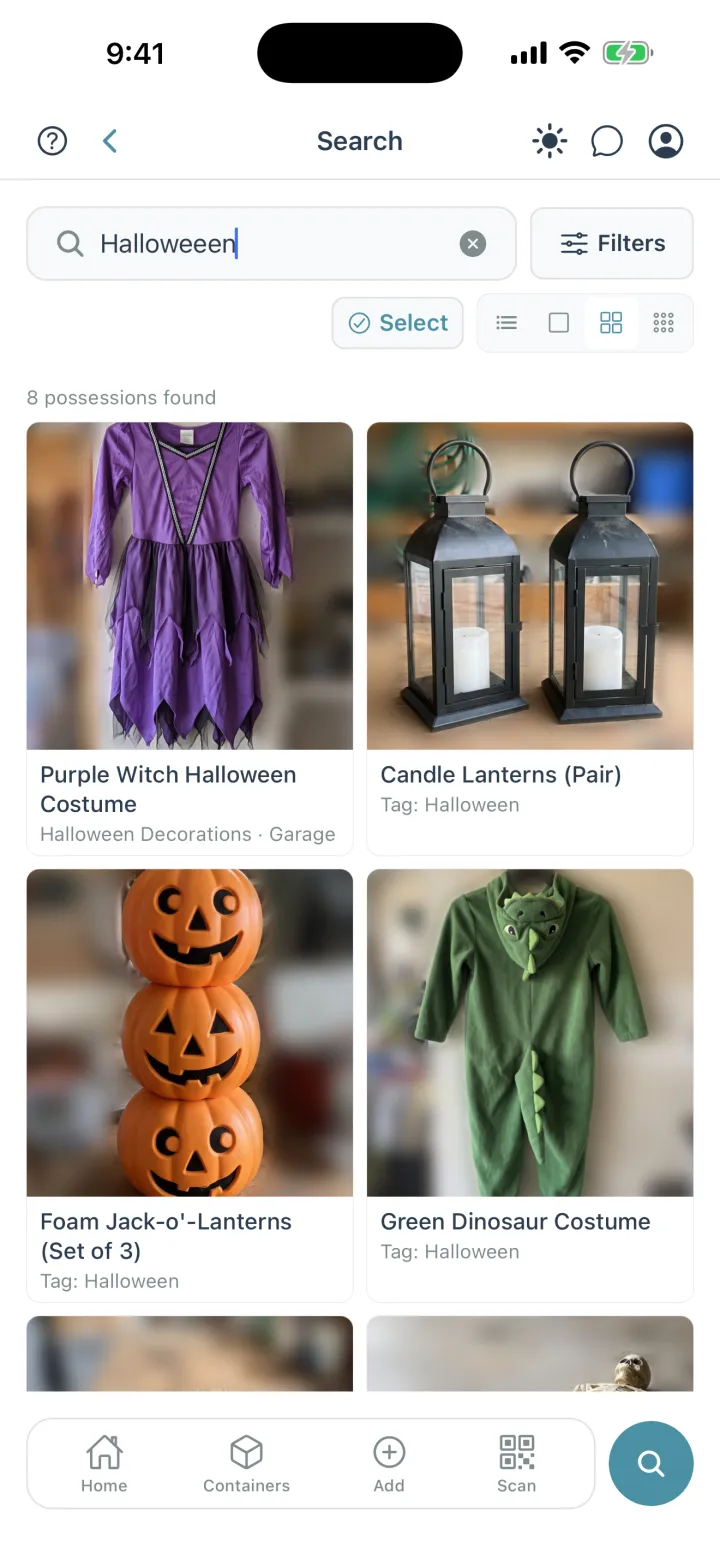
Search forgives typos: “Halloweeen” still finds every Halloween possession.
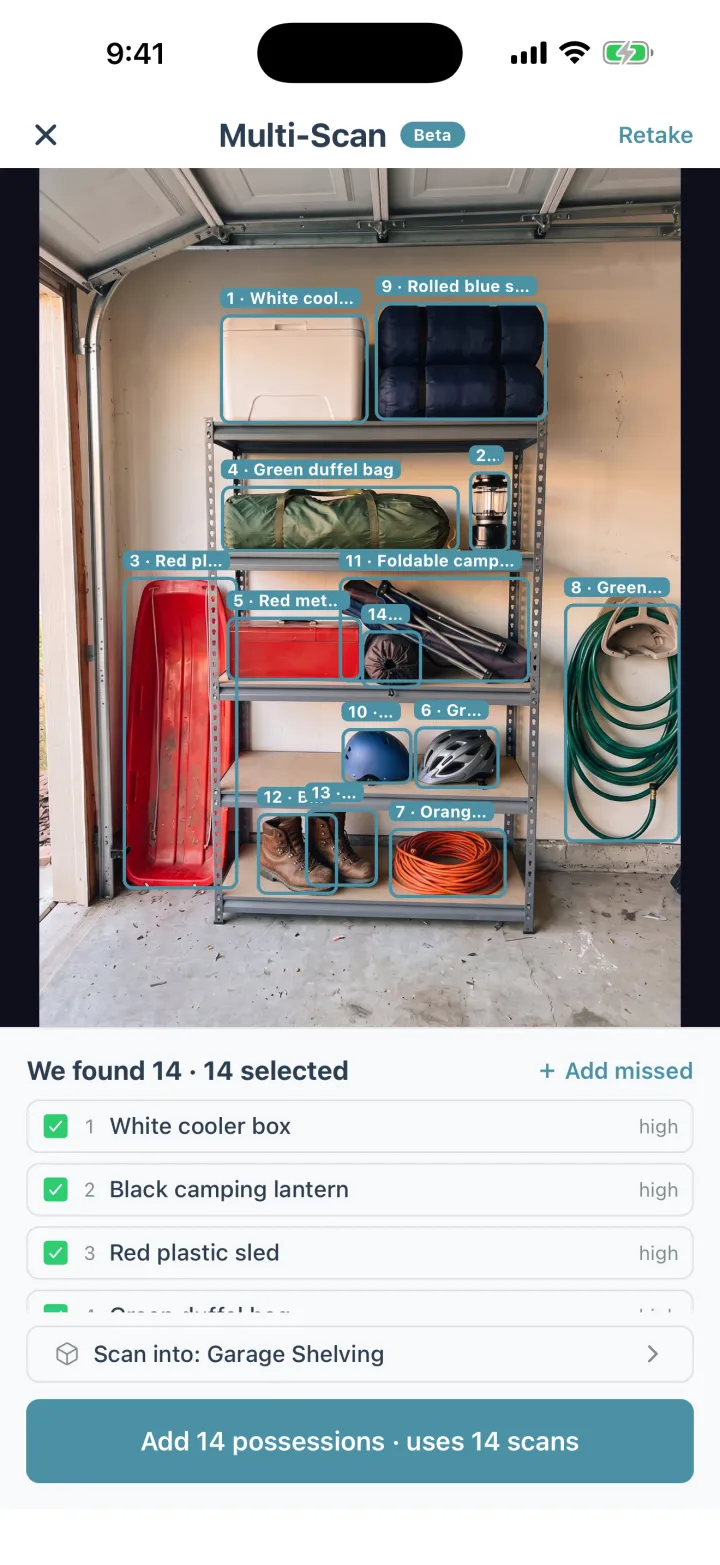
Containers come in types, including Cabinet, Drawer and Shelf, and a drawer can sit inside a cabinet, so a rolling chest becomes one cabinet with its drawers inside it. The cabinet then lists the possessions in every drawer, with totals. Photograph a tool and AI identification fills in its name and category, with a confidence percentage on screen so you can correct either. Several mode takes up to 20 photos in one batch, which suits a drawer of wrenches.
Fasteners and filters can carry a quantity instead of duplicate entries, and the Consumable type adds a unit and a restock-when-below note. Properties such as Flammable and Heavy mark the cans on the shelf and the tools in the bottom drawer. Search draws on each possession's details and the container it's in, so "10mm" leads to the right drawer. When a tool goes next door, mark it temporarily removed with a note.
The short version
Sort by job, put the daily tools at waist height and the heavy ones at the bottom, rail the sockets in size order with the gaps left visible, and keep fasteners and fluids out of the chest. Clear the top tray at the end of every job. Cratify is free to try.
Know which drawer the 10mm is in
Photograph each tool, record the drawer it lives in, and search before you open the chest. Cratify is free to try.