First Apartment Checklist: Start From the Boxes You Packed
Most first apartment checklists assume you own nothing. Start from the boxes you already packed, walk the apartment, and buy only the real gaps, in the order you need them.

On this page
The boxes are already taped. There are 14 of them stacked by the door of the place you are leaving, and a moving date is circled on the calendar. Somewhere online is a first apartment checklist with 150 lines on it, from a shower curtain to a fire extinguisher, and every line seems to say you need to buy it. Most of those lists were written for someone starting from zero. You are not starting from zero. You are starting from those boxes.
That difference saves real money and a lot of wasted trips. The classic first-apartment mistake is not forgetting the can opener. It is buying a second set of towels, a second lamp and a third phone charger because the first ones were packed somewhere you could not see. The fix is to build the checklist in the other direction: write down what you already own, then let the gaps become the shopping list.
Why a store checklist is the wrong place to start
A generic first apartment checklist is organized by what a store sells: kitchen, bath, bedroom, cleaning. It has no idea that your aunt gave you a full set of pans, that your desk lamp is coming with you, or that the apartment already has blinds. Read it top to bottom and every line feels urgent, so the cart fills up with duplicates and the possessions you actually lack get lost in the noise.
An inventory-first list does the opposite. It is short, it is specific to you, and every line on it is a real gap. It also turns the boxes you packed into a record you can check from a store aisle instead of a guess.
Step 1: List what is already in the boxes
Do this before the move if you can, and in the first week if you cannot. One box at a time, open the lid and write down the main possessions inside. You do not need every fork. You need enough to answer the question you will ask in a store: do I already have one?
Kitchen: pans, knives, a cutting board, plates and bowls, mugs, utensils, a kettle or coffee maker.
Bath: towels, a bath mat, a shower curtain, a first-aid kit.
Bedroom: sheets, pillows, a blanket, hangers.
Cleaning: a broom, a mop, a bucket, a vacuum.
Tools and setup: a screwdriver, a hammer, an extension cord, a power strip, light bulbs.
Give each box a number or a short name and write it on two sides, so the list and the box can find each other again. The guide to labeling moving boxes covers a system that still works when the boxes are stacked three high.
Count, do not just tick
For anything that comes in sets, write the number. Two sets of sheets is a different answer from one. Four plates is fine for one person and thin for anyone who has friends over. The count is what stops you buying a fifth mug.
Note what is borrowed or shared
If a roommate is bringing the couch or a sibling is lending a microwave until spring, write that down next to the room, with the owner's name. Shared possessions are the first to slip out of memory, and the first to cause an argument when someone moves out.
Step 2: Walk the apartment before you shop
The apartment itself is half of your inventory. Before you buy anything, walk through once with the list in hand and note what is already there.
Appliances that come with the unit: fridge, stove, microwave, dishwasher, washer and dryer.
Window coverings, shower rods, closet shelves and light fixtures.
Storage: how many kitchen cabinets there are, whether there is a hall closet, how much room is under the bed.
Anything broken or missing that the landlord has said will be fixed.
Take a photo of each room while it is still empty. It records what the space really holds, and it doubles as a record of the condition the apartment was in when you arrived. Documenting an apartment before you move in goes through that walk-through room by room.
Step 3: Write the gap list
Now the shopping list writes itself. Go room by room through any standard checklist and ask two questions of each line: is it in a box, and is it already in the apartment? If the answer to both is no, it goes on the gap list.
Then sort the gap list into three groups. This is the step that keeps the first month affordable.
Before the first night: somewhere to sleep, sheets, a towel, toilet paper, soap, a phone charger, a lamp that works, and a plate and a fork.
In the first week: a shower curtain if there is none, a trash can, basic cleaning supplies, a pan or two if you have none, a doormat.
When you know the space: furniture, rugs, shelving and decor. Wait on these until you have lived there for two weeks.
The third group is where most first-apartment money goes, and where most of the regret comes from. A rug bought before you know where the couch goes is often the wrong size, and a bookcase bought for a wall you have not measured ends up in the hallway. Two weeks of living in the space tells you what it needs, and the gap list keeps the first two groups honest in the meantime.
Step 4: Unpack against the list
Moving day goes faster when every box carries its list. Unpack the before-the-first-night boxes first, check them off, and leave the rest stacked in the room they belong to. What to unpack first after a move has the order for the first 48 hours.
As each box empties, cross it off and move its possessions onto that room's part of the list. By the end of the second week the list should describe the apartment rather than the boxes, and anything still packed is a decision you can make on purpose.
Keep the leftovers findable
Not everything gets unpacked. Off-season clothes, a box of keepsakes and the spare bedding often stay boxed in a closet or under the bed. Leave those on the list with their box name and where the box sits, because those are the possessions you will forget first.
The mistakes that cost the most
Shopping from a printed checklist before the boxes are listed. Nearly every duplicate starts here.
Buying furniture before measuring the doorways, the stairs and the elevator.
Labeling a box Kitchen and nothing else. When you need the can opener, every kitchen box is a candidate.
Losing track of what is borrowed. Write the owner next to it the day it arrives.
Treating the list as done on moving day. It is most useful in week two, when you are deciding what to buy next.
Where an app helps
A paper list works, but it lives in one place, and the question it answers usually comes up somewhere else, like a store aisle. In Cratify you photograph possessions and the details are filled in from each photo, with a confidence percentage you can check and correct. Each possession sits in a container, inside a room, inside a location, so the box still taped in the closet and the shelf in the kitchen live in one record.
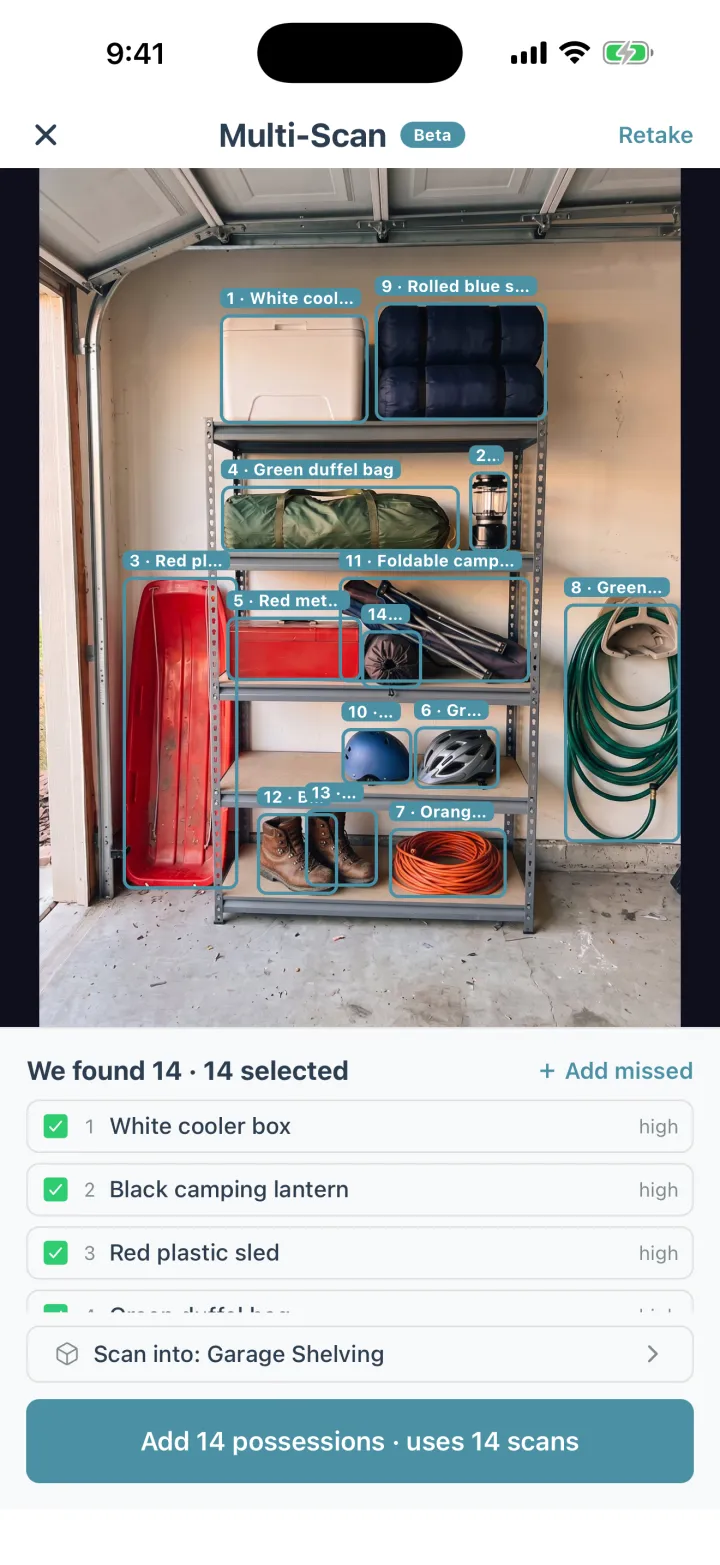
Multi-Scan names up to 15 possessions from one photo.
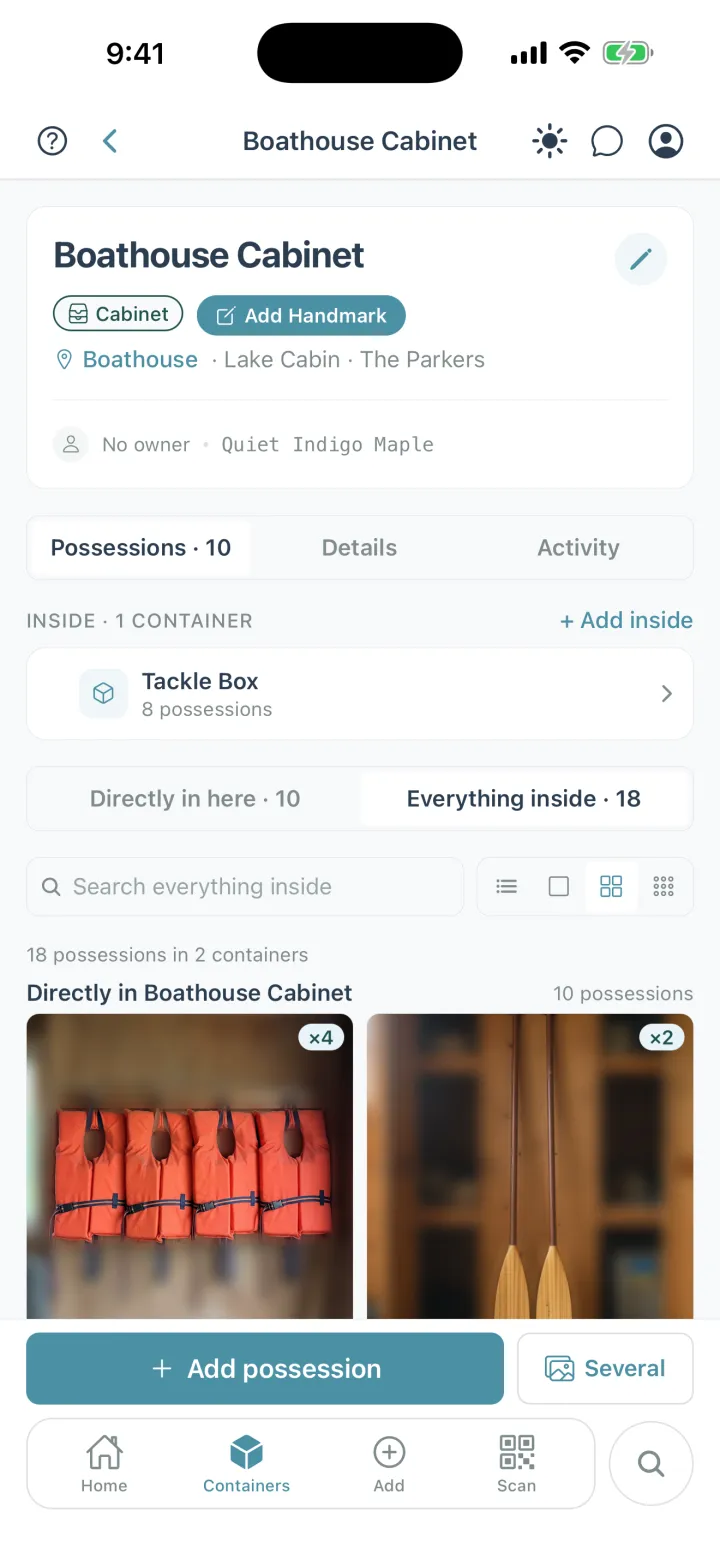
Containers inside containers, with everything inside listed.
Search draws on the details of each possession and the container it lives in, so typing sheets shows how many sets you own and which box they are in before you buy another. A collection works as the before-the-first-night list: the possessions you need first, wherever they were packed, checked off as you take them out.
The short version
A first apartment checklist should start from what you already own. List the boxes, walk the apartment, write down only the real gaps, and buy them in the order you will need them. If a list like that would help, Cratify is free to try.
Know what you own before you shop
Record what is in each box as you pack, then search it from any store aisle. Cratify is free to try.