How to Organize a Coin Collection and Stop Buying Duplicates
A dime bought twice and a shoebox of coins sorted by nothing. Here is how to organize a coin collection, store it safely, and keep one record of what you own.

On this page
- Decide how you collect before you sort
- Sort the loose coins first
- Handle coins by the edges and never clean them
- House each coin in the right holder
- Label every holder the same way
- Store the collection where it stays dry and steady
- Keep a record of every coin worth tracking
- Where an app helps
- Check the collection once a year
You are at a coin show, and a dealer has a 1916 dime in a holder that looks exactly like the one you have been hunting for. You buy it. At home you open the album to slot it in, and the space is already filled. You bought that dime two years ago, at a different show, and forgot. Meanwhile there is a shoebox on the closet shelf holding a few hundred coins from old change jars and a relative's desk drawer, sorted only by when they were dropped in.
Most coin collections grow this way: a few coins bought on purpose, a lot of coins that simply arrived, and no single place that says what is there. Here is how to organize a coin collection so you can see what you own, store it so it keeps its condition, and stop buying the same coin twice.
Decide how you collect before you sort
Sorting goes faster once you know what the collection is for. Most collectors fall into one or more of these, and each points to a different way of sorting.
By series: one of each year and mintmark in a series, such as Lincoln cents or Washington quarters. Sort by year, then mintmark.
By country: coins from travel or from a family member who traveled. Sort by country, then denomination.
By type: one example of each design, regardless of year. Sort by denomination, then design.
By theme: animals, ships, commemoratives. Sort by theme, then country.
You do not have to pick one for everything. Many collections are a series album plus a box of everything else, and that is fine as long as each part has its own rule.
Sort the loose coins first
Start with the shoebox, not the album. Lay a soft towel on a table, work in good light, and sort into small piles using the rule you chose. Keep a magnifier nearby, because dates and mintmarks on worn coins are hard to read with the naked eye.
Pull out anything that looks unusual, older than the rest, or in better condition than its neighbors, and set it aside to look at properly. Everything else can be grouped and stored in rolls or bulk holders by denomination. Not every coin in a change jar needs its own holder, and trying to give every one that treatment is how a weekend project stalls.
Handle coins by the edges and never clean them
Hold a coin by its rim, between your thumb and finger, over the towel. Skin oils leave marks on the faces that can show up later, especially on uncirculated coins. Many collectors use cotton or nitrile gloves for anything they care about.
Do not clean coins. Scrubbing, polishing or dipping a coin removes its original surface, and collectors and dealers generally treat a cleaned coin as worth less than the same coin left alone. If a coin looks dirty, store it as it is and decide later.
House each coin in the right holder
Different holders suit different parts of a collection. A good setup usually uses two or three of them.
Two-by-two holders
Cardboard two-by-two holders with a clear window are cheap and easy to write on. They suit individual coins you want to see and label, and they file neatly into pages or long, narrow boxes. Avoid soft plastic flips made with PVC for long-term storage, because over time they can leave a green residue on the coin.
Albums and folders
Albums with a labeled slot for each date and mintmark are made for series collecting. The empty slots show you at a glance what is missing, which is exactly what stops a duplicate purchase at a show.
Tubes and rolls
Coin tubes hold stacks of a single denomination and suit bulk coins from the shoebox. Label the tube with the denomination and the rough date range inside.
Graded coins sealed in a hard plastic holder by a grading service are already protected. Keep them upright in a box made for that size of holder rather than loose in a drawer, where they scratch each other.
Label every holder the same way
Pick one labeling format and use it on every holder: country, denomination, year, mintmark, and a short note on condition if you know it. Write it in the same order every time. A consistent label is what lets you scan a page of holders and find one coin in seconds.
Number the album pages and the boxes as well. A coin's location then becomes simple: box two, row three, or album one, page four.
Store the collection where it stays dry and steady
Coins are durable, but their surfaces are not. Humidity and swings in temperature cause toning and spots, so where the collection lives matters as much as what it sits in.
Keep it indoors, in a room with a steady temperature. An interior closet shelf or a cabinet works well.
Avoid the attic, the garage and the basement floor, where humidity and temperature change most.
Keep albums upright on a shelf, like books, so the pages do not press on the coins.
Add a desiccant pack to each box if the room runs damp.
Keep coins away from wood that has not been sealed, rubber bands, and paper envelopes not made for coins.
Keep a record of every coin worth tracking
The holder label tells you about a coin when you are holding it. A record tells you about it when you are not, which is the moment at a coin show when you need to know whether you already have it.
For each coin worth tracking, record the country, denomination, year and mintmark, the condition or grade if you know it, where and when you got it, what you paid, and where it lives. Take a clear photo of each side; our guide to photographing your belongings for a home inventory covers lighting and angles that work for small pieces. Keep any receipts and certificates with the record, not in a separate drawer.
The same habit runs through our guide to organizing a trading card collection and cataloging a vinyl record collection: a record you can search is what turns a pile into a collection.
Where an app helps
A notebook or a spreadsheet works for a small album. It gets harder once the collection spans several albums, a few boxes and a shoebox, and harder still when you want to check it from a coin show table.
In Cratify, the cabinet, the shelf and each box are containers in the room where they live, and a container can sit inside another, so a box of two-by-twos can be recorded on the shelf where it sits. Photograph a coin and its details are filled in from the photo, with a confidence score shown that you check and correct, which matters on a coin where the mintmark is a single small letter. You can add up to five photos to one possession, enough for the front, the back and the holder label.
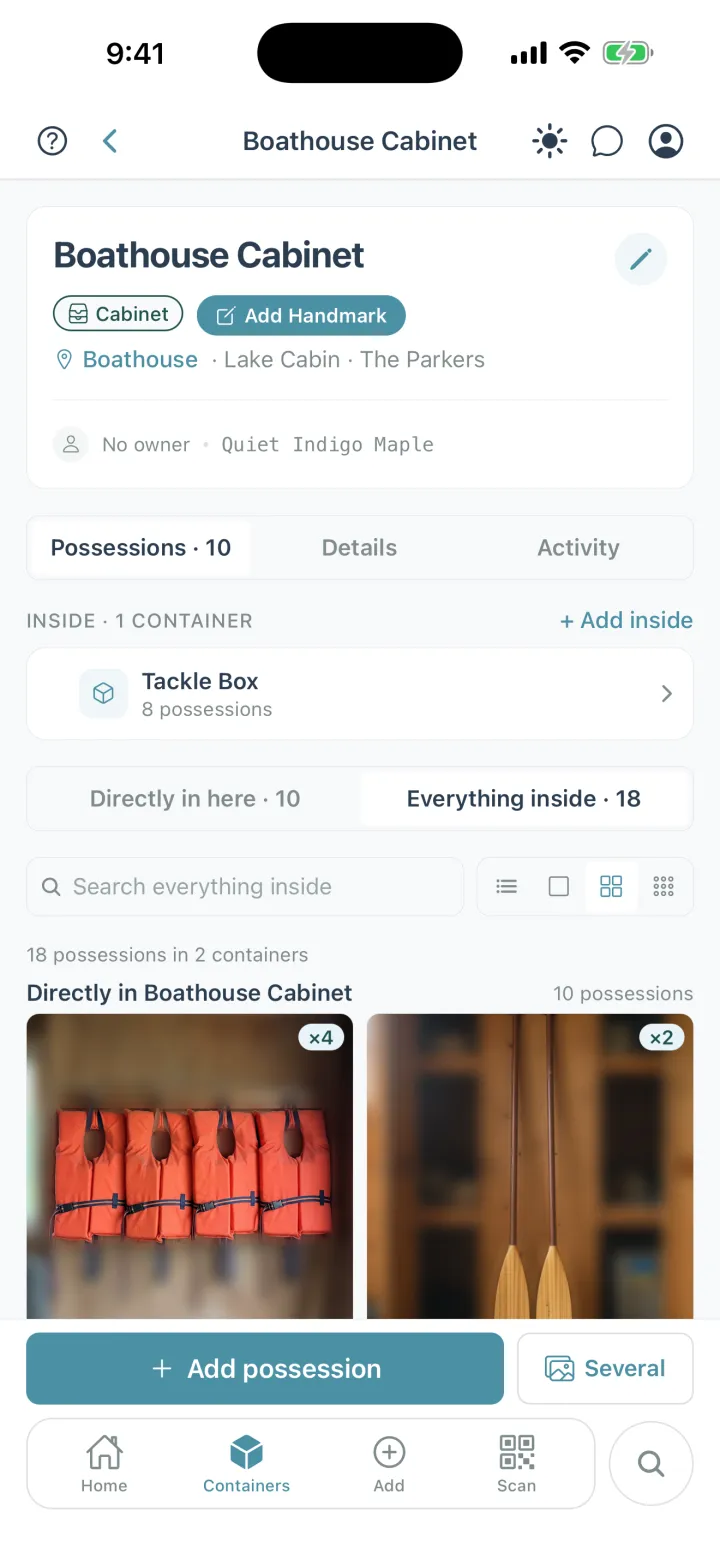
Containers inside containers, with everything inside listed.
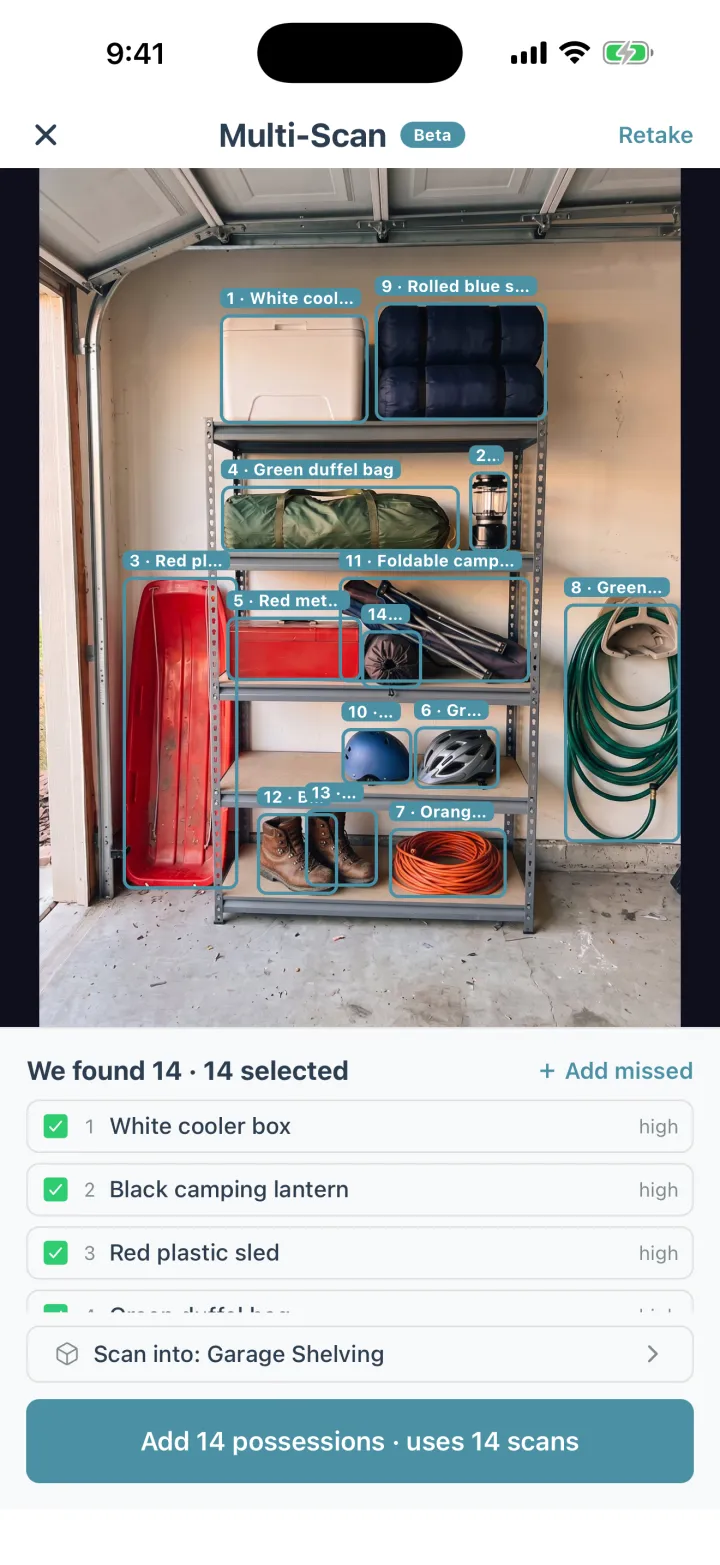
Multi-Scan names up to 15 possessions from one photo.
A coin worth real money can be marked Expensive, and its purchase kept as a Receipt with the amount and the date. A certificate can be stored as a Document beside it. Identification prefers the categories and tags you already use, so a category per series and a tag per country keep new entries consistent. Search covers all of it, so the answer to whether you already own that 1916 dime is a few seconds away.
Check the collection once a year
Once a year, take each box and album out and check it against the record. Look for spots, green residue or new toning, and move any coin that is reacting to its holder. Add anything that arrived during the year, and update where each coin lives if you moved it.
That is the whole system: one rule for sorting, the right holder for each coin, a steady place to store it, and one record you can check from anywhere. If a searchable coin list would help, Cratify is free to try.
Know every coin you own
Record each coin, the album or box it lives in, and what you paid. Cratify is free to try.