How to Store a Bike for Winter
Clean it, lube the chain, pump the tires, take the batteries inside and hang the bike somewhere dry. Then put every small part in one box and note what needs fixing.

On this page
It's the first properly cold Saturday in November, and the bike is where it's been since the last warm evening ride: leaning against the garage wall, chain going orange, back tire soft enough to push in with a thumb. The lights are still clipped to the handlebars with dead batteries in them. The pump is somewhere behind the paint cans. In March someone will wheel it out, find the brakes squealing and the chain stiff, and lose the first good weekend of spring to a repair that would have taken twenty minutes in October.
Storing a bike for winter isn't hard, but the order matters. Clean it, protect the parts that rust and perish, get it off the floor somewhere dry, and put every loose accessory in one place. Do it in one afternoon and the bike comes out in spring ready to ride.
Clean it before it goes away
Dirt holds water against the frame and the chain all winter, and road salt from a late-season ride keeps working on the metal long after the ride is over. A bike stored dirty comes out worse than it went in.
Rinse the frame, wheels and chain with a bucket of soapy water and a soft brush. Skip the pressure washer, which pushes water into the bearings.
Scrub the chain and the gears with an old toothbrush and a little degreaser, then rinse.
Dry everything with a rag, and leave the bike somewhere warm for an hour so water can drain out of the frame.
Lube the chain once it's dry: one drop on each link while you turn the pedals backward, then wipe off the excess so it doesn't collect dust.
Look over the brake pads, the tires and the cables while the bike is clean and you can see them properly.
That last step is the one most people skip, and it's the one that makes spring easy. More on that below.
Look after the tires
Tires lose air slowly over a winter, and a bike left standing on flat tires puts its whole weight on the same patch of rubber for months. Pump both tires to the pressure printed on the sidewall before the bike goes away, and top them up once a month if it stays on its wheels.
The better answer is to take the weight off the tires entirely, which is what hanging the bike does. If it has to stand, a simple floor stand that holds the rear wheel off the ground does the same job.
Take the battery and the lights inside
Cold is hard on batteries. Bike lights, a bike computer and anything else that runs on a battery should come off the bike and come inside, charged or with the disposable batteries taken out, so nothing leaks in a drawer over the winter.
An e-bike battery deserves extra care. Most e-bike manuals ask for the battery to be taken off the bike and stored indoors at room temperature, partly charged rather than full or empty, and checked every month or two. The right charge level varies by manufacturer, so follow the number in yours. Never charge a battery that's still cold from the garage; let it warm up to room temperature first.
Choose where it spends the winter
The best place is indoors, dry and out of the way: a spare room, a basement with no damp problems, a hallway corner. Second best is a dry garage or shed. The wrong place is outside under a tarp, because a plastic cover traps condensation against the frame. If a bike has to stay outside, use a breathable cover and lift it off the ground.
Watch for two less obvious problems. A bike parked beside a furnace or a water heater goes through warm and cold cycles that pull moisture into the frame. And a bike stored where the car parks gets knocked every time a door opens, which is how a derailleur gets bent in February. If the garage is the only option, the guide to organizing a garage so the car fits covers how to give the bike its own wall.
Hanging it
Getting the bike off the floor protects the tires, saves space and keeps it out of the path of everyone walking past.
A wall hook holds the bike vertically by its front wheel and takes up about two feet of wall.
A horizontal wall rack holds it by the frame, which suits a bike with a heavy frame or a carbon rim you'd rather not hang from.
A ceiling hoist lifts it overhead on a pulley, which is the best use of a garage with high ceilings.
Whatever you choose, screw it into a stud or a joist, not just the drywall. A bike is heavier than it looks once it's hanging.
E-bikes are often too heavy for a ceiling hoist or a single hook, so check the rated weight on the hardware before buying it.
Keep the small parts in one box
The bike is easy to find in spring. The pump, the lock key and the spare tube are not. Put every accessory in one small box with a lid and a label, and keep the box on a shelf next to wherever the bike is stored.
The pump, the spare tube and a patch kit.
The lock, and the spare key, taped to the inside of the lid.
The multitool and the chain lube.
The lights and the bike computer, once their batteries are sorted.
Gloves, and the clips or reflectors that came off for the winter.
The helmet can hang from the handlebars or sit on top of the box. If several bikes share one garage, give each rider their own box, or at least their own bag inside one, so nobody's spare tube goes on someone else's bike. The rest of the summer gear, from paddling pools to beach chairs, is covered in the guide to storing summer gear for winter.
Write down what needs fixing now
This is the step that pays for the afternoon. While the bike is clean, make a short list of what's worn: brake pads with less than a couple of millimeters left, a chain that's stretched or stiff, tires with cracks in the sidewall, a cable that's fraying where it enters the housing. Put the list somewhere you'll see it in spring, or tape it to the box.
Then you have a choice. Order the parts now and fix it over the winter, or book a tune-up for the quiet weeks before the first warm weekend. Either way the problem is known in October instead of discovered on the first ride.
Record the serial number while you're there
Nearly every bike has a serial number stamped into the frame, usually underneath where the pedals attach. Turn the bike over, photograph the number and write it down with the make, the model and the color. It's what identifies the bike if it's ever stolen, and winter is when it's easiest to find, because the bike is clean and upside down already.
Keep the receipt with it if you still have one. A bike that cost real money is worth the same care as anything else in the house worth recording.
Where an app helps
In Cratify, the bike can be a possession with its photos, and the serial number, make and model in its details. Photograph it once and the details are filled in from the photo, with a confidence percentage you can check and correct. The original receipt can be stored as a Receipt with its amount and purchase date.
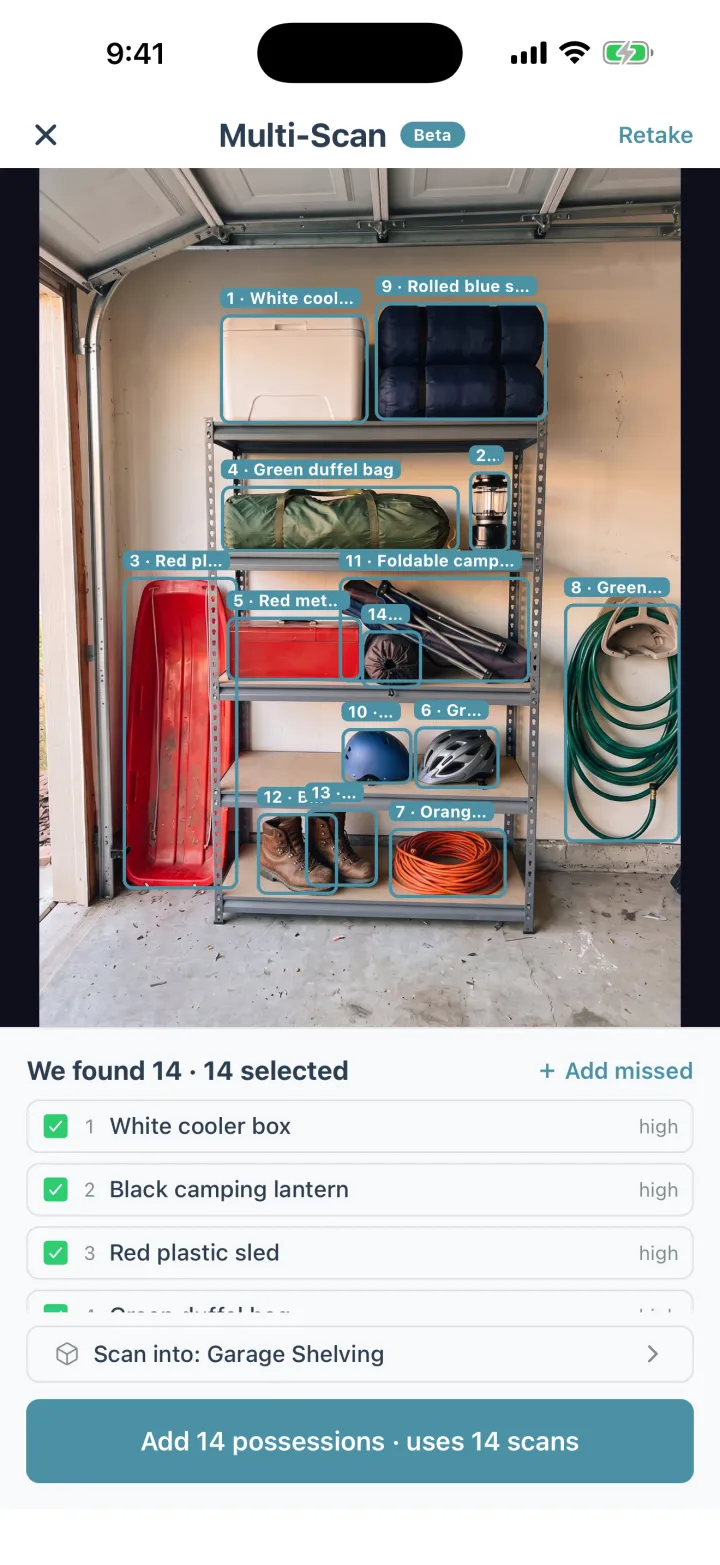
Multi-Scan names up to 15 possessions from one photo.
The box of accessories can be a Box container in the room where it lives, so the spare key turns up in a search for "bike lock". And if a household has several riders, each bike can belong to a person, so nobody has to ask whose helmet is whose. If the pump keeps going to the neighbors, the guide to keeping track of what you lend out is worth a look too.
None of this is needed to store the bike well. It only means the answers are on your phone in March instead of somewhere in the garage.
The short version
Clean the bike, dry it and lube the chain. Pump the tires, take the batteries and lights inside, and hang the bike somewhere dry. Put the pump, the lock, the tools and the spare tube in one labeled box, write down what needs fixing, and photograph the serial number. Cratify is free to try.
Find the pump and the spare key in spring
Record the bike and its box of accessories, then search for them in March. Cratify is free to try.