How to Organize Fishing Tackle and Store It for Winter
Two bags of soft plastics melted into one, and three packs of the same hooks. Here is how to organize fishing tackle, store it for winter, and stop buying it twice.

On this page
- Empty every bag and box first
- Dry and clean before anything goes back in
- Sort tackle by how you fish, not by what it is
- Store tackle where it stays dry and cool
- Write down what you own before you put it away
- Pack trip kits so you can leave in ten minutes
- Where an app helps
- A fifteen-minute check in spring
It is the last warm Saturday of October, and you are standing in the garage holding the rod you meant to put away in September. The tackle bag still smells like the lake. Inside it, a crankbait has rusted onto the hook of the lure beside it, two bags of soft plastics have melted into one purple lump, and there are three unopened packs of size 6 hooks, because each time you went to the store you were sure you were out.
Fishing tackle is small, sharp, and easy to buy twice. It also gets put away wet, at the end of a long day, by someone who wants a shower more than a system. Here is how to organize fishing tackle so you can see what you own, store it so it survives the winter, and start next season knowing what to buy and what to leave on the shelf.
Empty every bag and box first
Bring every piece of tackle to one table: the main tackle box, the backpack, the bag that lives in the truck, the jacket pockets, the bucket in the boat, and the kitchen drawer where loose hooks end up. Lay it all out on an old towel so the hooks do not roll.
This is the step that saves money. Most anglers find duplicates of the lures they like, a handful of lures they have never tied on, and hooks and swivels rusted past saving. Throw out anything rusted, cracked or bent, because a rusty hook spreads rust to every hook it touches in a closed tray. Cut the old hooks off lures you want to keep and set them aside to re-rig.
Dry and clean before anything goes back in
Moisture does more damage to tackle over a winter than anything else. Before you sort, let everything dry completely, for a full day if it came out of a damp bag. Rinse anything that saw salt water in fresh water first, then dry it, because salt left on a hook or a reel keeps working all winter.
Wipe down rods and reels with a damp cloth and let them dry.
Back off the drag on each reel so it is not under pressure for months.
Check the line. Old monofilament that is faded, kinked or brittle is cheaper to replace now than a fish lost in May.
Leave the tray dividers out until every compartment is dry.
Sort tackle by how you fish, not by what it is
The usual advice is to sort by type: all the hooks together, all the weights together. That works for terminal tackle. For lures it usually does not, because nobody goes out to fish every crankbait they own. Sort lures by the trip they belong to instead.
Terminal tackle
Hooks, sinkers, swivels, snaps, leaders and bobbers do sort best by type and then by size. One small tray with a labeled compartment for each size is easier to restock than a mix, and you can see at a glance that the size 6 hooks are running low.
Lures by species and water
Group lures by what and where you fish: bass on the lake, trout in the stream, walleye off the dock, a saltwater tray for the beach trip. Each group gets its own tray, so a trip means grabbing two trays instead of carrying everything you own.
Soft plastics on their own
Keep soft plastics in their original bags, sorted by style and color, in a tray or pouch of their own. Many soft plastics react with hard plastic trays and with each other, which is how two colors become one lump. If a tray is not marked as safe for soft plastics, keep the bags in a pouch instead.
Store tackle where it stays dry and cool
Where tackle spends the winter matters as much as how it is sorted. A garage or shed that swings from freezing to warm and back invites condensation, and condensation becomes rust. If you have the room, keep the trays and reels inside the house, in a closet or on a basement shelf that stays dry.
Rods: upright in a rack or flat along a wall, away from car doors and the lawn mower. A rod leaned in a corner for months can take a bend.
Reels: dry, drag backed off, in a soft case or a drawer.
Spare line: out of sunlight, which weakens it.
Trays: closed, with a desiccant pack in each if the space runs damp.
Waders and boots: dry inside and out, hung upside down if you can.
If the gear has to stay in the garage, keep it off the floor on a shelf and away from the door. The approach in our guide to storing summer gear for winter works for tackle too: one shelf for the off-season, labeled, with the most fragile gear at chest height.
Write down what you own before you put it away
Tackle gets bought twice because nobody remembers in March what was in the box in October. A list fixes that, and the end of the season is the one time you have everything out on a table anyway.
The list does not need every lure. Record what you would buy again if you thought you were out: the lures you actually use, hook and weight sizes, the line on each reel, and anything worth real money. Note which tray or box each one lives in. While it is all out, write a short list of what is running low, so spring shopping is a list and not a guess.
If you lend gear out, a rod to a neighbor or a tray of lures to a friend for the weekend, write that down too. Our guide to keeping track of what you lend out covers how to do it without an awkward conversation later.
Pack trip kits so you can leave in ten minutes
Once tackle is sorted by trip, packing is a checklist. Keep a short list for each kind of trip you take: the trays, the rod and reel, pliers, line clippers, a spare spool, sunscreen, a first aid kit, and your license. Check it off as you load the truck. The same idea runs through our camping gear guide, and if you fish when you camp, the two lists can share a shelf.
Look at when your fishing license expires while you are making the list. Rules differ from place to place, and renewing in the off-season is easier than renewing at the bait shop counter.
Where an app helps
A paper list taped inside the tackle box works until the tackle box is in the garage and you are standing in the store. A list on your phone goes with you.
In Cratify, the shelf, the cabinet and each tackle box are containers in the room where they live, and containers can sit inside other containers, so each tray can be recorded inside the bag it travels in. Photograph a lure or a reel and its details are filled in from the photo, with a confidence score shown that you can check and correct. With Several, you can photograph up to 20 at a time, one possession per photo, and identification prefers the categories and tags you already use, such as a category for terminal tackle and a tag for each species.
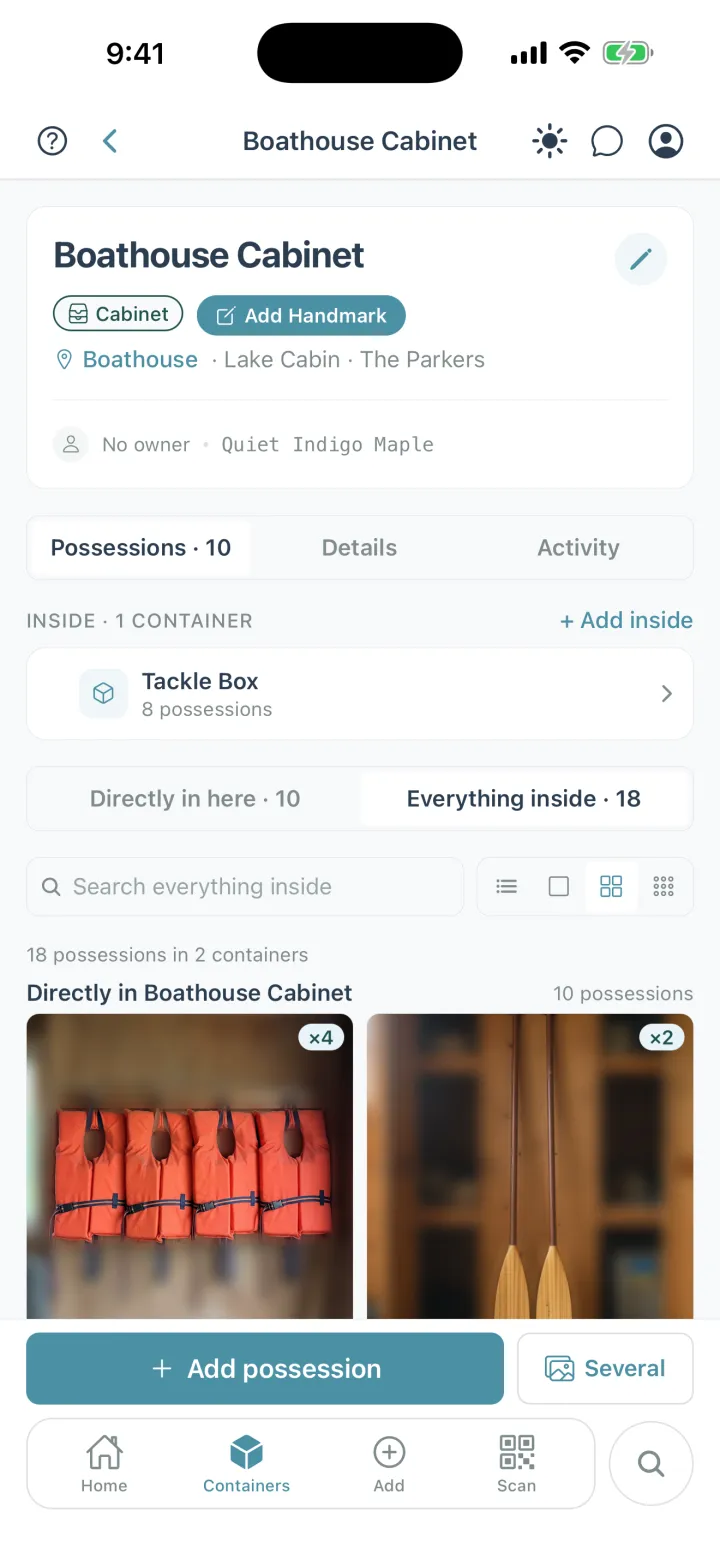
Containers inside containers, with everything inside listed.
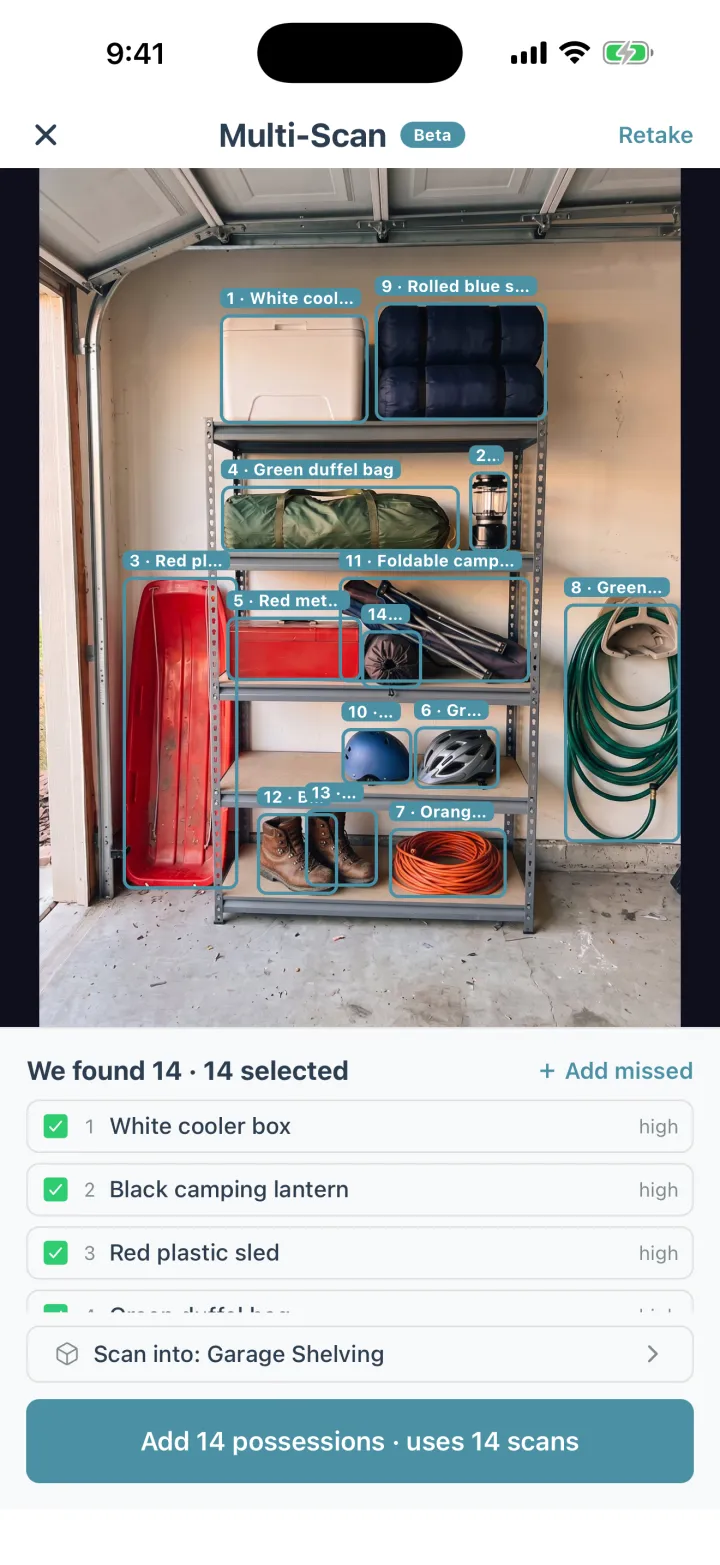
Multi-Scan names up to 15 possessions from one photo.
A reel worth real money can be marked Expensive, and its receipt kept as a Receipt with the amount and purchase date. A collection works as the trip checklist you tick off at the truck, and a rod on loan can be marked temporarily removed with a note saying who has it. Search covers all of it, so the answer to whether you already own size 6 hooks is a few seconds away in the store aisle.
A fifteen-minute check in spring
Before the first trip next year, open each tray and check it against the list. Re-spool any reel whose line looked tired in the fall, set the drag back to where you fish it, and replace whatever you marked as running low. Then put each tray back where it was, so the list stays true.
That is the whole system: dry before it is stored, sorted by trip, kept somewhere dry, and one list of what you own. Next fall, the rod goes away when the season ends. If a searchable tackle list would help, Cratify is free to try.
Know what is in every tackle box
Record your lures, reels and trays, the shelf each one lives on, and what is out on loan. Cratify is free to try.