What Not to Put in a Storage Unit, and Where It Goes Instead
Fuel, food, photos, papers, electronics and instruments: what a storage unit bans, what the seasons ruin, and where each of those possessions should go instead.

On this page
It is the first cold week of October, and you are standing at a roll-up door with the last load from the truck: a box of old photos, a mini fridge, half a can of deck stain and a garbage bag of winter coats. The unit is paid for, the lock is new, and the obvious plan is to put all of it inside and pull the door down. Some of that load will come back out in spring exactly as it went in. Some of it will not.
A standard storage unit is a concrete room with a metal door. Unless you are paying for climate control, it gets about as cold as the night outside and as hot as the afternoon, and the air inside has nowhere to go. Most of what people regret storing was ruined by one of three causes: temperature, moisture or pests. A fourth group was never allowed in the first place. Here is what to keep out, why, and where each of those possessions should go instead.
Start with the rental agreement
Most storage rental agreements include a list of what you may not keep in the unit, and the facility can act on it. Read yours before you load, because it is the list that actually binds you. What follows is the common core of those lists, plus the possessions that are allowed but tend to be ruined, which no agreement warns you about.
What a facility will not let you store
These are the possessions most often banned outright. The reasons are fire, smell and the safety of everyone else in the building, not only you.
Fuel and anything that burns or explodes: gasoline, propane tanks, kerosene, lighter fluid, fireworks.
Paint, stain and solvents, including the half-used can from the deck.
Food of any kind, including pet food and sealed pantry goods. Food is how mice find a unit, and mice do not stop at the food.
Plants, or anything else alive.
Lawn equipment with fuel still in the tank. Run the mower dry first, and check whether your facility allows engines at all.
Anything stored wet: a damp tent, a cooler that was never dried out, the towels from the last trip.
Where they go instead
Fuel and solvents belong in a ventilated garage or shed, off the floor, or at a household hazardous waste drop-off if you are done with them. Food goes back to the kitchen or to a food bank. Dry the tent and the cooler completely before they go anywhere with a door that closes.
What is allowed but will not survive the season
This is the list that costs people money, because nothing stops you loading it. In a unit without climate control, these are the possessions most likely to come out damaged.
Photos, papers and anything you cannot replace
Prints curl and stick together, and paper takes on moisture through the seasons. Birth certificates, passports, a will, tax records, the box of family photos: keep them at home, where the temperature is steady and you can reach them on a weekday. If paper has to go into storage, use lidded plastic boxes off the floor and treat it as a risk you are choosing.
Electronics and anything with a battery
Cold on its own is not the main danger. Condensation is, when a cold unit warms up on a sunny afternoon, and so are batteries that slowly drain or swell. Laptops, televisions, game consoles and cameras are better at home. If a television has to go, store it upright in its own box, and take the batteries out of every remote and cordless tool before the door comes down.
Wood and leather furniture
Wood swells and shrinks with humidity, and veneer lifts at the edges. Leather dries out or grows mildew. Keep furniture off the concrete on pallets or blocks, leave a gap at the walls so air can move, and cover it with breathable cloth rather than plastic, which traps moisture against the surface.
Mattresses and upholstered pieces
A mattress sealed in plastic and laid flat on concrete is a damp sponge by spring. Put it in a breathable cover, stand it on its long edge off the floor, and keep it away from the door, where the cold air comes in.
Musical instruments
Guitars, violins and pianos react to every swing in humidity, and those swings show up as cracked tops, lifted bridges and tuning that never settles again. They are worth the space at home, or a climate-controlled unit if there is no room.
Candles and anything made of wax
The cold months are forgiving. A unit that sits through next August is not, and a box of candles becomes one lump of wax. If the box is staying past spring, move the wax out now.
Valuables
Cash, jewelry, the watch you inherited, a coin collection: a storage unit is a rented room with a padlock on it. These belong in a safe at home or a bank safe deposit box, not behind a roll-up door you visit twice a year.
If you need climate control
If several of the possessions above have to be stored, the honest fix is often a climate-controlled unit rather than more plastic. It costs more each month, so price it against what the possessions are worth to you. Size is the other half of that decision, and choosing the right size of unit shows why a smaller climate-controlled unit is sometimes the better buy than a larger standard one.
How to load what does go in
Lay pallets or a row of 2x4s down before the first box lands, so nothing sits on bare concrete.
Use lidded plastic boxes for anything that cannot take damp, and sturdy cardboard only for possessions that can.
Leave a few inches between the stacks and the walls so air can move around them.
Keep the heaviest boxes low and the fragile ones at eye level, never underneath something.
Leave an aisle to the back wall, so the box you need in January is not behind the box you need in June.
Packing a storage unit for access covers a layout that keeps every box reachable. Then write down what went in, box by box, before the door comes down. A unit you cannot see into is only useful if the list is accurate, and a two-visit inventory is the fastest way to make one.
Three questions for every box
Before a box goes onto the truck, ask three questions. Can it be replaced? Will cold, heat or damp ruin it? Will I need it before spring? A yes to any of them is a reason to keep that box at home.
Where an app helps
The worst moment with a storage unit is rarely the day you load it. It is the evening in January when you need the space heater and cannot remember whether it went to the unit or the garage. In Cratify you can add the unit as its own location and photograph what goes into each box, and the details of each possession are filled in from the photo, with a confidence percentage you can check and correct. Search draws on each possession's details and the container it sits in, so typing space heater tells you which box, at which location, before you drive anywhere.
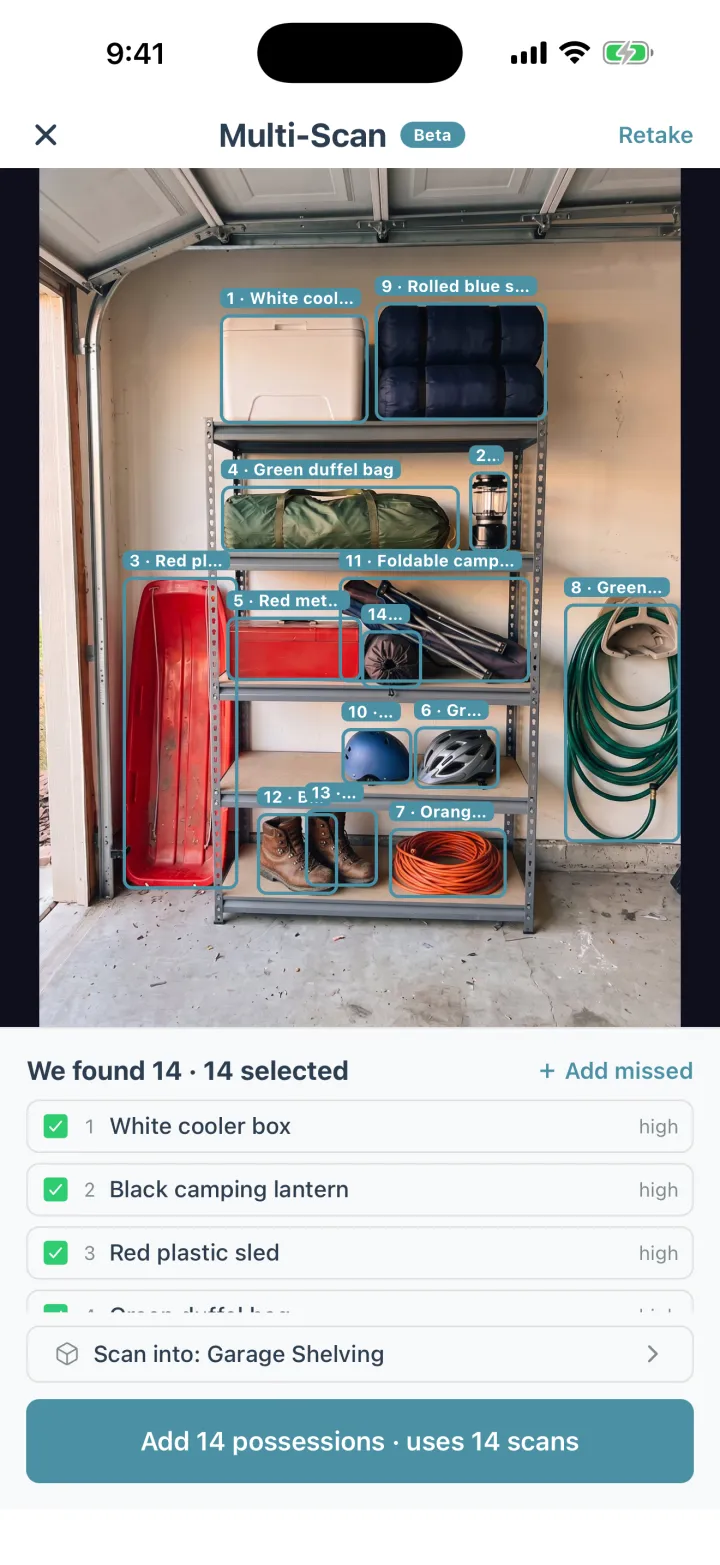
Multi-Scan names up to 15 possessions from one photo.
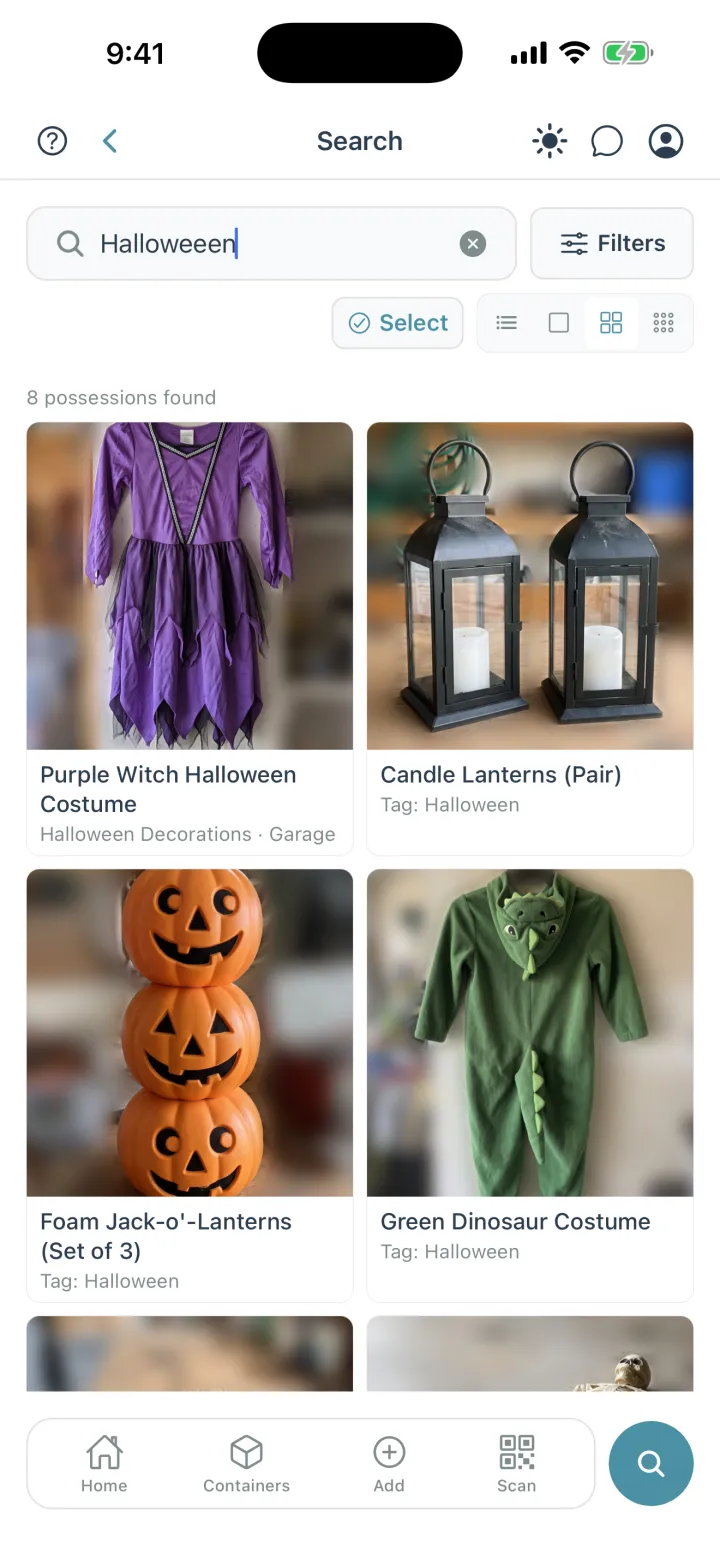
Search forgives typos: “Halloweeen” still finds every Halloween possession.
Possessions can also carry a property such as Fragile or Expensive. Marking the fragile ones as you pack keeps that warning on the record, not only on the tape, and a quick look at what is marked Expensive is a fast check that none of it ended up in the unit by accident. When you bring a possession home for the winter, marking it temporarily removed, with a note, keeps the unit's list honest.
The short version
Keep out what the agreement bans, what you cannot replace and what the weather will ruin: fuel, food, papers, photos, electronics, instruments and valuables. Store the rest off the floor and away from the walls, with a list of what is in every box. If a list like that would help, Cratify is free to try.
See inside the unit without driving there
Photograph what goes into each box as you pack, then search the whole unit from home. Cratify is free to try.