How to Organize a Pantry So Food Stops Expiring at the Back
There are three bottles of soy sauce in this house and nobody planned that. A pantry goes wrong in one specific way — depth — and here is the afternoon pass, plus a fifteen-minute version.

On this page
- Take everything out, all at once
- Zones beat containers
- Nothing sits behind anything it is not identical to
- Dates face out, oldest in front
- The fifteen-minute version
- Shop your own pantry before you shop the store
- What is worth a record, and what is not
- A pantry stays sorted for the same reason a room does
There are three bottles of soy sauce in this house, and nobody planned that.
You bought the second one because the first was behind the cereal. You bought the third because by then you had stopped believing in the second. Somewhere behind all three is a bag of rice from a recipe you made once, and a box of stock cubes that expired while nobody was looking.
This is not a cleaning problem. The pantry is clean. It is deep, and it is stacked, and the front row is the only row anyone has seen since spring.
A pantry goes wrong in a way no other storage space does, and it is worth naming before you pull anything out: this is the only place in the house where the contents expire. Ignore a shelf in the garage for a year and it costs you nothing. Ignore this one and it costs money, quietly, at a rate nobody ever adds up.
Here is a pass that fixes it in an afternoon, and a shorter version for a weeknight when an afternoon is not on offer.
Take everything out, all at once
The instinct is to tidy in place — straighten the front row, square up the cans, close the door. That has already been done four or five times, and it is exactly why the back of the shelf has not been seen since spring.
Take everything out. Not shelf by shelf, and not one section a day: all of it, onto the counter and the table, at the same time. The whole point is to see the duplicates standing next to each other. Three bottles of soy sauce spread across two shelves are invisible. Three bottles of soy sauce in a row on the counter are a decision that makes itself.
Wipe the shelves while they are empty. It takes two minutes and you will not get another clean shot at it for a year.
While it is all out
Turn every package so the date faces you. You are not reading them yet — you are making them readable.
Put anything genuinely past its date straight into the trash or the compost, never into a maybe pile. A maybe pile goes back into the pantry.
Stand duplicates together. Two open packets of the same item become one packet.
Group by how you actually cook, not by category. Baking together, weeknight dinner together, lunchbox together — even when that splits the cans across two zones.
Zones beat containers
At this stage most advice tells you to go and buy a set of matching containers. Hold off. The same argument applies here as it does in a closet: containers do not create room, they divide it, and dividing a space before you have emptied it is how people end up with a beautiful shelf of forgotten food.
What works is zones — a fixed home for each kind of food, decided by how often you reach for it rather than by what it is. A zone survives a rushed unpacking of groceries. A labeled container only survives if the person unpacking cares as much as you do, and on a Tuesday nobody does.
The five zones that hold up
Eye level, front and center — daily. Coffee, bread, cereal, the four or five items touched every single day.
Eye level, to one side — breakfast and lunch. Everything that goes into a lunchbox or a bowl on a weekday morning, kept together so one person can pack a lunch without a search.
Waist height — cooking stock. Oils, vinegars, pasta, rice, canned tomatoes: the base layer under most weeknight dinners.
Top shelf — occasional and baking. Flour, sugar, the cake pans, the second slow cooker. Reached deliberately, a few times a month.
Floor or bottom shelf — bulk and heavy. Paper goods, large bags, drinks. Weight belongs low, and the floor is the only place a twelve-pack does not make a mess of a shelf.
Write the zones down once, on paper, and stick it inside the door for a month. After a month nobody needs the paper.
Nothing sits behind anything it is not identical to
This is the one rule that keeps a pantry organized after the afternoon is over.
Depth is what kills a pantry. A shelf sixteen inches deep holds two rows, and the back row is functionally a different house. So: an item may only sit behind an item identical to it. Two cans of chickpeas, fine, one behind the other. A can of chickpeas behind a jar of peanut butter, no — the peanut butter has just become invisible, and invisible food gets bought again inside a month.
Where a shelf is genuinely too deep for that, the answer is not a container. It is a tiered riser or a turntable, both of which make the back row visible rather than merely reachable. Visible is the whole game. Nobody forgets food they can see, and the freezer has exactly the same geometry with worse lighting.
Dates face out, oldest in front
Every time groceries come in, the new packet goes behind the old one and the label faces the door. That is the entire maintenance routine, it takes no extra minutes, and it is the difference between a pantry that stays sorted for a year and one that lasts until October.
The reason this works is that it moves the decision to the moment when the food is already in your hands. Anything that asks you to go and check something later loses to a Tuesday.
The fifteen-minute version
Not every week has a free afternoon in it, and the job does not strictly require one.
Pick one shelf. Take everything off it.
Discard anything past its date. Do not deliberate.
Stand the duplicates together and combine the open packets.
Put it back single file, dates facing out, heaviest at the bottom.
Stop. Do not start the next shelf.
A five-shelf pantry is five weeknights. Five weeknights is not a project, and unlike the free Saturday you have been waiting for since June, it exists.
Shop your own pantry before you shop the store
The habit with the highest return here has nothing to do with tidying: look at what you already own before you write the list.
Late August is the sharpest illustration of it. School lunches restart, half the neighborhood buys granola bars and juice boxes in the same week, and most of those kitchens already hold two of the three items on the list, behind something taller. The same check applies to school supplies, where it reliably saves more than people expect.
A photograph of the open pantry taken on the way out of the door is a crude version of this and works better than memory does. A real record works better still, and that is the next section.
What is worth a record, and what is not
Cataloging food is a losing game. It moves too fast, it gets eaten, and any list is wrong by Thursday. Nobody should be logging a can of beans.
What is worth recording is the durable half of the pantry, which most people forget is in there at all: the small appliances on the top shelf, the spare extension cords, the picnic set, the bulk paper goods, the boxes of cables that migrated in from the hall closet. Those are the items you own, forget, and buy a second time — and unlike food, they are still there next year.
That is the half Cratify is built for. Photograph what is on the top shelf and the AI fills in the details for you; give the shelf itself a QR label and a scan shows what is on it without anything being moved, and QR label printing is on every tier, including the free Basic one. Collections help with the rest: a check-off list that spans containers, so "what do we already have" is a list you tick rather than a room you search twice.
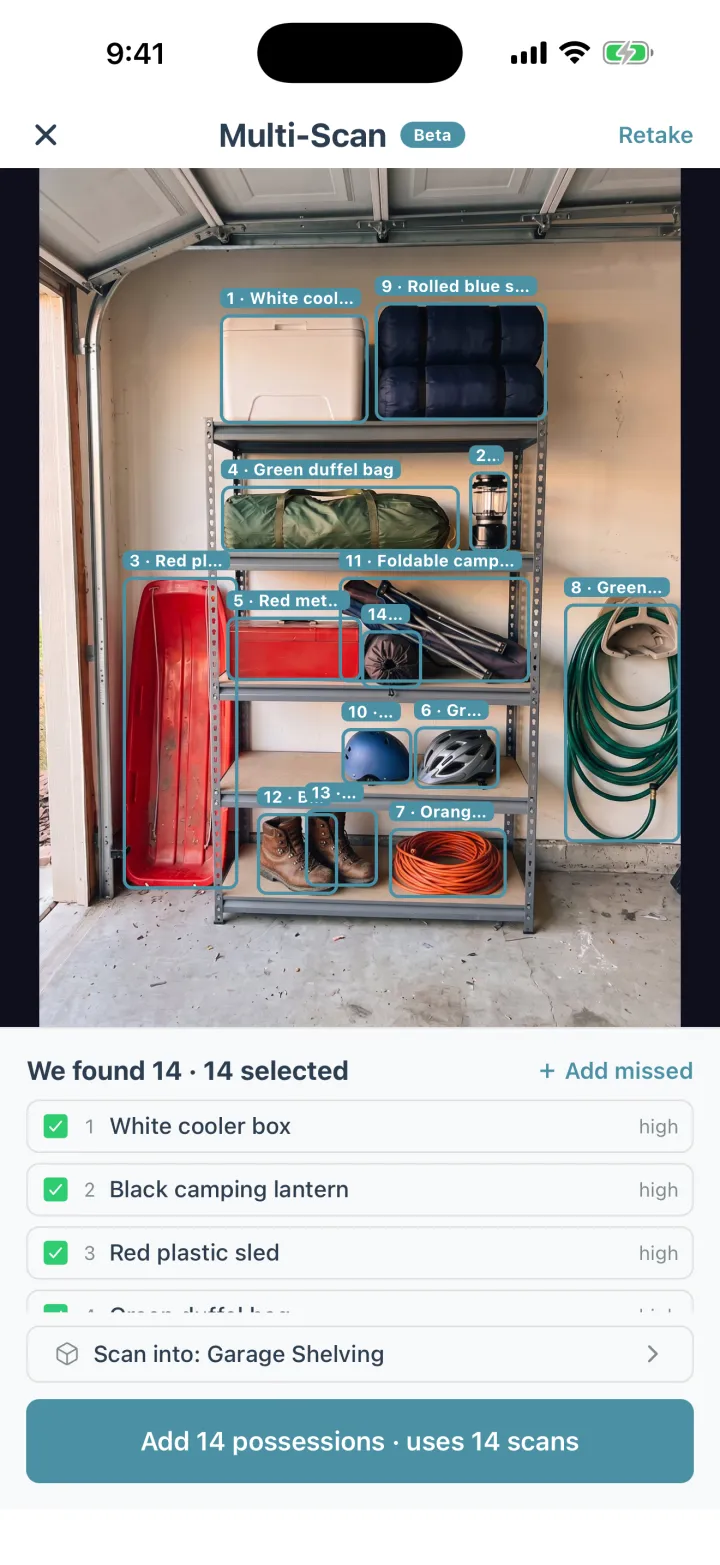
Multi-Scan names up to 15 possessions from one photo.
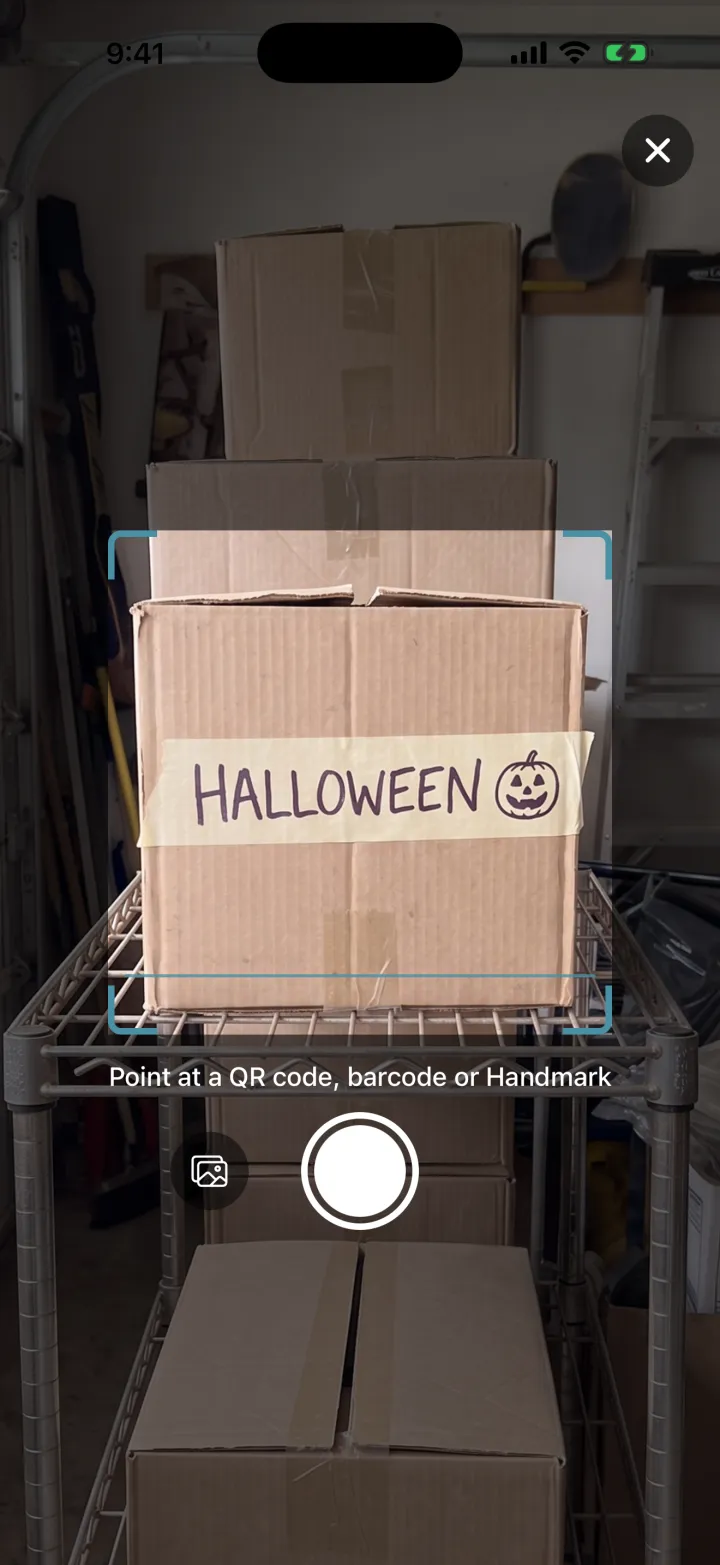
Scan reads QR labels, barcodes and what you already wrote on the box.
The food still needs your eyes. The equipment does not, and the equipment is where the money quietly goes.
A pantry stays sorted for the same reason a room does
Every rule above is one idea wearing five hats: make the contents visible, and the work gets small. Single file makes food visible. Zones make a home visible. Dates facing out make age visible. A photograph makes the durable half visible from the store parking lot.
None of it requires a system anyone has to maintain. It requires that nothing be hidden behind anything else, which is a decision made once, during one afternoon, and then defended for four seconds at a time whenever groceries come in.
The three bottles of soy sauce are not a failure of character. They are what happens when a deep shelf meets a busy week, over and over, for a year. Empty it once, put it back so you can see it, and the pantry stops quietly charging you for the privilege. Cratify is free to try.
Know what is on the top shelf without climbing up
Photograph the durable half of the pantry, and a QR label on the shelf shows what is on it — Cratify is free to try.