How to Organize Pet Supplies and Never Run Short
The leash is in the car and the flea treatment ran out last week. Here is how to organize pet supplies so you can find them, see what is low, and stop buying extras.

On this page
It is seven in the morning and the dog is already at the door. The leash is not on its hook. You find it eventually, in the car, under a beach towel from August. Then you notice the flea treatment was due last week, and the box in the bathroom cabinet turns out to be empty. On the way home you buy a bag of food, and that evening you find an unopened one in the garage, behind the paint cans, where somebody put it to make room.
Pet supplies are hard to keep organized because they live everywhere. Food is in the pantry or the garage, medications are in a bathroom drawer, leashes are by the door or in the car, grooming tools are under the sink, and the toys are in every room of the house. Nobody decided that. It just happened, one purchase at a time. Here is how to organize pet supplies so you can find what you need, see what is running low, and stop buying a second bag of food you already own.
Gather everything once
Before you buy a single shelf or basket, collect every pet supply in the house into one spot. Check the pantry, the garage, the laundry room, the bathroom cabinets, the hall closet, the car, and the bottom of every bag you take to the park. Put it all on the floor or a table and look at it together.
This step is where most of the surprises are. People routinely find three half-used bottles of the same shampoo, a drawer of leashes from a dog who outgrew them years ago, and medication that expired before the current pet arrived. Throw out what is broken, empty or expired. Set aside what no longer fits or gets used to donate to a local shelter, many of which accept clean leashes, bowls, towels and unopened food.
Sort pet supplies into five groups
Everything that is left falls into one of five groups. Sorting by group first makes every later decision easier, because each group has its own best home.
Food and treats: dry food, canned food, treats, chews and the scoop.
Health: medications, flea and tick preventives, a first aid kit, and the paperwork that goes with them.
Grooming: brushes, nail clippers, shampoo, towels and dental supplies.
Walk and travel gear: leashes, collars, harnesses, waste bags, a travel bowl and the carrier or kennel.
Toys and bedding: toys, blankets, beds and covers.
If you have more than one pet, sort by pet inside each group. Two cats on different foods, or a dog and a cat on different preventives, is exactly where mix-ups happen.
Give each group a home where you use it
The best place for a pet supply is the place where you reach for it. Supplies stored far from where they are used drift back to wherever they were last put down.
Food and treats
Keep the open food near the feeding spot and the backup supply in one place only, so you always know how much is left. If you pour dry food into an airtight container, keep the original bag or cut out the panel with the brand, the best-by date and the lot number, which is what you will need if that food is ever recalled. Put new bags behind open ones so the oldest food gets used first.
Medications and preventives
Give medications one drawer or one cabinet shelf, high enough that neither pets nor children can reach it, and separate from the medicine the people in the house take. Pet and human medications can look alike, and the doses are very different. Store each one the way its label says, and write the date you opened it on the box.
Walk and travel gear
Leashes, harnesses and waste bags belong by the door you leave from. A row of hooks and a small shelf is enough. If your entryway is already crowded, the approach in our mudroom guide works for pet gear too: one hook per person and one per pet, and nothing on a hook that does not get used every week.
Grooming
Grooming supplies live best where grooming happens, usually the laundry room or a bathroom cabinet. Keep the towels that are only for the pet in the same spot so they stay out of the family's laundry.
Toys and bedding
Toys spread through the house no matter what you do. Give them one basket in the room where the pet spends the most time, and rotate a few out of sight every couple of weeks. Old toys feel new again when they come back, and you will have fewer of them underfoot.
Keep one running list of what runs out
The supplies that cause the most trouble are the ones that run out: food, litter, waste bags, and monthly preventives. You do not need a system for the rest, but you do need one for these.
Keep one list, in one place, of what to buy next. A note on your phone or a sheet inside the cabinet door both work. Use a simple rule: when you open the last bag or the last dose, it goes on the list. Write the date on each bag of food when you open it, and after a couple of bags you will know how long one lasts in your house. That number is more useful than any reminder, because it tells you when to buy before you are down to the last scoop.
Keep the records together
Pet paperwork is easy to scatter and hard to find on short notice. Boarding facilities, groomers and new vets usually ask for proof of vaccination, and an emergency is the worst time to go looking for it.
Keep these in one folder, and take a photo of each page so you have them on your phone:
Vaccination certificates and the date each one is due again.
The microchip number and the company it is registered with.
Your vet's name and number, and the nearest emergency clinic.
Any pet insurance policy and its member number.
Receipts for large purchases, like a kennel, a bed or a big vet bill.
If you already keep your household papers in one place, the pet folder can live right beside them. Our guide to organizing important documents at home covers the rest of the drawer.
Pack a grab-and-go kit
One small bag, ready to leave the house in a minute, covers a surprise trip to the vet, a weekend away, and an evacuation alike. Put a few days of food, any daily medication, a spare leash and collar, a collapsible bowl, waste bags, copies of the vaccination records, and a recent photo of your pet in it. Store it near the walk gear by the door.
If you are building an emergency kit for the household, add the pet kit to the same shelf. The steps in our guide to organizing emergency supplies apply to pets as much as people: check it twice a year, and replace food and medication before they expire.
Where an app helps
A list on paper works until you are standing in the pet store trying to remember whether there is another bag of food in the garage. A list on your phone goes with you.
In Cratify, a household includes its pets as well as its people. Add each pet in People with the kind set to pet, and the food, the medications, the bed and the kennel can each belong to that pet, with a page for every pet that lists the containers and possessions that belong to it. The drawer, the cabinet shelf and the closet where supplies live are containers in their rooms, so each possession is recorded where it actually sits. Photograph a supply and its details are filled in from the photo, with a confidence score shown that you can check and correct.
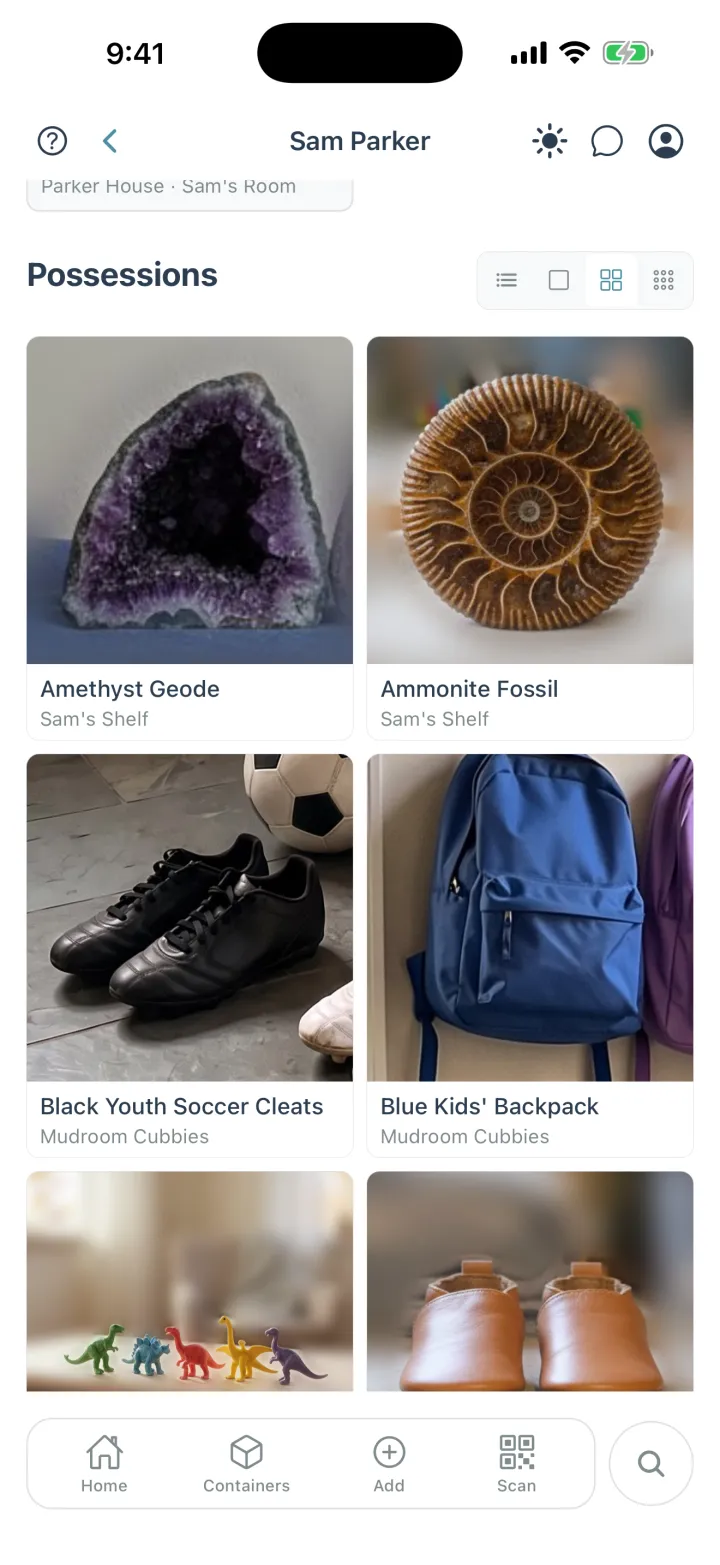
Each person gets a page with what's theirs, kids included.
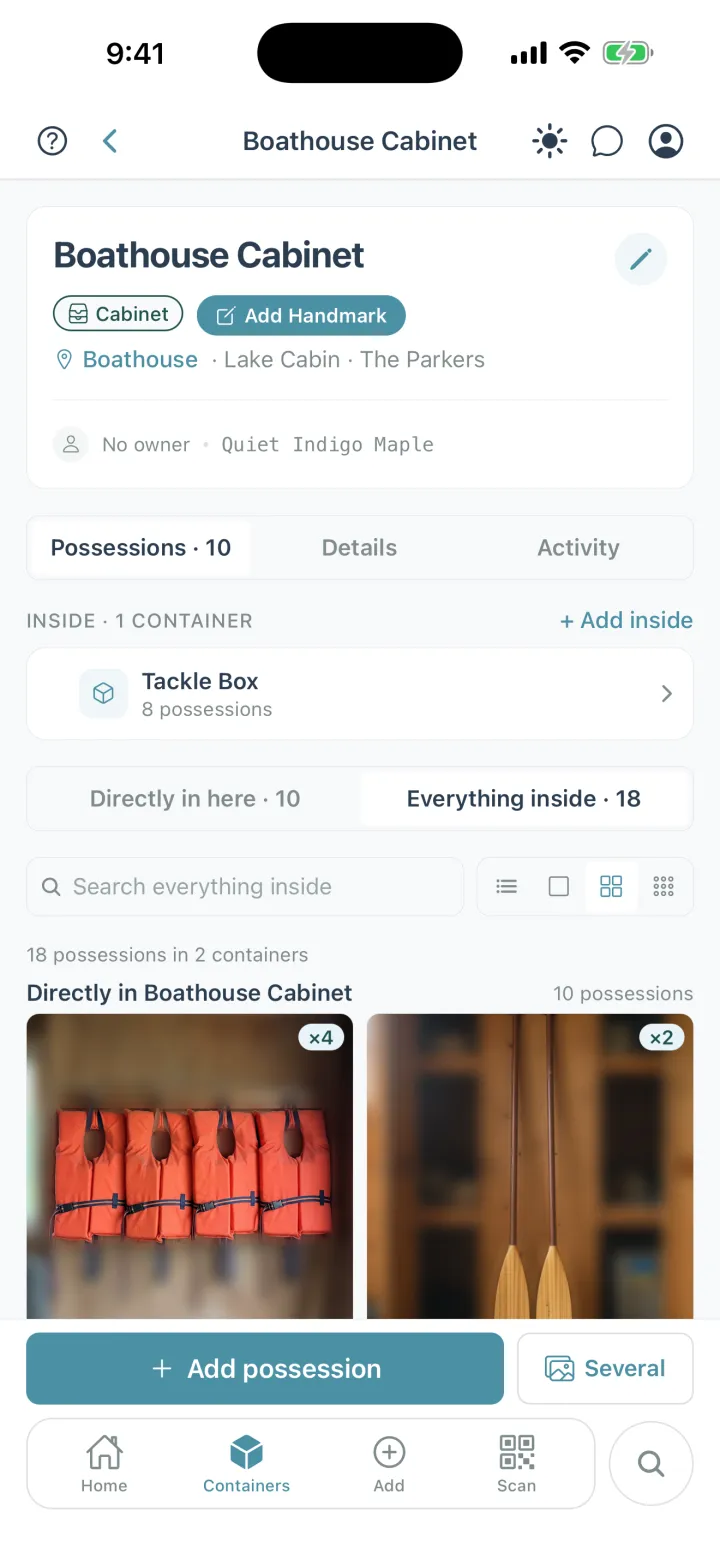
Containers inside containers, with everything inside listed.
A vaccination certificate can be stored as a Document, and a vet bill or a kennel you bought can be kept as a Receipt with the amount and purchase date. A travel collection works as a packing list for the grab-and-go kit that you check off as each possession goes in the bag, and search covers the whole inventory, so the spare leash is a few seconds away instead of a tour of the house.
A ten-minute monthly check
Pick one day a month, ideally the day the monthly preventive is due, and spend ten minutes on the pet supplies. Check how much food is left. Count the doses of each medication and look at the expiry dates. Throw out broken toys, wash the bedding, and refill the waste bags by the door. Anything that is running low goes on the list.
That is the whole system: everything in one place per group, one list of what runs out, one folder of records, one bag by the door. The next time the dog is waiting at seven in the morning, the leash is on its hook. If one list for every pet would help, Cratify is free to try.
Know what every pet has, and where
Record each pet's food, medications and gear, the drawer or shelf it lives in, and the records that go with it. Cratify is free to try.