How to Catalog a Wine Collection
Record each bottle's producer, vintage, count, rack position and drinking window, store it cool and on its side, and you'll always know which bottle to open next.

On this page
It's the week before Thanksgiving and someone asks whether there's still a bottle of the 2016 from the trip to Sonoma. There might be. There were six. One went to a birthday, one to a dinner nobody remembers, and the rest are somewhere in the rack in the basement, label-down, between a bottle a guest brought to a party and a case that never got unpacked. Twenty minutes later the bottle that comes up is a different year, and the one everyone meant to save turns out to have been opened in June.
A wine collection doesn't need to be large to need a list. Once there are more bottles than fit on one counter, the same three questions start: what do we have, where is it, and what should be opened before it's past its best. Cataloging a wine collection answers all three, and for a rack of 50 bottles it takes an evening, less if you record bottles as they arrive.
What to record for each bottle
Keep it to the details you'll actually look up. For most collections that's this list:
Producer and wine name, exactly as the label has them.
Vintage, or NV for a non-vintage bottle.
Region and grape, or the blend if the label names one.
Bottle size, if it isn't the standard 750 ml.
How many bottles of it you have.
Where it is: which rack, fridge or cabinet, and which row.
When to drink it: a drink-from year and a drink-by year.
What you paid and where you bought it.
Photograph the front and back labels while you're there. The back label often carries the importer, the alcohol content and sometimes the producer's own advice on when to open it, and a photo saves typing all of that. The guide to photographing items for a home inventory covers getting a label legible in one shot.
The price is worth the extra ten seconds. Wine is one of the few possessions in a house that can be worth more than it cost, and if you ever need a list of what's in the cellar for insurance, the home inventory guide covers what a complete record contains.
Set up a location system before you count
The list is only useful if a location means the same place every time. Before you record a single bottle, decide how you'll name where the bottles sit.
Racks
Give each row a letter, top to bottom, and each column a number, left to right. A small label at the end of each row and the top of each column is enough. A bottle's location is then its row and column, so B4 is the second row, fourth from the left, and a rack of 48 slots needs only 14 labels.
Wine fridges and cabinets
Number the shelves from the top. Most wine fridges hold bottles on pull-out shelves, so a shelf number is as precise as you need. Within a shelf you can find a bottle by reading the labels, as long as the labels face out.
Cases and boxes
Bottles still in their case are the ones that go missing first. Write a short label on the end of the case that faces out: what's in it, how many, and the year to start opening it. Record the case's spot like any other location, and update the count each time a bottle leaves it.
Store the bottles so the list stays true
A catalog of wine that has gone bad is a list of disappointments. A few storage basics keep the bottles worth recording:
Keep the temperature cool and steady. Around 55°F (13°C) is the usual target, and steady matters more than exact. A basement or an interior closet usually beats the kitchen.
Store corked bottles on their side, so the wine keeps the cork from drying out. Bottles with screw caps can stand.
Keep them out of light, especially sunlight, and away from heat: an oven, a dryer, a water heater, a sunny wall.
Avoid vibration. The top of the refrigerator is the worst spot in most kitchens, because it's warm, bright and humming.
The kitchen fridge is fine for a bottle you'll open this week. For months, it's too cold and too dry.
Work out the drinking windows
Most bottles are made to be opened within a few years of release, and only some improve over a decade or longer. The drinking window is what turns the catalog from a list into a plan.
Start with the producer. Many winery websites and tech sheets suggest a window for each vintage, and reviews often give a range too. When you can't find one, write "unknown" and lean toward opening that bottle sooner. A wine opened a little young is still a good bottle; one opened years too late usually isn't.
Then sort by the drink-by year. The bottles at the top of that list are the ones to open first, and the ones to bring out when someone asks what's worth opening tonight.
Do the first count in one sitting
The first count is the only slow part. Clear a table near the rack and work through it one row at a time, the same row-by-row approach as cataloging a vinyl collection.
Take out one row of the rack, or one shelf of the fridge.
Photograph each label, front and back.
Record the details from the list above, with the location each bottle came from.
Put the row back exactly as it was before you start the next one.
Working a row at a time means a bottle's recorded location is always where it actually is. If you're interrupted halfway through, the half you've done is still right.
Keep it current as bottles come and go
A catalog starts drifting the moment a bottle leaves without being crossed off. Two habits stop it:
- Record new bottles the day they come in, before they reach the rack.
- When you open one, update the count straight away and add a line on how it was. Those notes are what you'll want the next time you're deciding whether to buy that wine again.
Once a year, walk the rack against the list and fix whatever has drifted. Late autumn is a good time for it, just before the holidays give the rack its busiest month.
Where an app helps
A spreadsheet or a notebook works for all of this. If you'd rather keep it on your phone, here's how it looks in Cratify.
Each wine is a possession with its label photos, and its vintage, region and drinking window in its details. Photograph the label and the details are filled in from the photo, with a confidence percentage you can check and correct before you save. Six bottles of the same wine are one possession with a quantity of 6, not six separate entries.
Each rack, wine fridge or cabinet is a container in the room where it stands: a Shelf for a rack, an Appliance for a wine fridge, a Box for a case. The row goes in the possession's details. Search draws on those details and on the containers, so a search for "Sonoma" shows which bottles you have and where each one is. The receipt for a case can be stored as a Receipt with its amount and purchase date.
When the last bottle of a wine is opened, archive the possession with a note on how it was. The record of what you drank, and what you thought of it, stays.
The short version
Decide how you'll name each spot before you start. Record each bottle's producer, vintage, count, location and drinking window, with a photo of both labels. Store the bottles cool, dark, still and on their side. Sort by drink-by year and open from the top. Update the count every time a bottle comes in or goes out. Cratify is free to try.
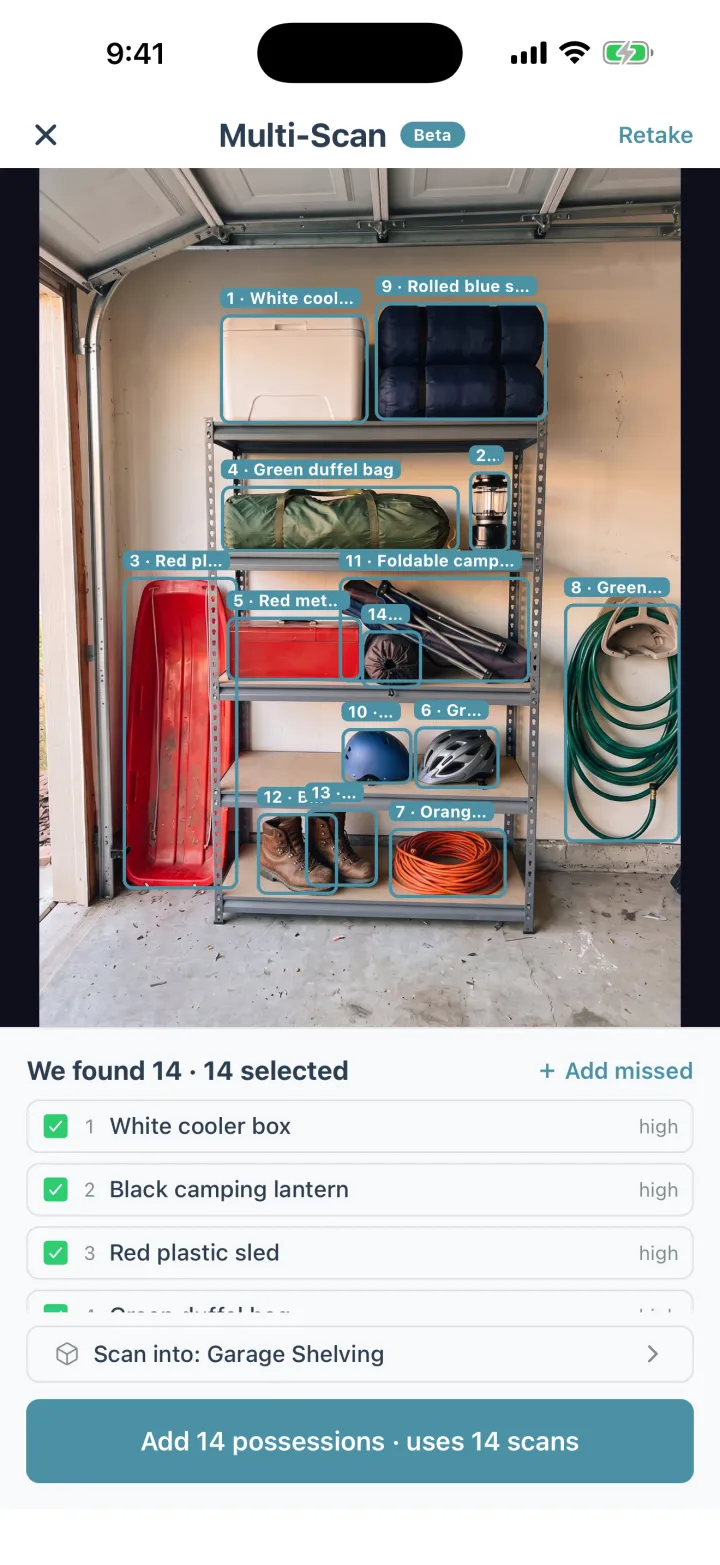
Multi-Scan names up to 15 possessions from one photo.
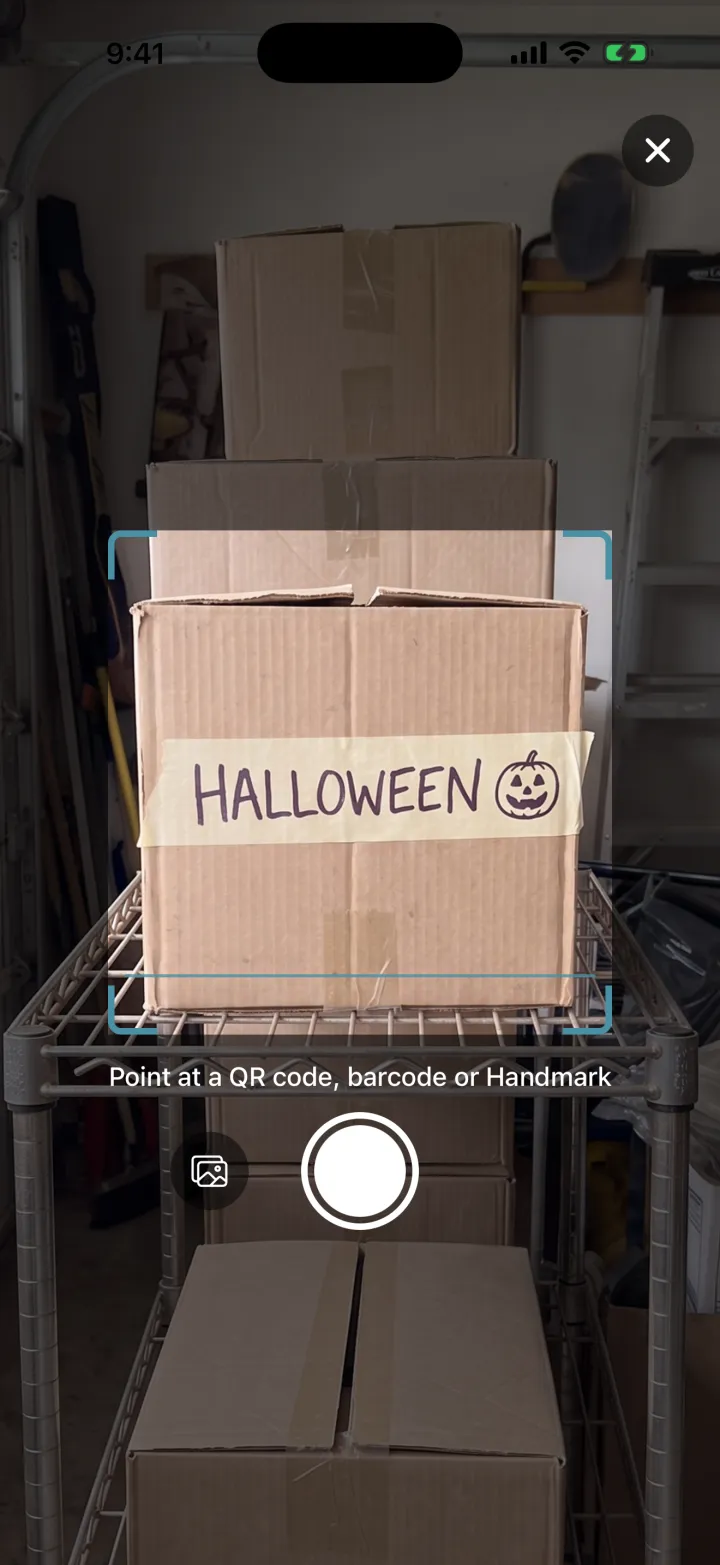
Scan reads QR labels, barcodes and what you already wrote on the box.
Know which bottle to open tonight
Record each bottle with its label photo, vintage and spot on the rack, then search before you open one. Cratify is free to try.