How to Store Jigsaw Puzzles and Stop Buying the Same One Twice
Puzzle boxes crush, lids pop and pieces wander. Stand the boxes upright, bag the pieces, note what is missing on the lid, and keep a list so you never buy one twice.
On this page
It is the first cold Saturday of November, and a 1,000-piece lighthouse is spread across the dining table. Three hours in, the sky is done, the rocks are done, and there is one hole in the middle of the lantern room. The piece is not under the table, not in the box and not in the dog. Worse, on the closet shelf behind you sits a second, identical lighthouse, still sealed, bought last winter by someone who did not remember the first.
A puzzle collection fails in three ways at once. The boxes give out, the pieces wander, and nobody can remember what is already on the shelf. Each problem has a fix that takes an afternoon, and none of them needs a dedicated puzzle cabinet.
Why puzzle boxes fall apart
Puzzle boxes are built to survive one trip home from the store. Stack ten of them flat and the bottom ones crush at the corners. Pull one from the middle of the stack and the lid pops, and two hundred loose pieces slide to the back of the shelf. Keep them in a damp basement or a hot attic and the cardboard warps, the pieces curl, and a finished puzzle never quite lies flat again.
So the fix is less about where the boxes go than about how they sit once they get there.
Store the boxes like books
Puzzles that will be done again belong on a shelf in a dry, room-temperature part of the house, standing upright with the edge label facing out, the way books sit. An upright box carries no weight from the boxes above it, and you can read every label without unstacking anything.
Put the pieces inside each box in a zip-top bag, so a popped lid spills nothing.
Tie a ribbon or wrap a strip of low-tack tape around any lid that slides off.
Keep the edge label facing out. If it has worn away, write the name and piece count on a strip of tape.
Shelve the heavier 1,500- and 2,000-piece boxes on the bottom.
Leave a hand's width of space at the end of each shelf so a box comes out without a fight.
The best shelf is the one nearest the table where puzzles get done. A bookcase in the family room or a shelf in the hall closet beats the garage every time, because a puzzle stored two floors away from the table is a puzzle nobody starts. A shelf you can see from the sofa also does half the job of a list, at least until the collection outgrows it.
When the box has given up
A box held together with tape is not worth saving. Cut the picture off the lid, slide it into the zip-top bag with the pieces, and write the name and piece count on the bag. Bags store well upright in a drawer or a lidded box of their own, filed like folders, and they take about a third of the room the original boxes did.
Sort the collection so you can choose one
Once the boxes stand up, sort them in a way that answers the question people actually ask in front of the shelf: what do we feel like doing tonight?
Bring every puzzle in the house together in one place, including the ones in the guest room and the kids' rooms.
Line them up by piece count: under 500, 500 to 1,000, and over 1,000.
Set aside any puzzle you know is short of pieces, and any nobody will do again.
Shelve the rest by piece count, with the family puzzles at a height the kids can reach.
Put the ones you are not keeping in a box by the front door, so they actually leave.
A puzzle done once and never again is one of the easiest possessions in the house to pass on. A library swap shelf, a neighbor or a friend at work will usually take it, and the guide to where to donate household items covers the rest.
Deal with missing pieces honestly
Every puzzle eventually loses a piece. The answer is not counting pieces, which nobody will do twice. It is recording the gap at the moment you find it.
When a puzzle finishes short, write the number missing on the inside of the lid.
Keep one small jar for strays found under the sofa, labeled found pieces and nothing more.
Before a puzzle goes back on the shelf, check the jar against the picture on the lid.
If a puzzle that is short goes to someone else, say so on the box.
A puzzle missing two pieces is still worth doing. It only disappoints when nobody said so before the last hour.
Stop buying the same puzzle twice
Duplicates happen for the same reason they happen with any collection. Puzzles arrive from gift exchanges, swap tables and holiday sales, and nobody carries a list of what is already at home. Coin collectors have the same problem, and the answer in organizing a coin collection applies here: a list you can check from the shop aisle, not a shelf you can only check from the living room.
The list needs very little for each puzzle: the name or the picture, the piece count, and whether it is complete. If the family also has a shelf of games, the same list can cover both, the way it does for a board game collection.
Keep track of lent and swapped puzzles
Puzzles move between households more than almost any other possession. A neighbor borrows the map of the world, a sister takes three for a snowed-in weekend, and by spring nobody remembers which ones went where. A short note of who has which puzzle, and since when, is enough. Keeping track of what you lend out covers the habit in more detail.
Where an app helps
In Cratify, the shelf the puzzles live on can be a Shelf container in the room where it stands. Photograph each box front and the details of each puzzle are filled in from the photo, with a confidence percentage you can check and correct, and you can add the piece count or a note about missing pieces yourself. A custom category for puzzles, plus tags such as 1000 pieces or missing 2, makes the collection easy to sort.
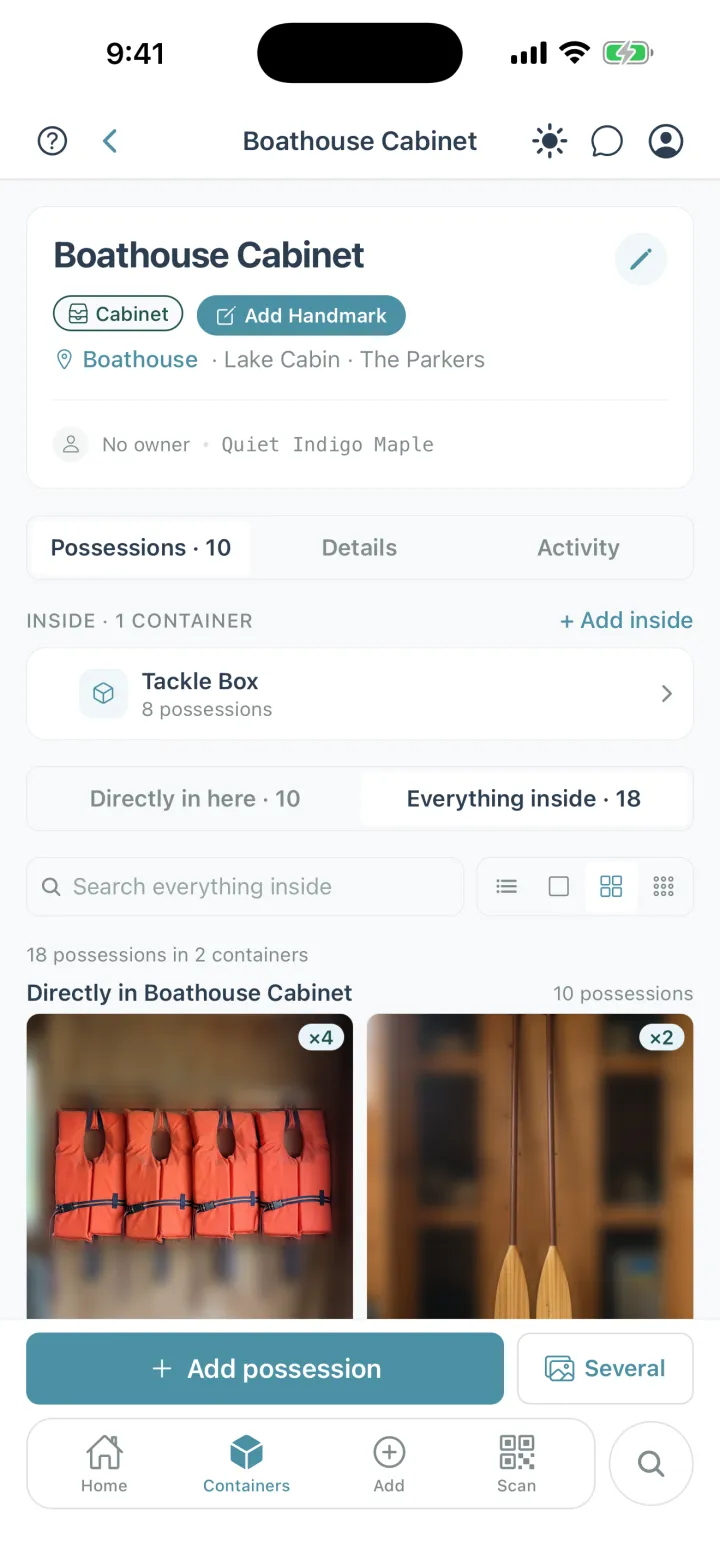
Containers inside containers, with everything inside listed.
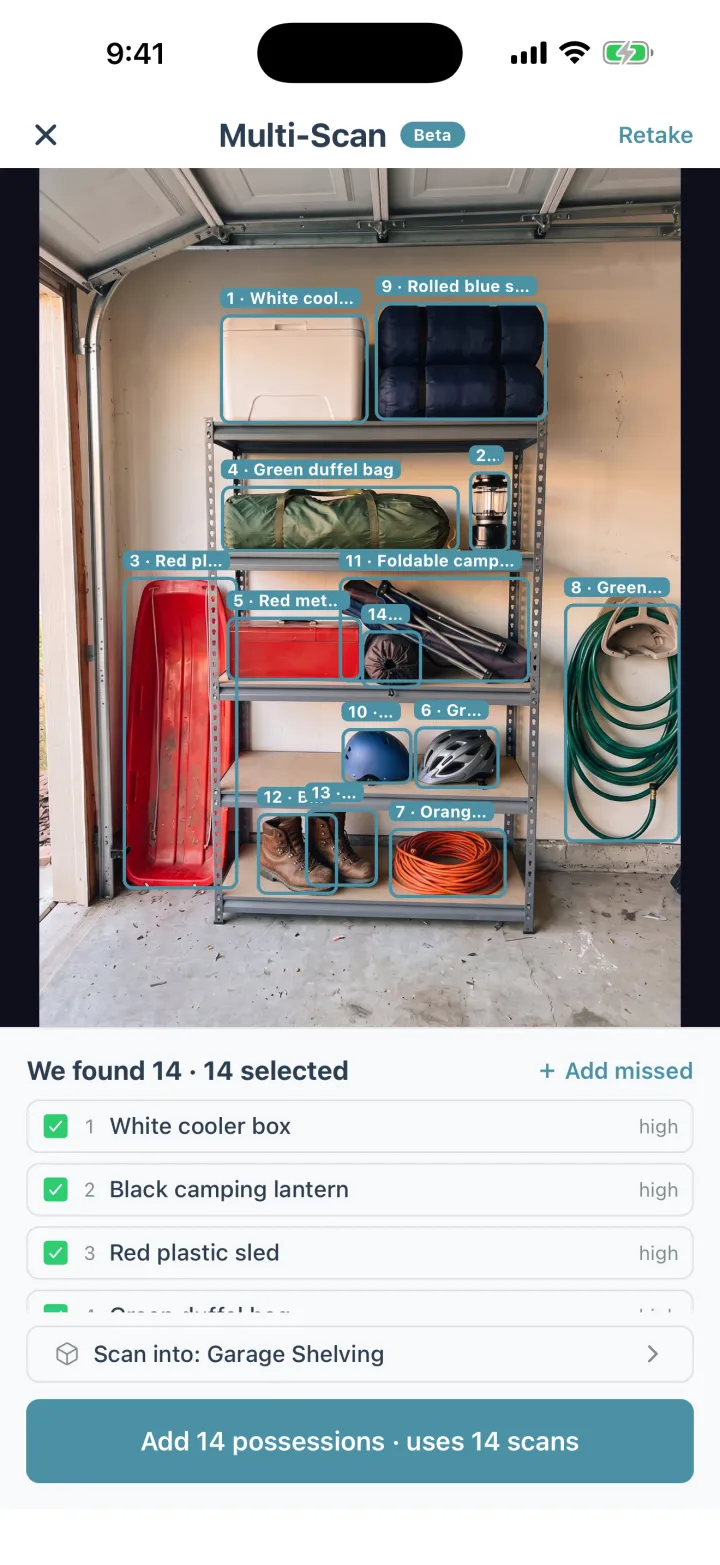
Multi-Scan names up to 15 possessions from one photo.
Search draws on each possession's details, so typing lighthouse in the shop tells you whether one is already on the shelf at home. The shelf's Everything inside view lists every puzzle on it, with a total. When a puzzle goes to a neighbor, marking it temporarily removed, with a note, keeps a record of who has it. When one is passed on for good, archiving it with a reason keeps the history without keeping the box.
Give the puzzle in progress a home
The other reason puzzles take over a house is the one on the table. A puzzle board or a roll-up felt mat lets a half-finished puzzle leave the dining table before dinner without coming apart, and a few shallow trays for edge and sky pieces keep the sorting you have already done. Slide the board under the sofa or onto a high shelf, and the puzzle waits for the next cold evening.
The short version
Stand the boxes upright on a dry shelf, bag the pieces, and swap dead boxes for labeled bags. Sort by piece count, write missing pieces on the lid, and keep a list of what you own, so the second lighthouse stays in the store. Cratify is free to try.
Know which puzzles are already on the shelf
Photograph each puzzle box once, then search your collection before you buy another. Cratify is free to try.