How to Keep a House Clutter-Free After You Declutter
Decluttering clears the house once. Keeping it clear is about what comes in next: the doors clutter uses, a landing spot at each one, and a reset small enough never to skip.

On this page
- Clutter is an intake problem, not a storage problem
- Find the doors clutter comes in through
- Give every incoming possession a place to land
- One in, one out, applied where it actually works
- The ten-minute reset
- Know what you own before you buy more
- The quarterly pass
- Where an app helps
- The short version
Six weeks ago the hall closet was finished. You emptied it onto the floor, kept what earned its place, drove four bags to the donation drop-off and put the rest back on the shelves with room to spare. You took a photo because it looked that good. This morning you opened it to find a pharmacy bag, two umbrellas that are not yours, a stack of catalogs, a box from an online order you meant to return, and a yoga mat nobody in the house uses.
Nobody decided to undo the work. It came back the way it always does, one reasonable decision at a time. That is the part every before-and-after skips, and it is the question people actually ask once the photo has been taken: how do you keep a house clutter-free once it is clear?
Clutter is an intake problem, not a storage problem
Decluttering deals with what is already inside the house. Keeping it clear is about what comes in next, and that is a different job with a different fix.
Most homes take in a steady flow of possessions every week: mail, groceries, online orders, gifts, freebies, school papers, hand-me-downs, the charger that came with a new phone. The house does not fill up because anyone is careless. It fills up because the intake never stops and the outflow only happens on the weekends someone feels guilty enough to start.
So the useful question is not where to put more. It is where the new arrivals come in, and what happens to each one in the first minute after it does.
Find the doors clutter comes in through
Spend one week noticing where new possessions first land. In most homes the list is short and boringly predictable.
Mail and paper, which lands on the kitchen counter or the table by the front door
Online orders, including the packaging and the return you have not made yet
Bulk buys and sale purchases, especially duplicates of what you already own
Gifts, hand-me-downs and the bag a relative leaves after a visit
Freebies: conference giveaways, party favors, sample sizes, promotional pens
Kids' paperwork and artwork, which arrives daily in backpacks
Possessions borrowed from someone else and never returned
Each of these is a door. A house with five open doors and no rule at any of them will fill back up no matter how thoroughly it was cleared. Close the doors, or at least put someone at each one, and the house stays close to where you left it.
Give every incoming possession a place to land
One landing spot per door
Clutter is mostly possessions in transit that never finished the trip. The fix is a defined landing spot at each door, with a short rule for leaving it.
Mail goes into one tray by the door, and the tray gets sorted every other day: recycle, act on, file. Packages get opened where the recycling lives, so the box never makes it to the living room. Returns go into one bag that lives by the car keys and leaves the house within a week. Kids' papers go into one folder per child, which gets weeded at the end of each month.
The landing spot is not storage. It is a waiting room, and the rule is that nothing lives there for long.
A box for the undecided, with a date on it
Some possessions do not have an obvious answer. The kitchen gadget you might use, the jacket that might fit again, the decor you are not sure about. Deciding on the spot is tiring, so most people leave those where they are, and that is how surfaces fill.
Keep one box for the undecided. Write a date on it three months out. When the date comes, anything you have not gone back for leaves the house, unopened if you can manage it. If you could not remember what was in it, you did not need it.
One in, one out, applied where it actually works
The one-in, one-out rule is the most repeated piece of advice in organizing, and it fails when people apply it to the whole house. Nobody wants to give away a lamp because they bought a phone case.
It works when the rule is scoped to a category with a fixed home. One drawer of kitchen utensils. One shelf of mugs. One rack of shoes per person. When a new pair of shoes comes in, a pair goes out, because the rack is the limit and the rack does not grow.
Pick three or four categories that drift in your house and give each one a container that sets the limit. The container does the arguing so you do not have to. The junk drawer is the classic example of a category with no limit, and it shows how quickly a space with no rule refills itself.
The ten-minute reset
Maintenance is not a project. It is a short habit, done often enough that nothing gets out of hand.
Once a week, pick a fixed time, the same day each week, and give the house ten minutes. Clear the landing spots. Put back anything that wandered to the wrong room. Take the returns bag to the car. Bag up anything already marked to leave. Stop when the timer goes.
Ten minutes sounds too small to matter, and that is the point. A reset small enough to never skip beats a big clear-out you dread, and it keeps the house from reaching the state where you need another weekend like the first one. If you are still at the start of that first weekend, where to start when the whole house needs organizing covers the scope question before any of this applies.
Know what you own before you buy more
A large share of household clutter is duplicates. The third tape measure. The second bottle of the same cleaner, bought because the first was hiding behind the paper towels. Batteries, extension cords, wrapping paper, phone chargers, spare light bulbs. Each one bought in good faith because nobody could find the first.
Duplicates are a memory problem rather than a discipline problem. The fix is to make what you own easy to check before you buy. That can be a running list on the inside of a cupboard door for the categories you overbuy, or a quick look in the one place a category lives before you head to the store. The rule is the same either way: check first, then buy.
The quarterly pass
Once a season, when you swap clothes or put away holiday decorations, do one wider pass. Walk each room with a bag and ask the same question of every surface and shelf: is this here because it belongs here, or because it landed here?
Anything leaving the house should leave quickly. A donation bag sitting in the car trunk for a month is clutter in a different room. Where to donate household possessions sorts the options by what you have, so the bag has a destination before you fill it.
Where an app helps
A record of what you own does most of its work at the moment you are about to buy something. In Cratify you photograph possessions and the details are filled in from each photo, with a confidence percentage you can check and correct. Each possession sits in a container, inside a room, inside a location, so the record mirrors the house.
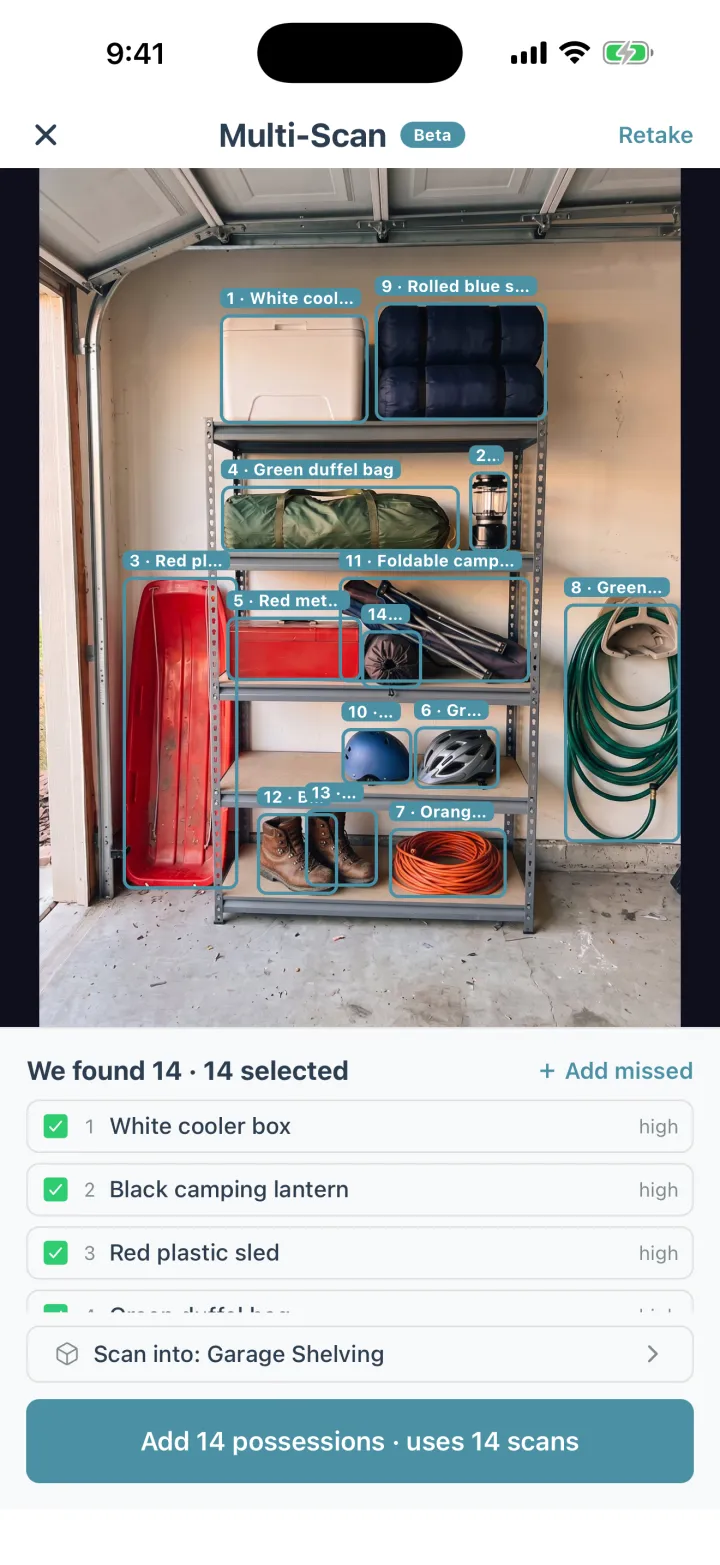
Multi-Scan names up to 15 possessions from one photo.
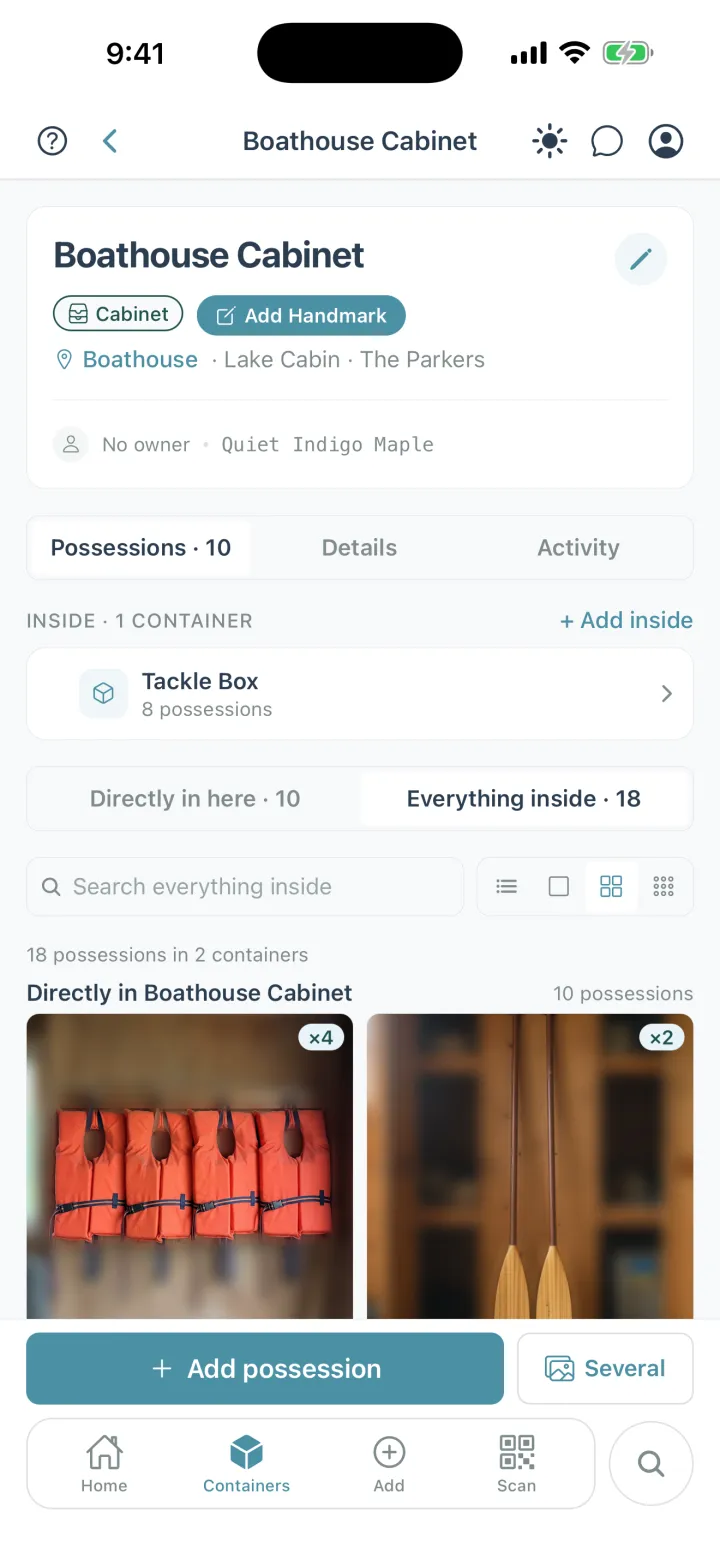
Containers inside containers, with everything inside listed.
Search draws on the details of each possession and the container it lives in, so before you buy a fourth tape measure you can type tape measure and see where the other three are. When a possession leaves, you can archive it with a reason, and when it is out for a while, such as a lent drill or a jacket at the dry cleaner, you can mark it temporarily removed with a note.
The short version
Clutter comes back through a handful of doors, so put a landing spot and a rule at each one. Limit drifting categories with a container that sets the size. Keep one dated box for the undecided. Reset for ten minutes every week, do a wider pass each season, and check what you own before you buy more. If a record of what you own would help with that last step, Cratify is free to try.
Check what you own before you buy more
Photograph what you keep, record the container it lives in, and search before you buy a second one. Cratify is free to try.