How to Store a Christmas Village So Every Piece Comes Back
Photograph the display before it comes down, pack each building in its own box with its cord and bulb, store the boxes upright and dry, and keep a list of every piece.

On this page
The village goes up the weekend after Thanksgiving, and it always starts the same way: eleven boxes on the dining room table, half of them in their original packaging and half wrapped in newspaper from a year nobody can remember. The church is fine. The bakery has a chipped chimney. One of the lamp posts is missing, and so is the little bench that sat outside the post office, and nobody is sure whether they were packed last January or left in the drawer under the display table.
A Christmas village is a collection in the truest sense: dozens of small, fragile pieces, many of them bought one a year, some of them gifts, a few of them no longer made. It spends a month on display and eleven months in boxes, and most of the damage and loss happens in the two days it spends moving between the two. Here's how to set it up so taking it down is easy, how to pack each piece so it survives, and how to keep track of what you own so no piece goes missing between seasons.
Before you set it up: start the list now
The best moment to take stock of a village is while it's coming out of its boxes, because every piece passes through your hands anyway. As you unpack:
Note each building, figure and accessory as it comes out, along with the box it came from.
Check for chips, cracks and loose parts, and set damaged pieces aside to repair before they go on display.
Test every lit building with its cord and bulb before it goes into the scene, while you can still reach the back.
Keep the original boxes and their foam inserts together in one place, nested if they fit, so they're ready in January.
If your pieces have names or years printed on the base or the box, write those down too. They're what you'll need if you ever insure the collection, sell a piece or look for a replacement.
Photograph the display before it comes down
Before the first piece goes back in its box, take photos of the whole scene from the front, then of each section up close. Next year those photos answer every question the layout raises: which building sat on the riser, where the skating pond went, how the lights ran behind the hill. A layout that took a full afternoon to get right should only have to be worked out once.
Photograph each building on its own as well, front and back. A clear photo of each piece is the most useful record you can keep, both for setting up and for any future insurance claim. The guide to photographing your belongings for a home inventory covers how to take photos that hold up.
Take it down in the right order
Taking a village down in a hurry is how pieces get lost. Work in this order:
Unplug the lights and let the bulbs cool.
Collect the small accessories first, the figures, benches, lamp posts and trees, into one small box so none of them get swept up with the snow blanket.
Remove the cord and bulb from each lit building, wind each cord loosely and bag it with its bulb.
Lift each building by its base, never by a roof, chimney or steeple.
Pack each piece in its own box before moving on to the next.
Shake out the snow blanket and any loose fiber fill outdoors before folding it. Flakes of fake snow work their way into every box and every hinge if they're packed with the buildings.
Pack each piece so it survives
Ceramic and porcelain village pieces break in storage in two ways: by knocking against each other, and by being crushed under weight. Both are avoidable.
Use the original boxes when you have them
The box and foam insert a piece came in were made for that exact shape, and they're still the safest place for it. Write the piece's name on the end of the box so you can read it on a shelf without pulling it out.
When the original box is gone
Wrap the piece in acid-free tissue first, then a layer of bubble wrap, and fit it into a small sturdy box with crumpled paper filling the gaps. Keep newspaper away from the piece itself, since the ink can rub off onto light glazes. Pad chimneys, steeples and every other part that sticks out before the outer wrap goes on.
Keep the small parts with their building
Cords, bulbs, the little sign that hangs off the shop front: bag them and tape the bag inside the box lid, or keep one labeled bag for each building. Small parts packed loose are the parts that disappear.
Choose where it lives for eleven months
Village pieces are sensitive to heat, damp and weight, so where they spend the year matters as much as how they're packed.
An indoor closet or a shelf in a spare room is the gentlest option, with a steady temperature and no damp.
A basement works if the boxes are raised off the floor on a shelf, away from the water heater and any outside wall that sweats.
An attic is the riskiest spot. Summer heat up there can soften glue and stress painted finishes, so if the village has to go up there, keep it away from the roof deck.
Wherever it goes, store the boxes upright, heaviest at the bottom, with no heavy boxes stacked on top.
Keep the village boxes together on one shelf or in one section of a shelf, rather than spreading them across the house wherever there's a gap. The guide to storing holiday decorations covers how to pack the rest of the season's boxes so they come back out in the order you decorate.
Keep an inventory of the collection
A village grows a piece or two at a time over years, which is exactly why many collectors can't say how many pieces they own or what they paid for them. A simple inventory fixes that, and it doesn't need to be elaborate. For each piece, record:
Its name and the year you got it
Whether it lights up, and what cord or bulb it takes
What you paid, or who gave it to you
Which box it's packed in, and where that box is stored
A photo, plus a note of any chips or repairs
If the collection has real value, a list with photos and prices is the kind of record an insurer is likely to ask for after a fire or a burst pipe. The guide to home inventory for insurance explains what that record should include.
Setting it up next year
When the boxes come back out, the work you did in January pays off.
Bring the boxes into the room and open last year's layout photos.
Set up the platforms, risers and snow blanket before any building comes out.
Unpack one box at a time, checking each piece against your list as it comes out.
Test each lit building's cord and bulb before placing it.
Add the accessories last, using the photos to put each figure back where it belongs.
Where an app helps
If you'd rather keep that list on your phone than on a sheet of paper tucked into one of the boxes, here's how it works in Cratify. Each building or figure can be an Item possession with up to five photos, and possession properties such as Fragile and Expensive. A possession can carry a quantity, so a set of six matching lamp posts is one entry instead of six.
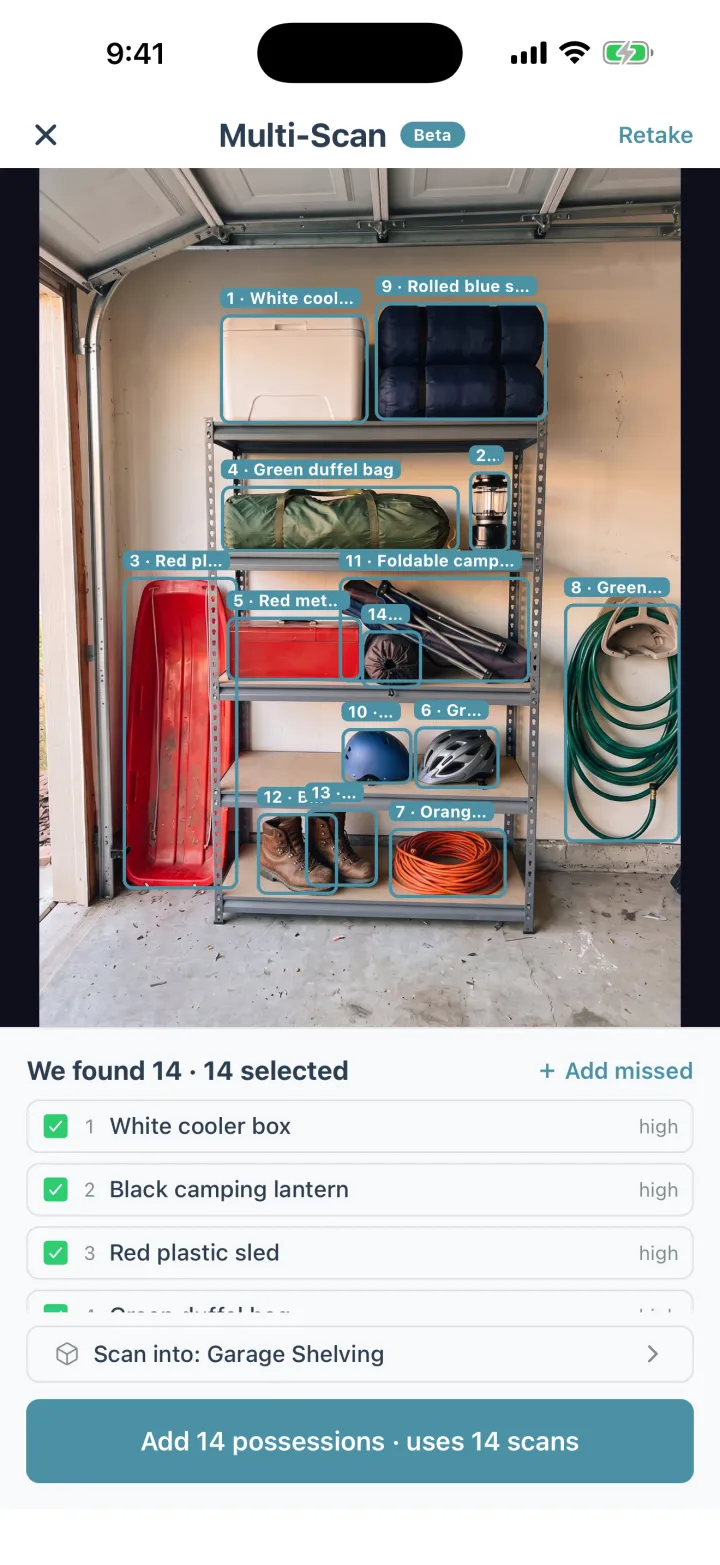
Multi-Scan names up to 15 possessions from one photo.
Each storage box is a Box container in the room where it lives, or the village can sit on a Shelf container if the boxes stay on one, and every box gets a permanent three-word name that survives a rename. A collection can gather every village piece into one list, wherever each one is packed, and you can check pieces off as they come out of their boxes. When an insurer asks for a list, a collection can be exported as a PDF.
Search draws on each possession's details and the container it's in, so searching for the bakery tells you which box it's in and which room that box is in. Next year, the missing lamp post is a search instead of an evening of opening boxes.
The short version
Start the list as the village comes out of its boxes, and photograph the display before it comes down. Take it down accessories first, lift every building by its base, and pack each piece in its own box with its small parts beside it. Store the boxes upright somewhere steady and dry with no weight on top, and keep a list of each piece, its box and where that box lives. Cratify is free to try.
Know which box the bakery is in
Photograph each village piece, add it to a collection, and search for it from your phone. Cratify is free to try.