How to Organize Recipe Cards and Cookbooks Before the Holidays
Gather every recipe into one place, sort by how you actually cook, protect the handwritten family cards, and plan the holiday menu from one list so you shop once.

On this page
It's a week before Thanksgiving and someone asks for the sweet potato recipe. You know exactly what it looks like: an index card in your mother's handwriting, a butter stain in one corner, "350 until bubbly" at the bottom. What you don't know is where it is. It might be in the recipe box on top of the fridge, tucked inside the red cookbook, taped to the inside of a cabinet door, or in a photo on your phone from three years ago that you'll never scroll back to.
Recipes scatter because they arrive from everywhere: cards from family, pages torn from magazines, printouts, cookbooks, and the screenshots you took mid-scroll. Organizing them isn't about a pretty system. It's about putting your hand on the one you need in the week you need it, and about not losing the handwritten ones for good. Here's how to do it in an afternoon.
Gather every recipe into one pile
Before you buy a recipe box or a binder, collect every recipe you have in one spot on the kitchen table. Check:
The recipe box, and whatever has slipped down behind it.
The insides of cookbooks, where loose cards and clippings hide between pages.
Kitchen drawers and the insides of cabinet doors.
Folders of printouts and magazine pages.
Your phone's photos and screenshots, and the recipe pages you bookmarked.
Don't sort yet. Just get it all into one place so you can see how much there is. Most people find more duplicates than they expect: the same pie recipe printed twice, a card and a clipping for the same chili.
Sort by how you actually cook
Alphabetical order looks tidy and fails in practice, because nobody plans a meal by thinking "C for cornbread." Sort into groups that match how you reach for recipes:
Holidays and occasions: Thanksgiving, the winter holidays, birthdays, the summer cookout.
Weeknight meals you make often.
Baking and desserts.
Want to try.
Family recipes, handwritten or inherited.
Then be honest about the want-to-try pile. A magazine page you've kept for five years without cooking from it can go. If you're not ready to let it go, give it a month: cook it or recycle it.
Duplicates are easier. Keep the version with the notes on it, like the card where someone crossed out a cup of sugar and wrote "3/4," and recycle the clean copy. The notes are the recipe as your family actually makes it, which is the version worth keeping.
Give each group one home
Recipe cards
Keep cards in one recipe box with a divider for each group. Store it in a cabinet away from the stove and the sink, since heat, steam and splashes are what fade ink and curl cards. Keep a few blank cards and a pen at the front so new recipes go straight in instead of onto the counter.
Clippings and printouts
Loose pages are the ones that wander. Put them in a three-ring binder with clear sheet protectors, one tab per group. Sheet protectors also mean you can wipe off a splash when the binder is open next to the mixing bowl.
Cookbooks
Shelve cookbooks together, close to where you cook but out of the splash zone. If shelf space is tight, keep the ones you actually cook from in the kitchen and move the rest to a bookshelf in another room. When a cookbook has only one or two recipes you use, write the book and page number on a card in the recipe box, so you don't have to remember which book it was. The guide to organizing a kitchen covers finding room for them without giving up a cabinet you need.
Digital recipes
Make one folder or album for recipe screenshots and bookmarks, with the same groups as your recipe box. Delete screenshots of recipes you already have on a card, so the folder only holds what lives nowhere else.
If a recipe exists only on a website, save it as a printout or a screenshot too. Pages move and sites close, and the version you cooked from last year can be gone by the time you go looking for it again in December.
Protect the handwritten ones
Handwritten family recipes are the ones you can't replace. A card in a grandparent's handwriting is part recipe and part keepsake, and every year next to the stove fades a little more of the ink.
Photograph each handwritten card, front and back, flat on a table in daylight, so notes on the back aren't lost.
Keep the originals out of the kitchen, in a recipe box or an envelope in a cool, dry closet.
Cook from a copy: a printout, a rewritten card or the photo on your phone.
Write down who each recipe came from on the back of the copy, while someone still remembers.
Share the photos with family before the holidays, so everyone who wants a copy has one.
If the cards live alongside old family photos, the guide to organizing old photos covers storing prints with the same care.
Plan the holiday menu from your list
Once every recipe has a home, holiday cooking gets easier. A week or two out, pull the recipes for the menu into one place: the cards, the binder pages and the cookbook page numbers. Read each one through and write down every ingredient and every dish it calls for, so you shop once instead of three times. If baking is part of the plan, the guide to organizing baking supplies before holiday baking starts covers the pans and pantry staples.
When the holiday is over, put each recipe back where it came from and write on it what you changed: "doubled it for 12 people," "needed 10 more minutes." Next year's cook will be glad of those notes.
Where an app helps
If you'd rather keep the list somewhere you can search from the grocery store, here's how it works in Cratify. The kitchen is a Room, the cabinet that holds the recipe box is a Cabinet container, and the recipe box is a Box inside it. Containers nest, so the Cabinet's view lists the possessions in it and in the Box, with totals.
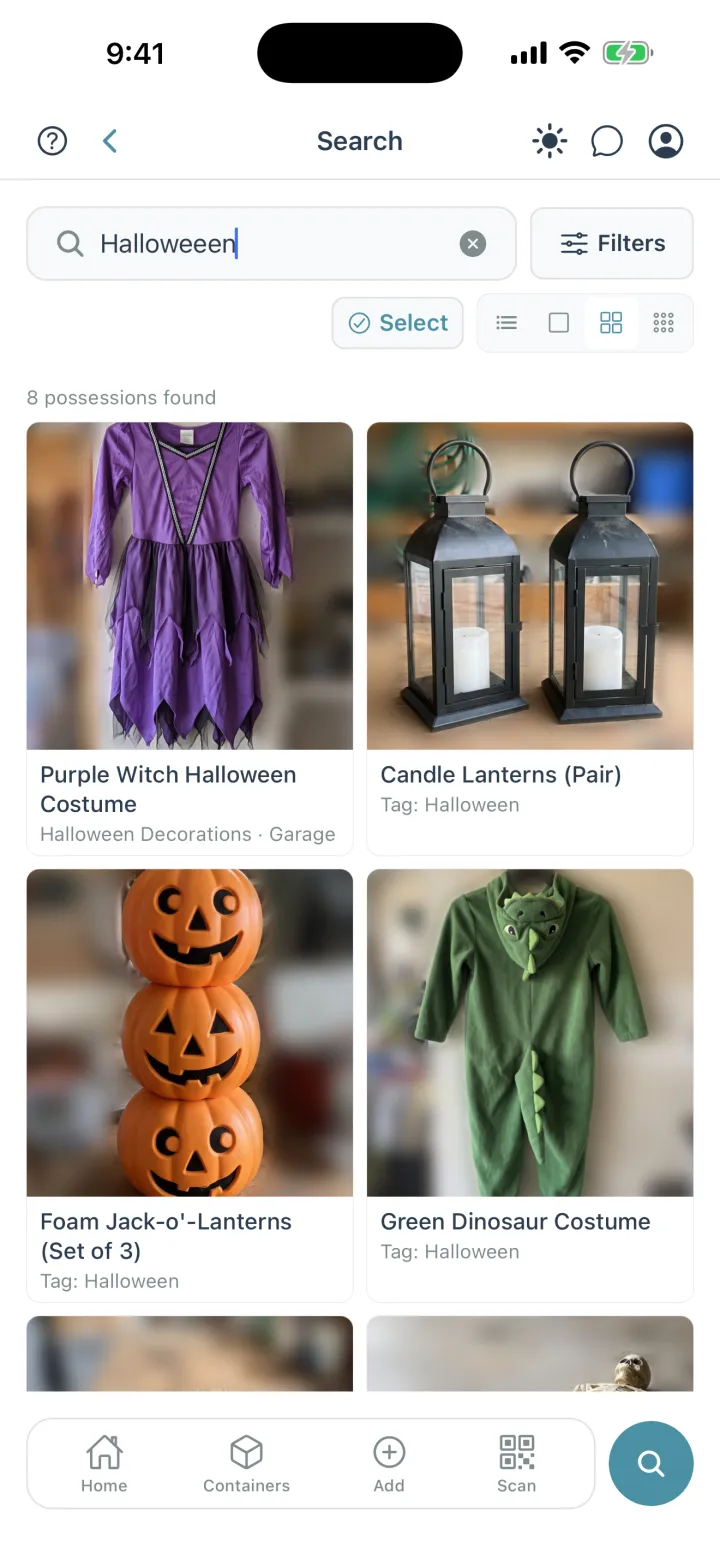
Search forgives typos: “Halloweeen” still finds every Halloween possession.
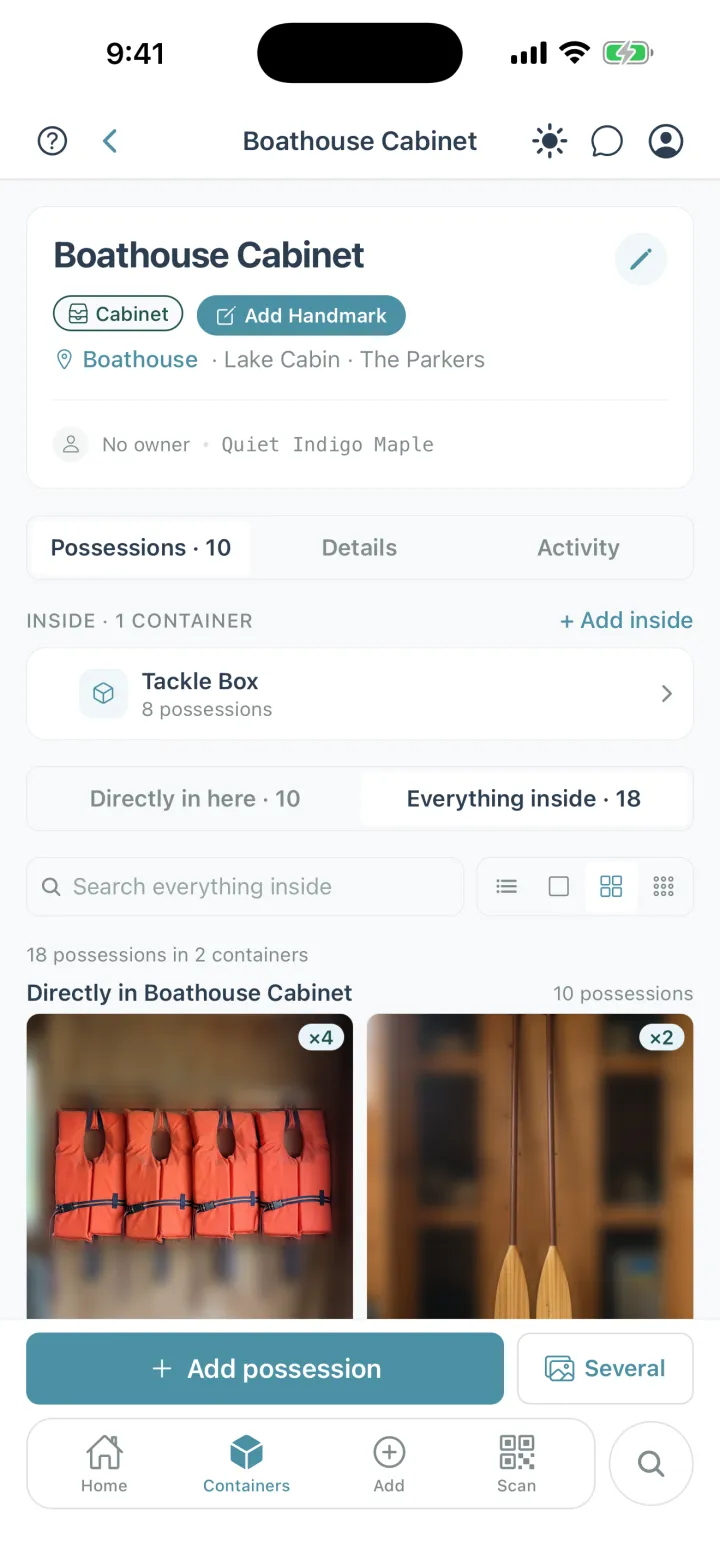
Containers inside containers, with everything inside listed.
Each handwritten card can be a Document possession with its photo, and each cookbook an Item. Photograph it, and AI identification suggests a name and category, with a confidence percentage on screen, so you can change the name to the dish, like Aunt Ruth's cornbread, before you save. Search draws on each possession's details and the container it lives in, so searching for cornbread tells you which Box the card is in. You can also save possession photos to your phone's gallery, which makes sharing them with family easy.
A Collection is a list that spans containers, with a check-off on each entry. Make one called Thanksgiving, add the cards and cookbooks for the menu, and check each one off as you pull it out.
The short version
Gather every recipe into one place, sort them by how you cook rather than alphabetically, and give cards, clippings, cookbooks and screenshots one home each. Photograph the handwritten family cards and cook from copies. Before the holidays, pull the menu's recipes into one list and shop once. Cratify is free to try.
Find the cornbread recipe in one search
Photograph your recipe cards and cookbooks, add the holiday menu to a Collection, and search by dish. Cratify is free to try.