Moving in Winter: How to Plan a Cold-Weather Move
Plan a winter move around daylight and a backup date, keep cold-sensitive possessions in the car, and pack a first-night box so the weather is the only surprise.

On this page
It's half past four on a January afternoon, the light is already going, and the truck is half loaded. Somebody packed the snow shovel. The box with everyone's gloves is under forty others, and the walk up to the new front door hasn't been cleared. No one has made a mistake yet, but every step from here takes longer than it should.
Moving in winter is very doable, and it has real advantages. It's a quieter season for many moving companies, so dates can be easier to book, and you aren't hauling a sofa in July heat. It just asks for more planning than a summer move: shorter days, weather that can cancel a date, and possessions that don't like the cold. Here's how to plan a winter move so the weather is the only surprise.
Pick a date, then pick a backup
Winter weather is the one part of the move you can't control, so plan for it instead of hoping. When you book a truck or a moving company, ask what happens if roads close or a storm is forecast: whether you can move the date, how much notice they need, and whether there's a fee.
Choose a main date and a backup date two or three days later.
Check the forecast for both homes and the route between them, starting a week out.
Plan the heaviest loading for the morning, while there's daylight and before afternoon temperatures drop.
If the trip is long, know where you'd stop overnight if conditions turn.
Short days are easy to forget until you're carrying a mattress down icy steps in the dark. Count back from sunset and plan to have the truck loaded with an hour of light to spare.
Set up both homes before moving day
At the new place
Ask for the heat, water and electricity to be on in your name at least a day before you arrive. Walking into a cold house with a truck to unload is miserable, and pipes in an unheated house can freeze. If you can get in early, check that the heat actually works.
Arrange for the walkway, driveway and front steps to be cleared and treated before the truck arrives. Leave a bag of ice melt and a shovel by the door, not in the truck.
At the old place
Keep the heat on until the last box is out. Lay down floor protection at both ends: old rugs, flattened cardboard or runners along the main path from the door. Wet boots on hardwood all day is how floors get scratched and stained. Put a mat and a spot for boots right inside each door so people can stamp off snow before they carry a box in.
Pack for the cold
What shouldn't freeze
A truck in winter is a cold, unheated room, sometimes for a full day or overnight. Some possessions handle that badly. Plan to carry these in your car, where the heat is on:
Liquids that can freeze and split their containers, such as paint, cleaning products and wine
Houseplants, which can be damaged by even a short trip in freezing air
Candles and other wax possessions, which can crack
Important documents, medication and possessions you'd hate to lose if a box got wet
Musical instruments, especially wooden ones, which don't like fast temperature changes
Everything else in the truck can handle the cold. The trick is deciding which list each possession goes on while you pack, not on moving morning.
Give electronics time to warm up
Televisions, computers and speakers that have been in a cold truck can collect condensation when they come into a warm house. Leave them in their boxes for a few hours after you unload, until they're at room temperature, before plugging them in.
Keep winter gear out of the boxes
The most common winter-move mistake is packing the very possessions you need on moving day. Set aside a basket for each person with coats, hats, gloves and spare socks, and don't let it go on the truck. Keep the shovel, ice melt, a flashlight and a set of towels for wet floors in the car too.
If you're moving between seasons, the guide to swapping summer and winter clothes helps you decide what to pack away and what to keep within reach.
Label every box for a fast unload
In winter, the door is open and the heat is pouring out the whole time you unload, so a fast unload matters more than usual. That depends on labels. The guide to labeling moving boxes covers the full system. For a winter move, add three steps:
Write the destination room on the side of every box, not just the top, so it's readable when boxes are stacked.
Mark every box that holds cold-sensitive possessions so it gets carried in first and goes straight to a warm room.
Number the boxes and keep a list, so you can check no box was left in the truck when the door finally closes.
Moving day, in order
A winter moving day goes better when everyone knows the order before the first box moves:
Clear and treat paths at the old home early in the morning, and lay down floor protection.
Load the truck, heaviest boxes and furniture first, while there's light.
Do a final walk-through of the old home with a flashlight, checking closets, the basement and the garage.
Drive the car with the cold-sensitive possessions and the winter gear ahead of the truck if you can.
At the new home, check the heat is on, clear the paths again and lay floor protection before unloading.
Unload the marked cold-sensitive boxes first, then everything else room by room.
Pack a first-night box
You'll arrive tired and cold, and the boxes you need are rarely the first ones off the truck. Pack one box that rides in the car and holds the first night:
Bedding and a warm layer for each person
Phone chargers and a power strip
Kettle or coffee maker, mugs and a few snacks
Toilet paper, soap, towels and a shower curtain
Basic tools: a screwdriver, a utility knife and tape
Medication and whatever a pet needs
The guide to what to unpack first after a move picks up from there, room by room.
Where an app helps
A paper list and a marker work fine for a winter move. If you'd rather know what's inside every box without opening it in a cold garage, here's how it looks in Cratify.
Photograph what goes into each box as you pack it, and AI identification fills in the details for each possession. Each box can carry a printed QR label, and QR label printing works on every plan, including the free Basic one. Scan a box when it comes off the truck and you'll see what's in it, without cutting the tape. Search draws on each possession's details and the box it's in, so "gloves" finds the box with the gloves.
You can also make the first-night box and the cold-sensitive list into collections, and check possessions off as they come out of the car. For the bigger picture of planning a move, the guide to organizing your home for a stress-free move walks through the weeks before.
The short version
Book a backup date and plan loading around daylight. Get the heat on at the new place, clear the paths at both ends and protect the floors. Carry liquids, plants, documents and instruments in the car, and let electronics warm up before you plug them in. Keep coats, gloves and the shovel out of the boxes, label every box on the side, and pack a first-night box that rides with you. Cratify is free to try.
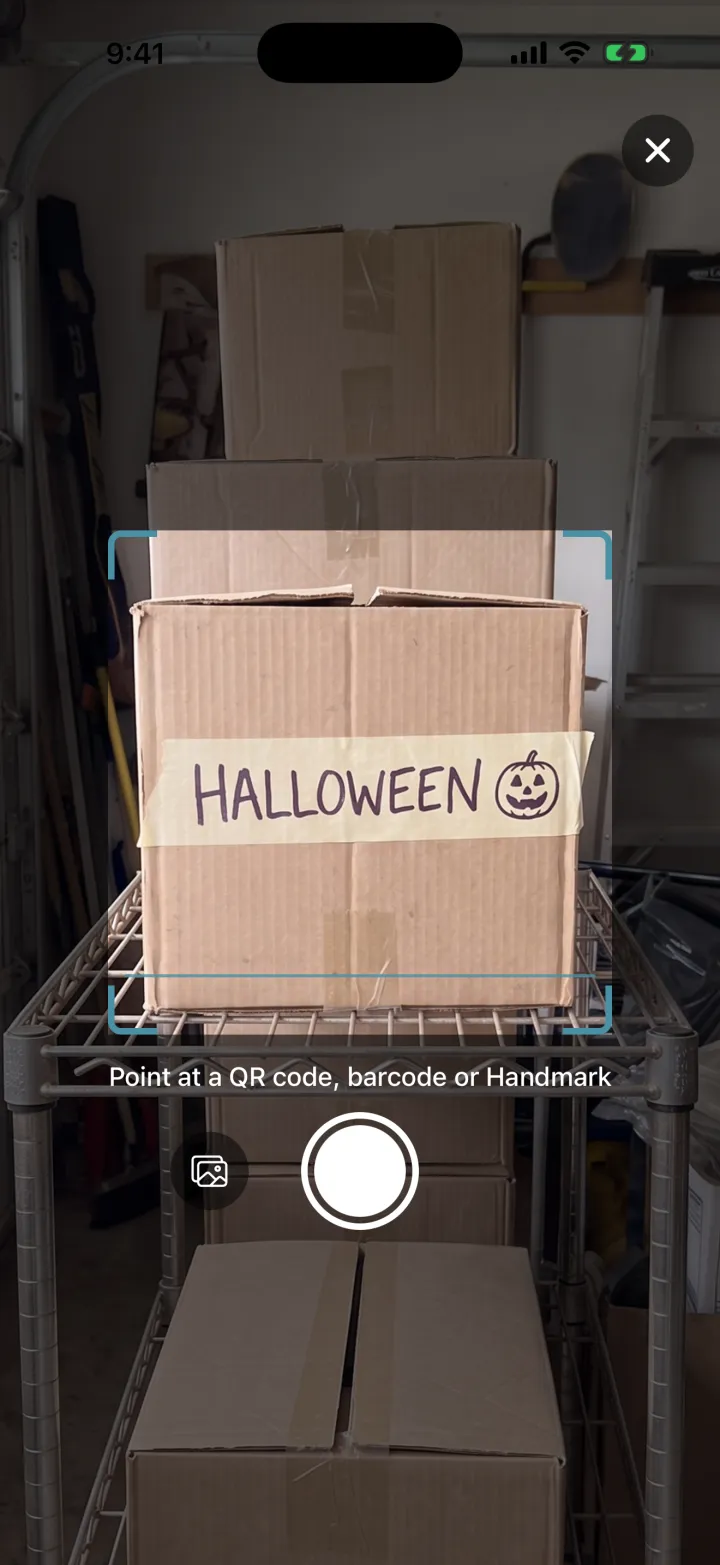
Scan reads QR labels, barcodes and what you already wrote on the box.
Know what's in every box before you open it
Photograph what goes into each box, print a QR label for it, and search when you unpack. Cratify is free to try.