What to Keep in Your Car for Winter
Keep a snow brush inside the car and one box in the trunk: jumper cables, a flashlight, a charger, warm layers, water, snacks, traction and first aid. Check it each fall.

On this page
It's the first real snow of the year, 6:40 in the morning, and the car is under three inches of it. The snow brush is in the garage, on the hook where it went in April. The ice scraper is somewhere under the passenger seat, or it was last winter. You clear the windshield with a sleeve and a library card and get to work late with wet cuffs.
A winter car kit fixes that morning, and it covers the worse ones too: the dead battery in a parking lot, the slide into a ditch on a back road, the two hours on a closed highway. Most of what belongs in it costs little and fits in one box in the trunk. The hard part is remembering what's in there, and what quietly left over the summer.
The short list
If you only do part of this, keep these in the car from November to March:
A snow brush and an ice scraper, kept inside the car rather than in the trunk, so you can reach them when the trunk is frozen shut.
Jumper cables, or a portable jump starter that's charged.
A flashlight with spare batteries.
A phone charging cable that fits the car, and a charged power bank.
A warm blanket, a hat, gloves, and boots or a pair of dry socks.
Water and a few shelf-stable snacks.
A small shovel and a bag of sand or cat litter for traction.
A basic first aid kit.
The rest of this guide is what to add for longer drives and colder places, how to pack the kit so it stays usable, and how to keep track of it from one winter to the next.
What to add for longer drives and colder places
If you drive rural roads, mountain passes or long stretches between towns, the kit grows. Pack for the version of the day where you sit in the car for three hours waiting for a tow.
Getting unstuck
Traction mats, which give a spinning tire a surface to bite.
A tow strap, so someone with a bigger vehicle can pull you out.
Reflective warning triangles, to make a stopped car visible on a dark shoulder.
Staying warm
A second blanket or a sleeping bag.
Chemical hand warmers.
A spare coat that stays in the car all season.
Staying seen and reachable
A bright cloth to tie to the antenna or a door handle.
A whistle.
A paper map of the area, for the stretch where the phone loses signal.
Your state's department of transportation or emergency management office usually publishes its own winter driving list, and it's worth a look for what's specific to where you live.
Pack it so it still works in February
Cold changes what a kit can do. A few habits keep it usable:
Batteries: cold drains them. Put fresh ones in each fall and keep the spares in their packaging.
Power bank: cold drains these too. Charge it indoors and bring it out to the car for long drives, or check it once a month.
Water: it can freeze and split a container. Use small bottles, leave a little air at the top, and swap them out in spring.
Snacks: granola bars, nuts and crackers hold up to cold. Chocolate and soft fruit can go in when you pack for a trip.
First aid kit: check the expiry dates on what's inside.
Washer fluid: keep a spare jug rated for freezing temperatures, because summer fluid can freeze in the lines.
Put the kit in one box or a sturdy duffel with a lid or a zipper, so it doesn't spill across the trunk on the first sharp turn. A list of what's inside, taped to the lid, saves you emptying the whole box at the side of the road to find the flashlight.
One more habit: keep the gas tank at least half full through the winter. It gives you heat and range if you're stuck, and it keeps some distance between you and an empty tank on a cold night.
If you do get stuck
The kit only helps if you know what to do with it. The standard advice from winter safety agencies is consistent:
Stay with the car unless help is clearly close by. A car is easier to find than a person on foot.
Make the car visible: hazard lights, the bright cloth on the antenna, and the triangles behind you if it's safe to set them out.
Run the engine about 10 minutes each hour for heat, and keep the exhaust pipe clear of snow so fumes can't build up inside.
Crack a window a little while the engine runs, and use the blankets and hand warmers between runs.
Your local emergency management office can tell you what applies where you drive.
Where the kit lives the rest of the year
In April the snow brush, the shovel and the traction sand come out of the car, and that's where kits go missing. The shovel lands in the garage. The blanket goes to the couch. The jumper cables get lent to a neighbor and stay at the neighbor's.
Give the off-season kit one home: a shelf in the garage, labeled, with the leftovers from the car in the same box. The guide to organizing a garage so the car fits covers making room for seasonal gear like this. If the cables or the jump starter go out on loan, write down who has them; keeping track of what you lend out covers that habit.
If the household already keeps an emergency supply at home, the car kit is its traveling half. The guide to organizing emergency supplies covers the home side, and the two lists are worth checking on the same day each fall.
Check it each fall
Pick a day in October or early November, the same weekend you swap the summer and winter clothes, and go through the kit:
Test the flashlight and put in fresh batteries.
Charge the jump starter and the power bank.
Replace the water and the snacks.
Restock the first aid kit and replace what has expired.
Put the snow brush and the scraper back inside the car.
Top up the washer fluid with a winter-rated mix.
It's twenty minutes once a year, and it decides how the first snow morning goes.
Where an app helps
If you'd rather keep the kit list somewhere other than the inside of a box lid, here's how it works in Cratify. Locations can take a custom name, so the car can be its own location, and the kit box in the trunk is a container in it.
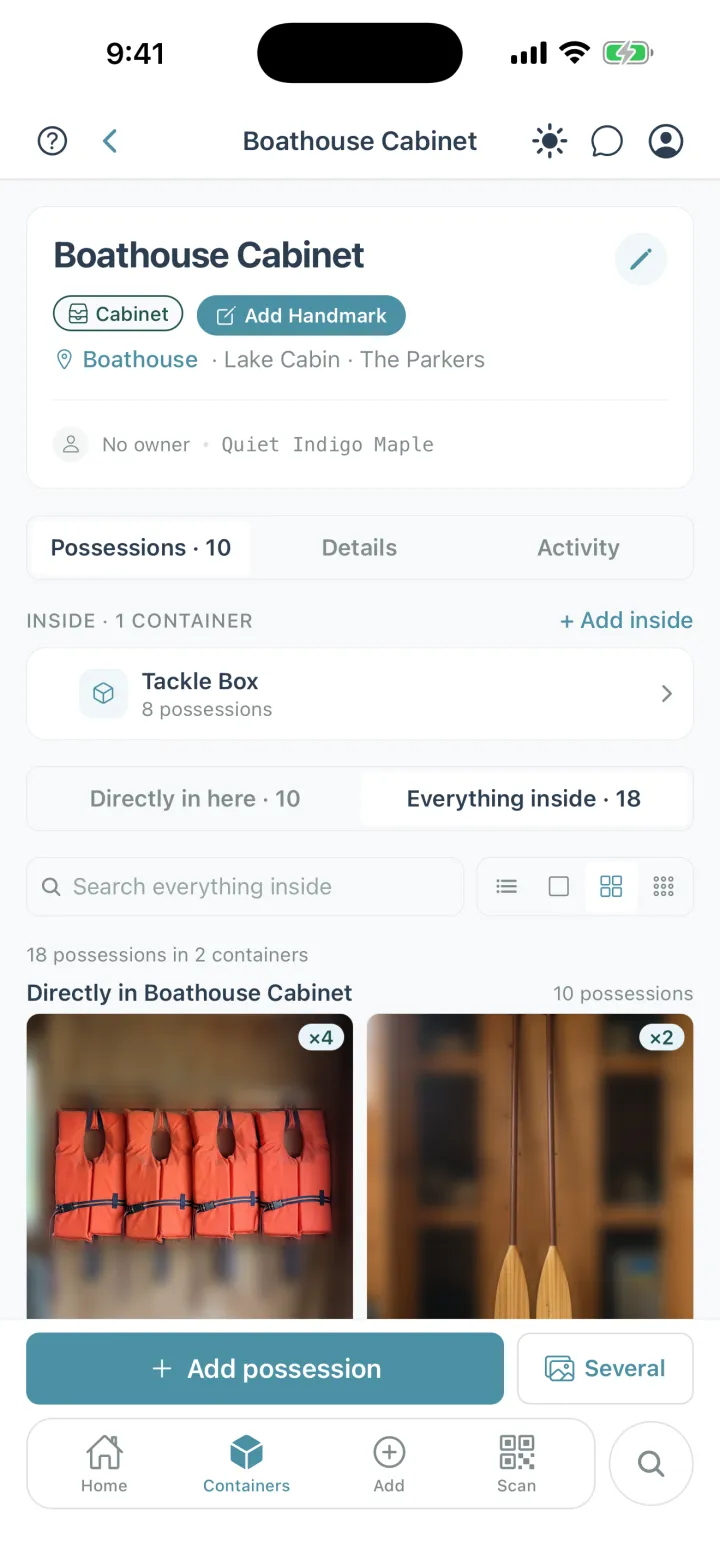
Containers inside containers, with everything inside listed.
Photograph each piece and AI identification fills in a name and category, with a confidence percentage on screen so you can correct either before you save. The water, the snacks and the hand warmers can be Consumables, with a quantity, a unit and a note for when to restock. When the jumper cables go out on loan, mark them temporarily removed, with a note saying who has them.
Search draws on each possession's details and the container it's in, so searching for the tow strap tells you whether it's in the car or the garage. A Collection is a list that spans every container, with a check-off on each entry: make one called fall car kit check, and work through it each October.
The short version
Keep a snow brush and a scraper inside the car, and one box in the trunk with jumper cables, a flashlight, a charger, warm layers, water, snacks, traction and a first aid kit. Add traction mats, a tow strap and extra warmth if you drive long or remote roads. Check the batteries, water and snacks each fall, keep the tank at least half full, and give the kit one home for the summer so it's all there when the first snow comes. Cratify is free to try.
Know what's in the car kit before you need it
Photograph each piece of the kit, file it in the box it lives in, and check it off each fall. Cratify is free to try.