How to Organize Jewelry So Necklaces Stop Tangling
Gather every piece, untangle and sort it, store each type by its shape, protect silver and soft stones, and keep a short record of the pieces that matter.
On this page
It's ten minutes before you need to leave, and the necklace you want is at the bottom of the dish on the dresser, knotted into two others. One earring of the pair you're after is there. The other is in last winter's coat pocket, or the travel pouch from August, or gone.
Organizing jewelry comes down to four jobs: sorting what you actually have, storing each type of piece in a way that suits its shape, protecting the pieces that tarnish or scratch, and keeping a short record of the ones that matter. Here's how to do each, starting with the tangle.
Start by getting every piece in one place
Jewelry spreads. A dish on the dresser, a drawer in the bathroom, the cup holder in the car, two travel pouches and a coat pocket. Before buying a single tray, collect all of it onto a towel on a table where it can stay out for an hour.
Then sort it into four piles:
Wear: pieces you've worn in the last few months.
Keep: pieces you don't wear often but want to hold on to, including inherited or sentimental ones.
Fix: broken clasps, single earrings, loose stones and chains too knotted to wear.
Let go: pieces you don't like, that don't fit, and that you wouldn't miss.
The fix pile is the one that usually lives at the bottom of a dish for years. Put it in a small labeled pouch now, and pick a date to take it to a jeweler or to sort through the singles.
Untangle chains before you store them
A knotted chain only gets worse in storage. Untangle each one before it goes anywhere:
Lay the chain flat on a hard surface and loosen the knot with two pins, working from the outside in.
If the knot is tight, a drop of baby oil or a little baby powder helps the links slide. Wipe the chain clean afterward.
Fasten the clasp before you put it away. A closed chain is far less likely to knot again.
Store each type by its shape
Most jewelry storage fails because it treats every piece the same. A necklace wants to hang, a ring wants a slot, and earrings want to stay in pairs.
Necklaces and chains
Hang them. A few hooks on the inside of a closet door or a short bar on the wall keep each chain separate and visible. If they have to lie down, lay each one flat in its own section of a lined drawer with the clasp fastened, or thread one end through a drinking straw cut to length so it can't knot.
Earrings
Keep pairs together. Studs go in a tray with small square sections, or pushed through a strip of felt or a piece of card. Hooks and hoops hang well along the edge of a small divider or on a fine mesh screen. Put single earrings in the fix pouch rather than back in the tray, or they slowly crowd out the pairs.
Rings
Rings sit best in a ring roll or a tray with slotted foam, one per slot, so stones don't rub against metal.
Bracelets and watches
Bangles stack on a short upright post or lie flat in a shallow section. Watches rest best on a soft cushion with the clasp closed, out of direct sun.
Brooches, pins and cufflinks
These are small, sharp and easy to lose. Give them a lidded section of their own so a pin can't snag a chain.
Store it where you get ready
Where the jewelry lives matters as much as what it's stored in. Keep the everyday pieces where you get dressed: one shallow tray on the dresser or an insert in the top drawer, sized so every piece is visible at a glance. If you can't see it, you won't wear it.
Pieces you keep but rarely wear can go one step further away, in a lined jewelry box on a closet shelf or a drawer you open once a month. Sentimental and high-value pieces can be separate again, in a case or a small safe, wherever you keep important papers.
The guide to organizing a closet covers clearing shelf space for a jewelry box and putting hooks to work on the inside of the door.
Protect what tarnishes and scratches
Air, moisture and other jewelry are what wear pieces down in a drawer.
Sterling silver tarnishes in open air. Store it in a small sealed pouch or a lined section with an anti-tarnish strip, and keep it out of the bathroom, where humidity speeds tarnish up.
Pearls, opals and other soft stones scratch easily against harder ones. Store them apart from other pieces, in a soft pouch, and ask a jeweler how they should be cared for.
Diamonds and other hard stones scratch metal and softer stones, so give them their own sections too.
Costume jewelry can lose its plating to moisture. Keep it dry, and take it off before swimming or showering.
When in doubt, follow the care card that came with a piece, or ask the jeweler who sold it.
Packing jewelry for a trip
Most lost earrings are lost between home and a hotel. For a trip, pack only what you'll wear, in a small roll or zip pouch with separate sections. Fasten every chain, and push stud earrings through a piece of card so the backs stay on. When you get home, put each piece straight back where it lives, not in a dish by the door.
Keep a short record of the pieces that matter
For everyday pieces, knowing where they live is enough. For the ones that would be hard to replace, a short record helps when a ring goes to be resized, when a necklace is lent for a wedding, or when you need to know what you own. For each one, note:
A clear photo, plus a second photo of any stamp or hallmark
What it is and what it's made of
Where it's stored
Who it belongs to, or who it's meant for one day
The receipt or appraisal, if you have one, and its date
Who has it, if it's been lent out or is at the jeweler's
The guide to photographing possessions for a home inventory covers getting a clear shot of small pieces.
Where an app helps
A notebook and your phone's camera roll do this job. If you'd rather the record say where each piece is stored and who it belongs to, here's how it works in Cratify.
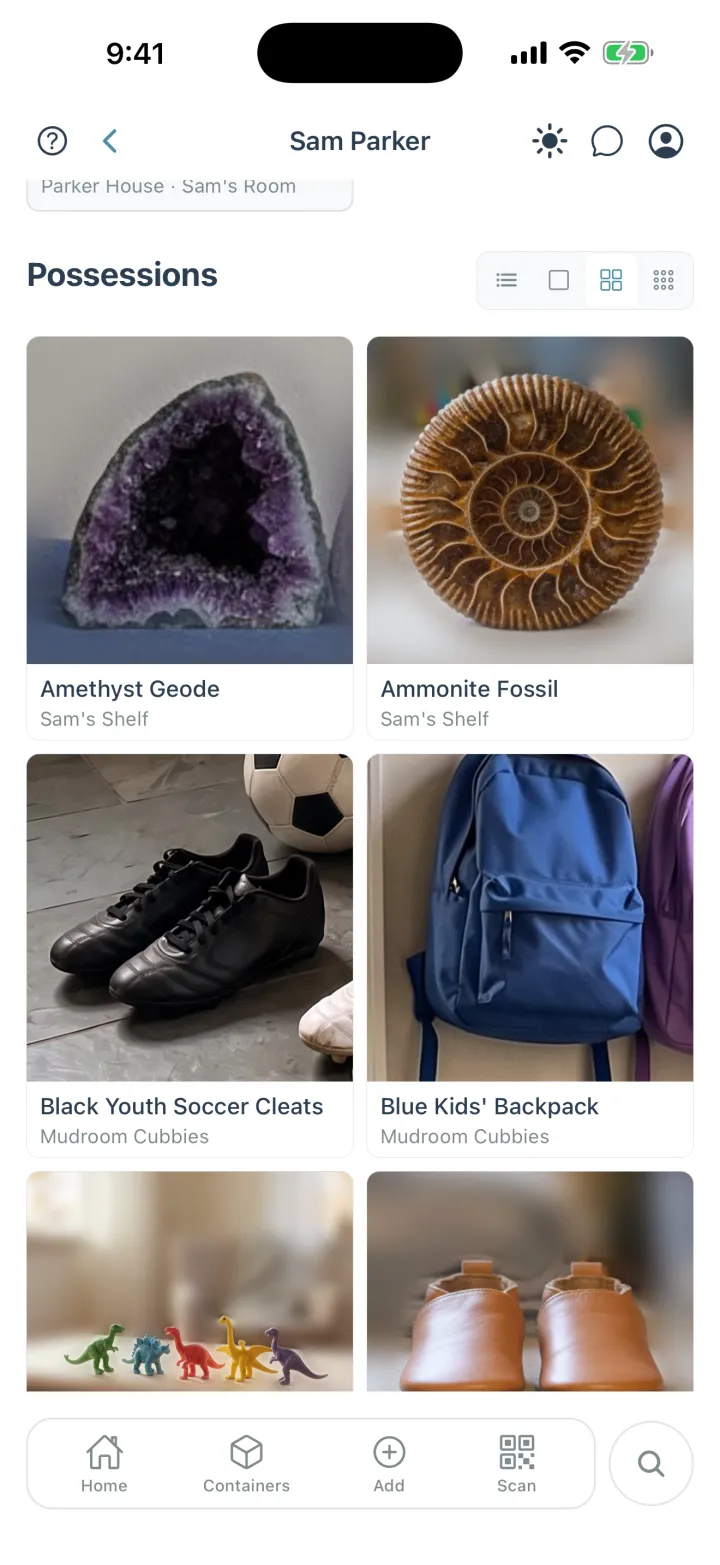
Each person gets a page with what's theirs, kids included.
Each piece can be its own possession inside the container that holds it: the everyday tray in the dresser drawer, the jewelry box on the closet shelf, the case where the inherited pieces are kept. Photograph a ring and AI identification fills in a name and category, with a confidence percentage on screen so you can correct either before you save. A possession can be marked Fragile or Expensive, and a receipt can be saved as its own possession with the amount and the purchase date.
Each possession can be set to belong to a person, so it's clear whose pieces are whose. A Collection is a list that spans every container, with a check-off on each entry: make one for a trip, and check each piece off as it goes back where it lives. Search draws on each possession's details and the container it's in, so searching for the silver hoops tells you which drawer to open.
If you're buying jewelry as gifts this season, the guide to keeping track of gifts you buy early covers hiding them somewhere you'll remember in December.
The short version
Get every piece in one place and sort it into wear, keep, fix and let go. Untangle chains and fasten the clasps. Hang necklaces, keep earrings in pairs, give rings their own slots and small pieces their own sections. Keep the everyday pieces where you get dressed and the rest one step further away, protect silver and soft stones, and write down where the pieces that matter are kept, so the ten minutes before you leave go to getting ready instead of the search. Cratify is free to try.
Know which drawer the silver hoops are in
Photograph each piece, file it in the container that holds it, and set who it belongs to. Cratify is free to try.