How to Store Golf Clubs for Winter
Clean the clubs and grips, dry the bag and headcovers, empty every pocket, store the set upright somewhere steady and dry, and write down where the extras went for spring.

On this page
The first warm Saturday in April, the tee time is at eight, and the golf bag comes out of the garage corner where it went in October. The grips are slick and a little tacky. There's an orange spot on the 7-iron. One glove has dried into the shape of a claw, the rangefinder won't turn on, and the towel clipped to the bag still smells like the last round of the year.
Storing golf clubs for winter comes down to five jobs: cleaning the clubs and grips, drying the clubs and the bag completely, emptying every pocket, choosing a spot with steady temperature and low humidity, and writing down where the extras went. None of it takes more than an afternoon. Here's how to do each, in the order it has to be done.
Clean the clubs before they go away
Dirt left in the grooves holds moisture against the steel all winter, and moisture is what turns into rust. Fill a bucket with warm water and a squirt of dish soap, and work through the set one club at a time.
Irons and wedges: dip only the heads, scrub the faces and grooves with a soft brush, and dry them right away with a towel.
Woods and hybrids: wipe the heads with a damp cloth rather than dunking them, then dry them.
Putter: wipe it down and dry it. It's the club that spends the most time in the bag and the least time getting cleaned.
Shafts: wipe each one from grip to head. On steel, look for small rust spots. On graphite, look for chips or splintering near the head.
Keep the water off the ferrule, the small collar where the shaft meets the head. Soaking it is how water gets into the joint.
The grips
Grips collect sweat, sunscreen and dirt all season, and that film is why they feel slick in spring. Scrub each grip with warm soapy water and a soft brush, rinse it with a damp cloth, and towel it dry. Then look at them in good light. A grip that's shiny, cracked or hard in the spot where your hands go is worn out, and winter is the easy time to replace it, before the first round instead of after a bad one.
Dry it all, including the bag
A club that goes into storage damp comes out with rust, and a bag that goes in damp comes out with mildew. Give drying a full day:
Leave the clubs out of the bag overnight after cleaning, standing upright or laid flat on a towel.
Open every pocket on the bag, turn it upside down, and shake it out. Leave the pockets open to air.
Wash the headcovers if the care label allows it, and let them dry completely. A damp headcover holds moisture against a clubhead for months.
Wash the bag towel and dry it before it goes back on the clip.
Clean the golf shoes, pull out the insoles, and pack the shoes with newspaper so they hold their shape and dry from the inside.
The clubs go back in the bag only when the bag is dry all the way to the bottom.
Empty every pocket
Golf bags have more pockets than anyone uses, and each one collects a season's worth of small possessions. Empty them all onto a table and sort what comes out:
Balls: count them, set aside the scuffed and cut ones, and keep the good ones together in one box.
Tees, ball markers and divot tools: one small box or zip bag, so they all come back together in spring.
Gloves: a glove that has dried stiff and cracked won't recover. Keep the good ones flat in a zip bag, out of the sun.
Rain jacket, rain pants and umbrella: dry them fully before they go anywhere.
Sunscreen, bug spray, snacks and drinks: out. A winter of freezing and thawing is how a sunscreen bottle splits inside a pocket.
Batteries: take them out of a rangefinder, GPS unit or speaker that will sit unused for months, so a battery can't leak into the contacts.
Pockets are also where the season's receipts, scorecards and the ball marker you thought you'd lost turn up. Keep the receipts.
Choose a spot with steady temperature and low humidity
What clubs need over a winter is simple to say and harder to find: steady temperature, low humidity, upright, and off the floor.
Inside the house is best
A hall closet, the back of a bedroom closet, under the stairs or a corner of a spare room all work. Indoor air stays at roughly the same temperature all winter, which is the condition that protects grips, shafts and the glue that holds them together.
A garage or shed can work, with care
If the clubs have to live in the garage or shed, keep them off the concrete, which draws moisture up into whatever sits on it. Stand the bag on a shelf, a pallet or a wall rack, against an inside wall rather than an outside one, and away from the door that lets the cold in. Cover it with a breathable cover or an old sheet, not a plastic bag that traps condensation. The guide to organizing a shed covers getting the wall space and shelves to hold the rest.
Never the car trunk
The trunk is where a lot of golf bags spend the winter, and it's the worst place for them. A closed car swings from cold to hot and back, heat can weaken the glue under grips and inside clubheads, the clubs knock against each other on every turn, and a bag in a trunk is an easy target for theft.
Keep the golf extras in one place
The clubs are the easy part. The extras are what scatter: the push cart, the travel bag, the practice net, the second pair of golf shoes, the spare gloves, the box of new balls you bought on sale.
Give them one shelf or one labeled box, close to wherever the bag lives. Fold the push cart and hang it or stand it next to the bag. Store the travel bag empty, with the clubs' headcovers zipped inside it so they don't wander. This is the same approach as storing a bike for winter, and the guide to storing summer gear for winter covers the rest of the warm-weather gear that goes away at the same time.
Write down where it all went
In April you'll want the clubs, and you'll also want the rain jacket, the new balls, the second glove and the battery charger. Write down, for each one:
What it is, with a photo
Where it's stored: which closet, which shelf, which box and which room
Whose it is, if more than one person in the house plays
The receipt and purchase date, if it was expensive, like a driver or a full set
A note on your phone works, as long as it's the same note every year.
Where an app helps
If you'd rather the record show where each piece of golf gear is and whose it is, here's how it works in Cratify. The hall closet is a container (Closet is one of the container types), and so are the shelf in the garage and the box of tees and balls on it, each in the room it sits in.
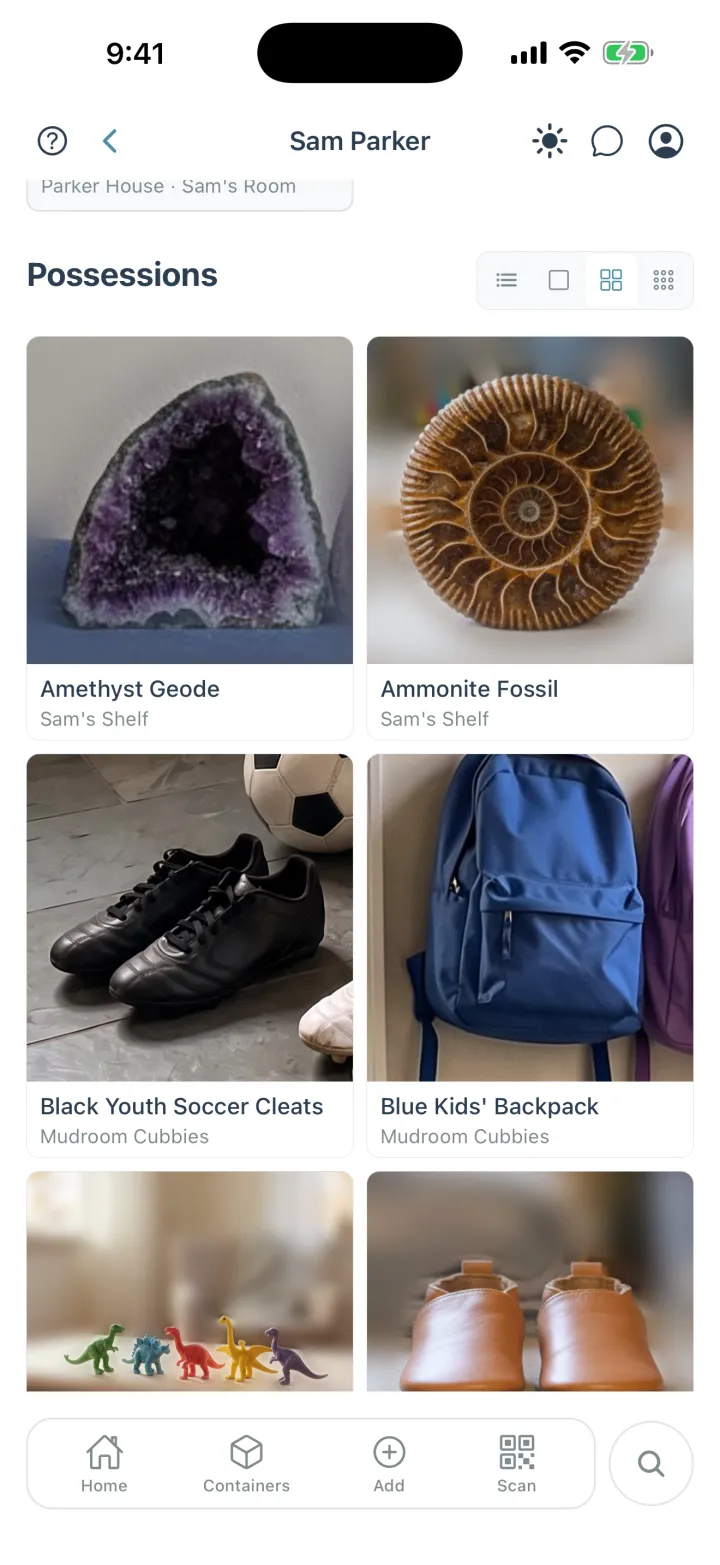
Each person gets a page with what's theirs, kids included.
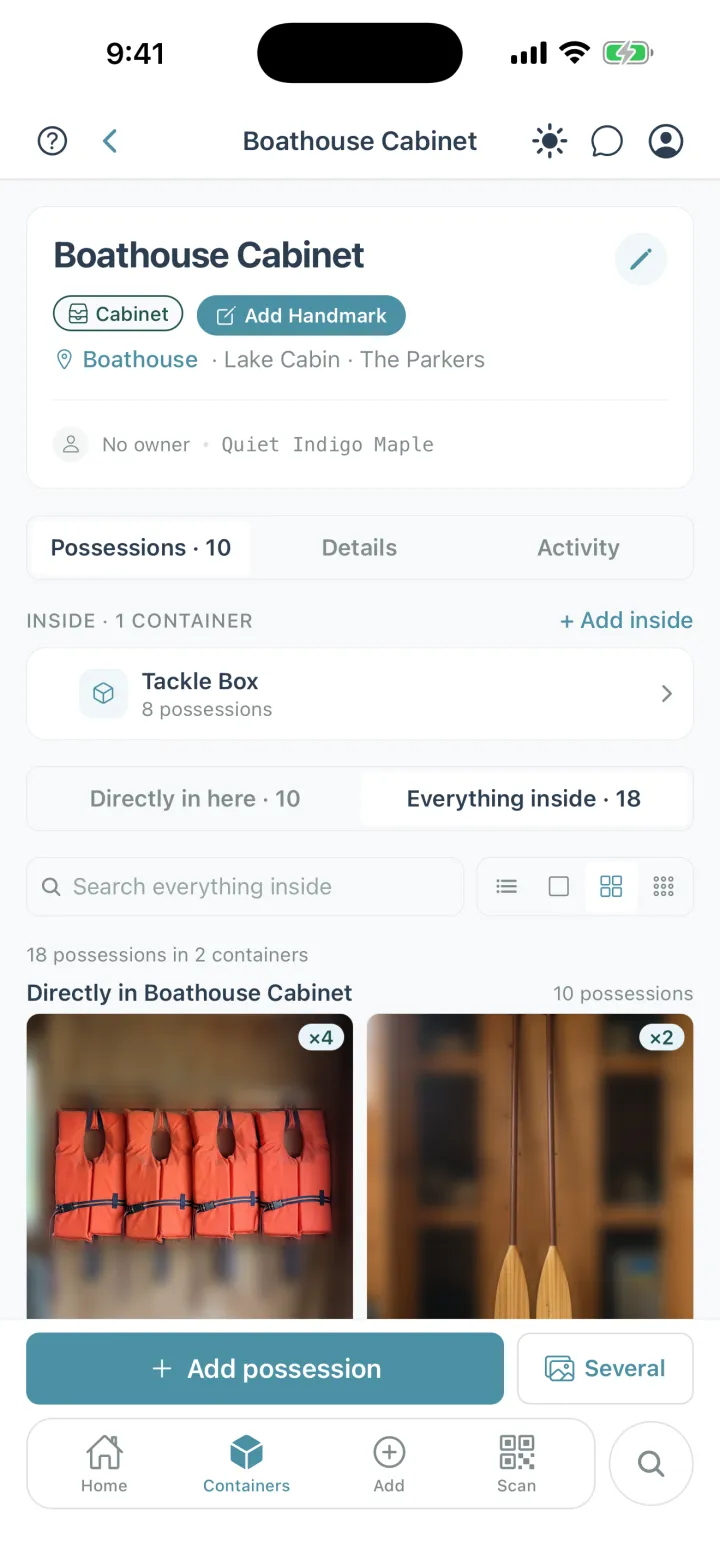
Containers inside containers, with everything inside listed.
Photograph a club and AI identification fills in a name and category, with a confidence percentage on screen so you can correct either before you save. A possession can carry a quantity, so the new balls are one entry instead of 20. Each possession can be set to belong to a person, including a child, so a junior set lands on the right list. A receipt can be saved as its own possession with the amount and the purchase date.
Search draws on each possession's details and the container it's in, so in April, searching for the rain jacket tells you which box to open. A Collection is a list that spans every container, with a check-off on each entry: make one called first round, and check each piece off as it goes back in the bag.
Getting them out in spring
When the season comes back, give the clubs 10 minutes before the first round:
Check the grips for cracks or tackiness, and wipe them down.
Look over the heads and shafts for rust spots that started over the winter.
Put the batteries back in the rangefinder and charge the devices that need it.
Restock the bag from the box of extras, so the spare gloves and balls aren't still on the shelf at the first tee.
The short version
Clean the clubs and grips, dry the clubs, bag and headcovers completely, and empty every pocket. Store the bag upright, off the floor, somewhere with steady temperature and low humidity, ideally inside the house and never in the trunk. Keep the extras together on one shelf, and write down where they went, so the first warm Saturday goes to the round instead of the search. Cratify is free to try.
Know which shelf the golf gear is on
Photograph each club and extra, file it in the closet or box that holds it, and set whose it is. Cratify is free to try.