How to Store Leftover Paint So It's Still Good for Touch-Ups
Keep latex paint from freezing, seal every lid airtight, label each can with the room, color and sheen, and know when an old can is past saving and where it should go.

On this page
It's the first cold week of November, and the touch-up you've been putting off is a scuff on the hallway wall. The paint is in the garage, on the shelf above the mower, in one of six cans with dried drips down the side and no label you can read. You pry open the likeliest one. It's lumpy, it smells sour, and you're no longer sure it was the hallway color anyway.
Leftover paint goes bad in a few predictable ways. It freezes in the garage, it dries out under a lid that was never sealed, or it outlives the only record of what color it was. Here's how to store paint so it's still usable when you need it, how to label it so you know which wall it belongs to, how to tell whether an old can is still good, and what to do with the cans you don't need.
Sort the cans before winter
Pull every can of paint, primer and stain into one place, along with the spray cans and the jars of thinner. Go through them in daylight and make three groups:
Paint you can identify and still want for touch-ups
Paint with no label, no matching wall, or no room it belongs to anymore
Cans that are rusted through, nearly empty, or already solid
Most households find more of the second group than the first. Those cans are only worth keeping if you can work out what they are, which usually means opening the lid and holding a stir stick against each wall. If a can doesn't match a wall in the house, it's a disposal question, covered below. If the garage is where the cans piled up in the first place, the guide to organizing a garage so you can park in it covers the rest of that shelf.
Keep latex paint from freezing
Water-based latex paint, which is most interior wall paint, can be ruined by freezing. A can that freezes and thaws can turn lumpy or stringy, and it won't go back to a smooth finish however long you stir it. That's why the garage, the usual home for paint, is often the wrong place for it from November to March in a cold climate. An unheated shed is worse.
Store latex paint somewhere that stays above freezing and out of summer heat: an interior closet, a utility room, or a basement shelf. The label on the can usually gives a storage temperature range, so check it. Keep cans off concrete floors, where they sit colder and the bottoms rust, and out of direct sun.
If your basement runs damp, a shelf off the floor matters even more, and the guide to organizing a basement covers keeping the space dry enough for storage.
Oil-based paint, stains and thinners
Oil-based paint, many stains, mineral spirits and spray paint are flammable. Store them away from a furnace, a water heater, a dryer or any appliance with a pilot light, in their original containers with the lids on tight, and read the warnings printed on each can. If you rent a storage unit, check its rules before moving paint there, since many facilities don't allow flammable liquids. The guide to what not to put in a storage unit covers the rest of that list.
Seal the lid so it stays airtight
Air is what turns a half-full can into a solid one. The more empty space in the can and the worse the seal, the faster a skin forms on top.
Wipe the rim and the groove of the can clean before you close it. Dried paint in the groove is what stops a lid from seating.
Lay a sheet of plastic wrap over the opening, then set the lid on top of it.
Tap the lid down all the way around with a rubber mallet, or with a hammer over a block of wood so you don't dent the rim.
Write the date on the lid.
Some painters store a sealed can upside down so the paint itself seals the gap around the lid. Only try it once the lid is fully seated, and stand the can on a tray in case it isn't.
Move small amounts into a smaller container
A gallon can holding an inch of paint is mostly air. Pour leftovers of a quart or less into a clean glass jar or a small plastic container with a tight lid, filled as close to the top as you can. It takes up less shelf space, keeps better, and you can see the color through the glass. Label it the same way you'd label the original can.
Label every can with where the paint went
The most useful part of a paint can isn't the paint. It's the record of which wall it's on. Six months after a project, "soft gray" means very little if you used two grays in two finishes.
Write these on the lid and on the side of the can in permanent marker:
The room, and which surface: walls, trim, ceiling, a door or an accent wall
The color name and number
The sheen: flat, matte, eggshell, satin, semi-gloss or gloss
The date you opened it
Roughly how much is left
Brush a small swatch on the lid too, so you can see the real color at a glance. If the paint was mixed to order, the printed label on the lid lists the color formula. Photograph it before drips cover it, because that formula is what lets a store mix the same color again once the can is gone.
Keep a list of paint by room somewhere other than the cans: a note on your phone or a page in the house binder. When a can goes bad or gets used up, the color record survives it.
Check whether old paint is still good
Before you use a can that has sat for a while, open it and stir it for a few minutes. It's usually still good if it stirs back to a smooth, even liquid. It's done if:
It smells sour or rotten rather than like paint
Lumps or strings remain after a thorough stir
It has set into a rubbery or solid mass
A thin skin on top is normal. Lift it off in one piece, then pour the rest through a paint strainer into a clean container. When you're unsure, brush a little onto a piece of cardboard and let it dry. If it dries smooth and matches the wall, it's fine for touch-ups. If it's grainy, it isn't.
What to do with paint you don't need
Paint disposal rules depend on where you live, so check your city or county's household waste page before you start. In general:
Never pour paint down a sink, a toilet or a storm drain
Small amounts of latex paint can often be dried out and thrown away once solid: leave the lid off in a ventilated spot away from children and pets, or stir in cat litter or a paint hardener, then follow your local rules for the can
Oil-based paint, stains, thinners and spray paint usually go to a household hazardous waste collection
Some areas run paint drop-off programs, sometimes at paint retailers
Usable paint can go to someone who'll use it. Neighbors, community theaters, schools and reuse stores sometimes take full or nearly full cans, especially neutral colors. Ask first, since not every group can accept paint.
Where an app helps
A marker on the lid and a list on your phone will do the job. If you'd like the list and the shelf in one place, here's how it works in Cratify.
Every can of paint can be its own possession, inside the container it sits on, such as a shelf in the basement. Photograph the can and AI identification fills in its name and category, with a confidence percentage on screen so you can correct either. Several mode takes up to 20 photos in one batch, enough for a full shelf of cans. The Consumable type carries a quantity, a unit and a restock-when-below note, so "about a quart left" has a place to go, and you can flag oil-based cans and thinners as Flammable.
Add a photo of the lid label and write the room, the surface, the sheen and the color formula into the description. Search draws on each possession's details and the container it's in, so a search for the hallway trim color can lead you to the right can on the right shelf.
The short version
Sort the cans before winter and keep only the paint you can match to a wall. Store latex paint where it won't freeze, and keep oil-based paint and thinners away from pilot lights. Clean the rim, seal the lid, and label each can with the room, the color, the sheen and the date. Check old paint with a stir and a test swatch, and take what you don't need to the right place for your area. Cratify is free to try.
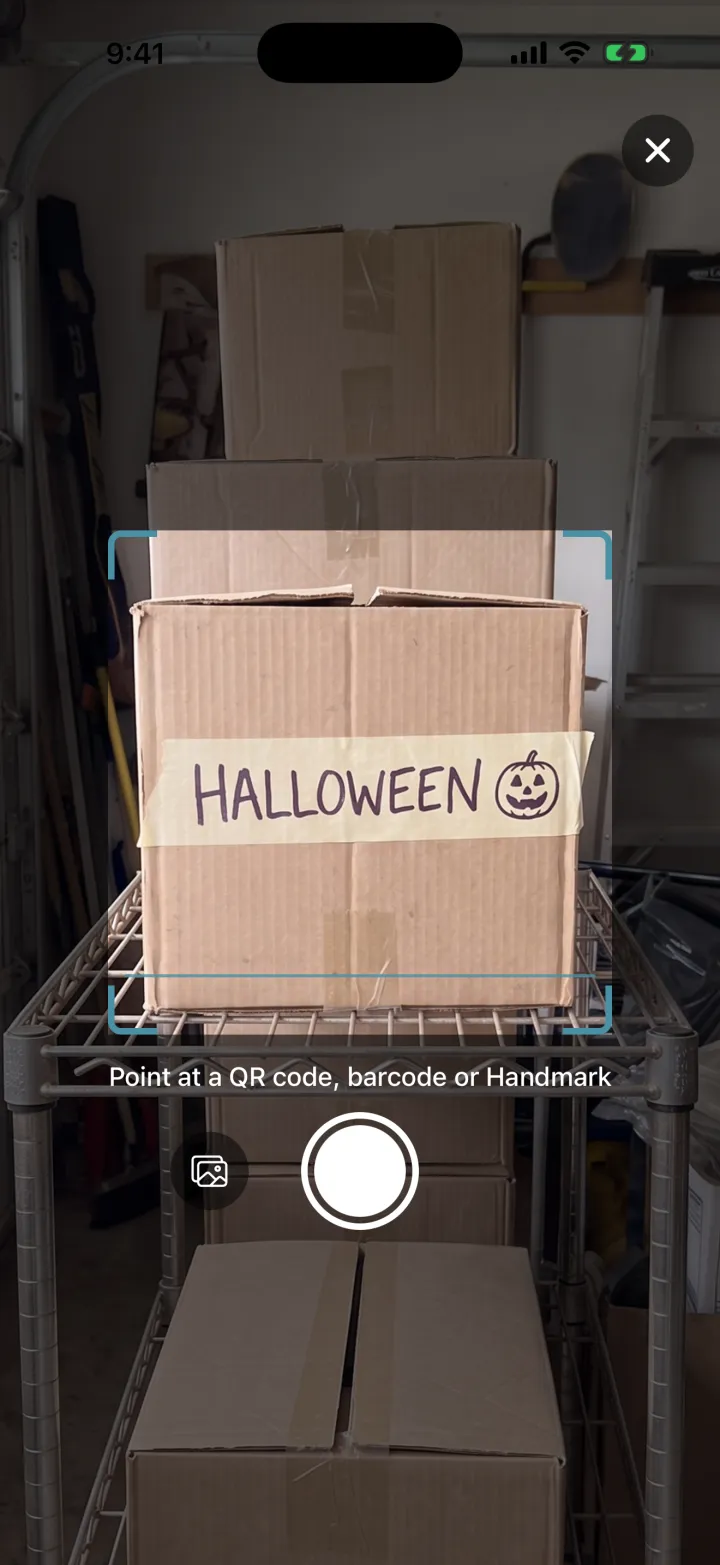
Scan reads QR labels, barcodes and what you already wrote on the box.
Know which can goes with which wall
Photograph each can, note the room, color and sheen, and find it on the right shelf before the next touch-up. Cratify is free to try.