How to Store Patio Furniture for Winter
Pick a dry weekend before the first hard freeze, clean and dry every piece, protect each material the way it needs, bring the cushions inside, and note where it all went.

On this page
- Pick a dry weekend before the first hard freeze
- Clean and dry every piece before it goes in
- Protect each material the way it needs
- Bring the cushions and umbrella indoors
- Choose where the frames spend the winter
- Take it apart, and keep the hardware with the frame
- Write down where each piece went
- Where an app helps
- The short version
The first cold night usually arrives before anyone has dealt with the patio. The cushions are still on the chairs, the umbrella is still in its stand, and there's a glass tabletop nobody wants to carry alone. Then in April you find the cushions spotted with mildew, a chair missing two bolts, and no memory of where the umbrella went.
Storing patio furniture for winter comes down to five jobs: picking the right weekend, cleaning and drying every piece, protecting each material the way it needs, putting it all somewhere dry, and writing down where each piece went. Here's how to do each, in the order that makes spring easiest.
Pick a dry weekend before the first hard freeze
The best time is a dry stretch in fall, before nights settle below freezing and before the first snow. You want two or three dry days in a row, because no piece should go into storage damp, and cushions take longer to dry than most people expect.
Bring the cushions, pillows and umbrella in first. Fabric suffers most from cold, wet weather, and those are the easiest pieces to move. If you run out of daylight, the frames can follow on the next dry weekend.
Clean and dry every piece before it goes in
Dirt, pollen and spilled food left on furniture over winter turn into stains and mildew by spring. A wash now takes less time than a scrub in April.
Brush off loose dirt, leaves and cobwebs, including the undersides of tables and chairs.
Wash frames with mild dish soap, warm water and a soft brush. Skip the pressure washer on wood and wicker, where it can raise the grain and loosen the weave.
Rinse, then let every piece dry completely in the sun or a breezy garage. Check the joints and the inside of hollow legs, where water hides.
Wash cushion covers according to their care labels, or spot-clean them if the covers don't come off.
Don't put a piece away until it's dry to the touch everywhere, including the cushion foam. A cushion that feels dry on the outside can still be damp in the middle, and that's where mildew starts.
Protect each material the way it needs
Most patio sets are made from a handful of materials, and each one fails differently over a winter.
Wood
Wood frames handle cold well but not standing water. Once they're clean and dry, apply the oil or sealant the manufacturer recommends and store them under cover. Teak left outside weathers to a silver-gray, which some people like. If you don't, bring it in.
Metal
Check steel and wrought iron for chipped paint and rust spots, and touch them up before storage, because winter moisture spreads rust from exactly those places. Aluminum doesn't rust the same way, but it's light enough for a winter wind to move, so stack it and secure it or bring it inside.
Wicker and resin
Natural wicker, rattan and bamboo belong indoors for the winter, since moisture and freezing temperatures can crack and loosen them. All-weather resin wicker handles cold better, but it still lasts longer under cover.
Plastic
Plastic chairs and tables can turn brittle in deep cold and crack if they're knocked or stacked under weight. Stack them loosely, somewhere out of the way, and keep heavy pieces off the top.
Glass tabletops
Lift a glass top off before you move the table. Store it upright on its edge, on a folded blanket, with cardboard over both faces, leaning against a wall where nobody will brush past it. Laid flat, it becomes a shelf, and sooner or later somebody sets a box on it.
Bring the cushions and umbrella indoors
Cushions and umbrellas are the pieces most likely to be ruined by a winter outside, and the pieces most likely to be lost by spring. Give them a proper spot:
Store cushions indoors and dry, in a closet, on a basement shelf or in a spare room, rather than in a shed that gets damp.
Use breathable fabric storage bags or old sheets, not sealed plastic, which traps leftover moisture against the fabric.
Keep cushions off concrete floors, which pull cold and damp up into the foam.
Stand them on edge, or lay them flat with no weight on top, so the foam doesn't crease.
Close the umbrella fully, check that the canopy is dry, and slip it into its cover before storing it upright.
Umbrella bases need a minute too. A base filled with water should be drained before a hard freeze, because water expands as it freezes and can crack the shell.
Choose where the frames spend the winter
The best spot is dry, out of the sun, and somewhere you won't need to walk through until spring. In most houses that means one of these:
A garage, along one wall, with chairs stacked and tables on their sides if that takes less floor
A shed, with the furniture raised off the floor on a pallet or a couple of boards
A basement, if the frames fit down the stairs and the space stays dry
The guides to organizing a shed and organizing a basement cover setting up those spaces so a stack of chairs doesn't block the shelves behind it.
If a piece has to stay outside, use a breathable fitted cover rather than a tarp, which traps condensation underneath. Raise the furniture on blocks so water doesn't pool around the feet, and push it against a wall or under an overhang, out of the wind.
Take it apart, and keep the hardware with the frame
Tables with removable legs and chairs that come apart take up a fraction of the space once they're disassembled. The risk is the hardware. Bolts, washers and the small wrench that came with the set are the first pieces to disappear over a winter.
Put each piece's hardware in a small zip bag, label the bag with what it belongs to, and tape it to the underside of that frame. Photograph the assembled set before you start, so you have a picture to work from when you put it back together.
Write down where each piece went
By spring, the problem usually isn't damage. It's that the cushions are in the basement, the umbrella is behind the snow shovels, the side table is in the shed, and the bench hardware is in a bag nobody can find. A short list fixes that. For each piece, note:
What it is, and how many (six chair cushions, two seat pads)
Where it's stored: the room, and the shelf or closet
The hardware or tools you'll need to reassemble it, and where those are
Repairs or replacements to handle before the season starts
Keep the list where you'll find it in April, not on a scrap of paper taped inside the garage door. The same habit works for the rest of the seasonal gear, and the guide to storing a lawn mower for winter covers the other big piece that heads into the garage this month.
Where an app helps
A notebook does this job. If you'd rather the list carry photos and say exactly where each piece is stored, here's how it works in Cratify.
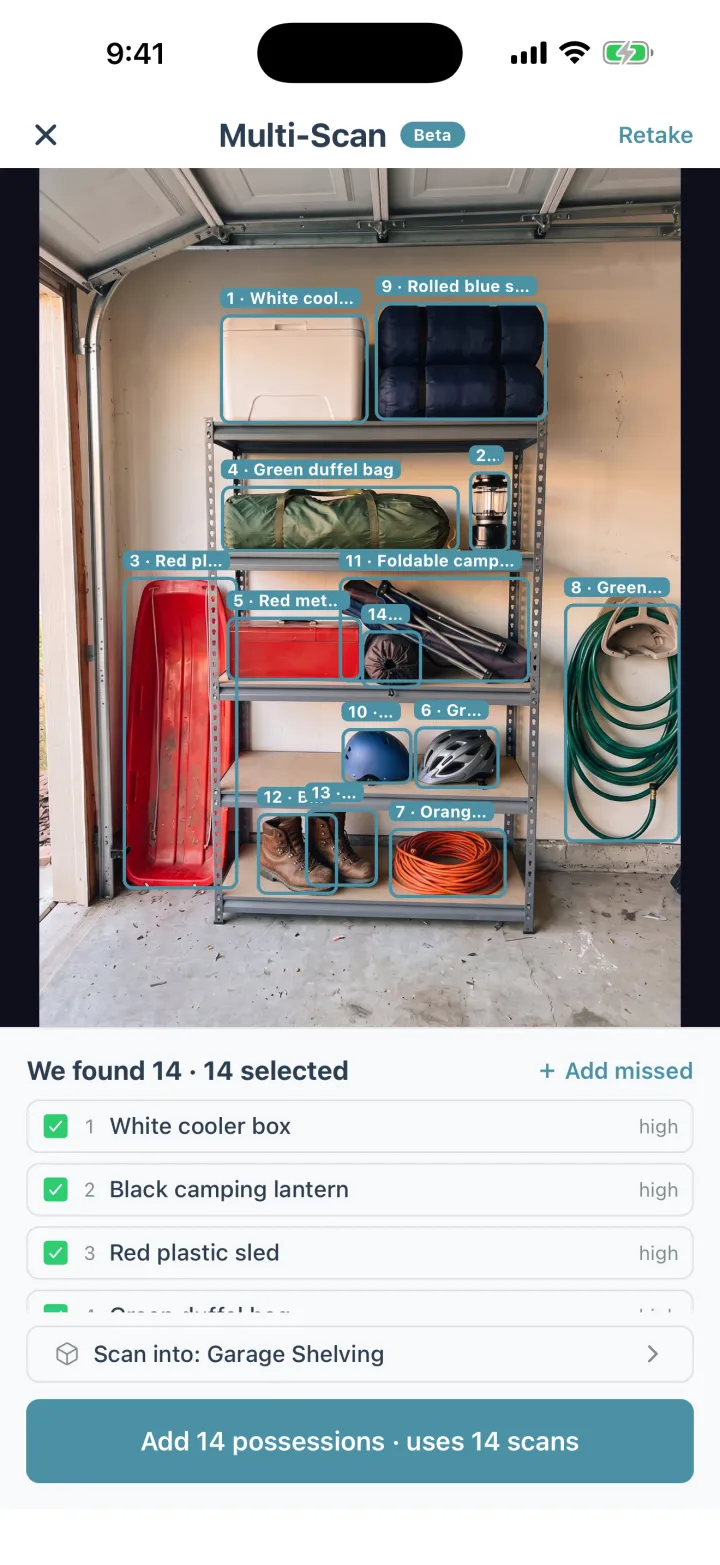
Multi-Scan names up to 15 possessions from one photo.
Each piece can be its own possession inside the container that holds it: the cushions in the basement closet, the umbrella on a garage shelf, the hardware bags in a box in the shed. Photograph a piece and AI identification fills in a name and category, with a confidence percentage on screen so you can correct either before you save. A quantity covers matching cushions, so six seat cushions show as ×6 instead of six separate entries.
A Collection is a list that spans every container, with a check-off on each entry. Make one for spring setup and check pieces off as they come back out, wherever they spent the winter. Search draws on each possession's details and the container it's in, so searching for the umbrella tells you which shelf to check.
The short version
Pick a dry weekend before the first hard freeze, bring the cushions and umbrella in first, and clean and dry every piece before it goes anywhere. Protect each material the way it needs, store glass on its edge, and keep the hardware taped to the frame it belongs to. Then write down where each piece went, so spring setup takes an afternoon instead of a weekend. Cratify is free to try.
Know where every patio piece spent the winter
Photograph each piece, file it in the container where it's stored, and check it off as it comes back out in spring. Cratify is free to try.