How to Organize Under-Stairs Storage So You Can Reach the Back
The space under the stairs is deep, dark and sloped. Sort by how often you reach for each possession, zone the closet, and keep a list of what is in every box.

On this page
It is late October, and the boxes of holiday decorations are somewhere under the stairs. You know they are there because you put them there in January. Between you and them stand a vacuum, two folding chairs, a bag of wrapping paper, last winter's snow boots and a box with no label that might be cables. Getting to the back means emptying the front onto the hallway floor, and putting it all back takes longer than finding what you came for.
The space under a staircase is one of the most useful storage spots in a house and one of the hardest to use well. It is deep, it is dark, and the ceiling slopes down to almost nothing at the far end, so the back corner is where possessions go to be forgotten. The fix is not more shelving. It is deciding what lives where by how often you reach for it, and keeping a record of what is in the parts you cannot see.
Why the space under the stairs gets lost
Three features work against you. The slope means the tallest possessions can only go at the front, the depth means the back is out of reach without crawling, and most of these closets have no light. Put those together and the space fills from the door backward: whatever went in first ends up at the back, and whatever is used most ends up blocking it.
That order is exactly backward. The possessions you use every week should be closest to the door, and the ones you need once a year should be at the back, in boxes that tell you what is inside without opening them.
Empty it once and sort by how often you reach for it
Pick an afternoon, take it all out, and sort what you find into four groups on the hallway floor.
Weekly: the vacuum, the mop, reusable shopping bags, the dog's leash.
Seasonal: winter boots, gloves and hats now; beach towels and the fan in summer.
Once a year: holiday decorations, the roasting pan, the spare folding chairs.
Not going back in: anything broken, outgrown or unused since the last move.
Be honest about the fourth group. If a possession has not left the closet in two years, it is taking up the most awkward space in the house for no reason. A guide to donating household items, sorted by what you have, covers where each kind can go.
Map the closet into three zones
Under most staircases the space divides naturally into three zones by height and depth. Treat each one differently.
The front: tall and frequent
The full-height section by the door is the only place a vacuum, a mop or a broom can stand upright. Keep it for possessions you use every week, mounted on the wall or the inside of the door so the floor stays clear. Hooks for bags and leashes go here too, at a height you can reach without stepping in.
The middle: seasonal, on shelves
Where the ceiling starts to drop, shelves earn their place. Use them for the seasonal group, and plan to swap the contents twice a year: boots and gloves in October, sandals and sun hats in April. Lidded boxes keep the dust off, and a box that matches the shelf depth is easier to pull out than a loose pile.
The back: once a year, in labeled boxes
The low, deep corner is for possessions you can wait for: the holiday decorations, the extra table linens, the spare duvet. Pack them in sturdy, uniform boxes that stack well, label every side that might face you, and put the box you will need first closest to the light.
Make the back reachable
The back corner is only useful if getting to it does not mean unloading the front. A few changes make the difference.
Leave a clear path along one side, even a narrow one, so you can reach the back without moving the middle.
Put the deep boxes on a low platform with casters, so the back row rolls out to you instead of you crawling in to it.
Add a battery or plug-in light. You cannot find what you cannot see, and a phone flashlight held in your teeth is not a system.
Keep the heaviest boxes on the floor and the light ones on top, never the other way around.
Stack no higher than you can lift from a crouch, because under the stairs you will always be crouching.
If the space is open or built in
Not every staircase has a closet. Some have open space underneath, others have built-in drawers or cabinets. The same rules apply: weekly possessions where they are easiest to reach, once-a-year possessions at the back or the bottom. Open space shows everything, so it rewards a few matching boxes over a mix of shopping bags. Deep pull-out drawers suit the seasonal group well, because the whole drawer comes to you.
Keep a list of what is in the boxes
The real problem with under-stairs storage is not space. It is memory. This October you know where the decorations are; by next October you will know they are under the stairs but not which box, and the box with no label will have become a mystery. A written list taped inside the door helps, as long as someone updates it every time a box changes.
For the once-a-year boxes, the approach that works for storing holiday decorations applies here too: one box per theme, a label on every side, and a record of what went in. And if the space under your bed is doing the same job, what to store under the bed covers which possessions belong down there and which do not.
Where an app helps
In Cratify you can set up the hallway as a room and the under-stairs closet as a container, then add the boxes that sit inside it. Photograph what goes into each box, and the details of each possession are filled in from the photo, with a confidence percentage you can check and correct. The closet's Everything inside view lists the possessions in it and in every box nested within it, with totals, so you can see what the back row holds without crawling in.
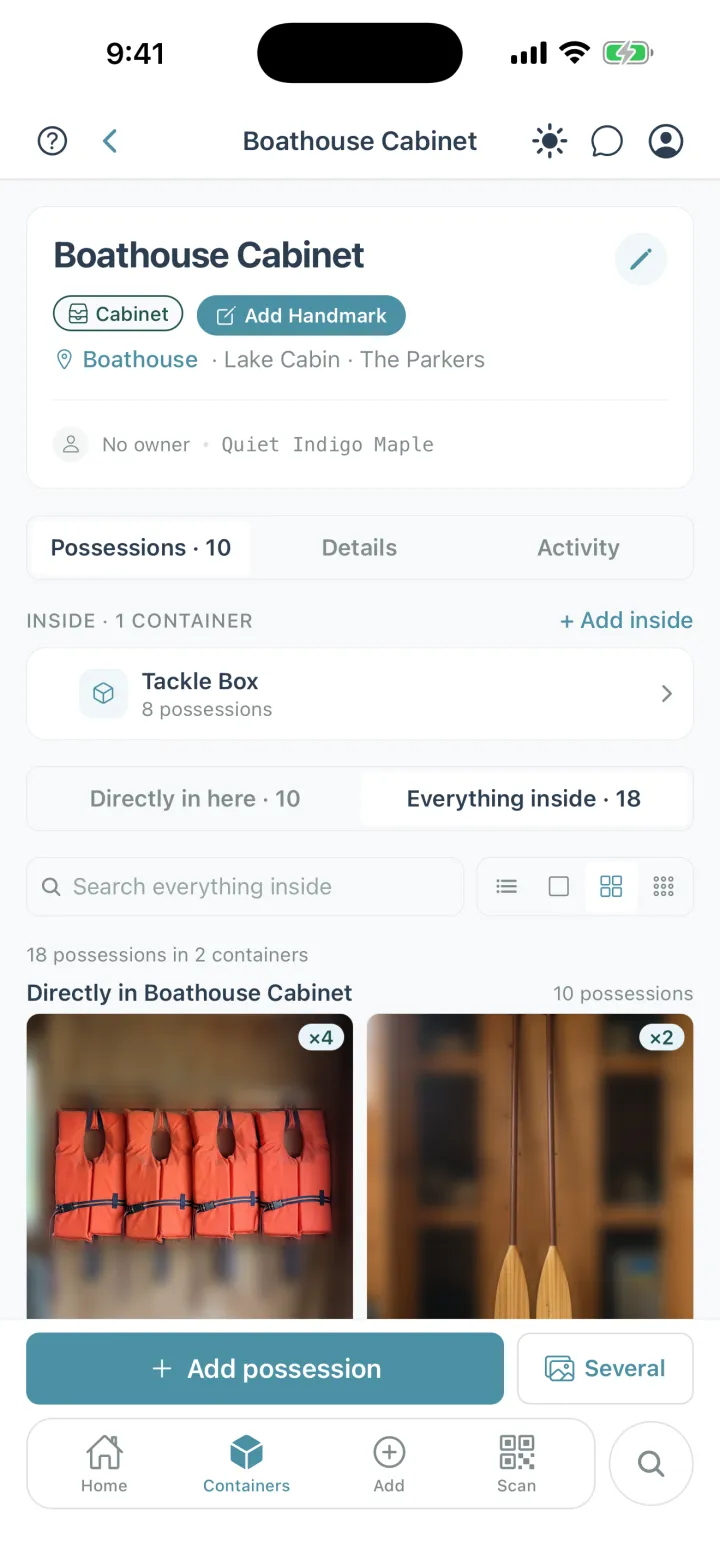
Containers inside containers, with everything inside listed.
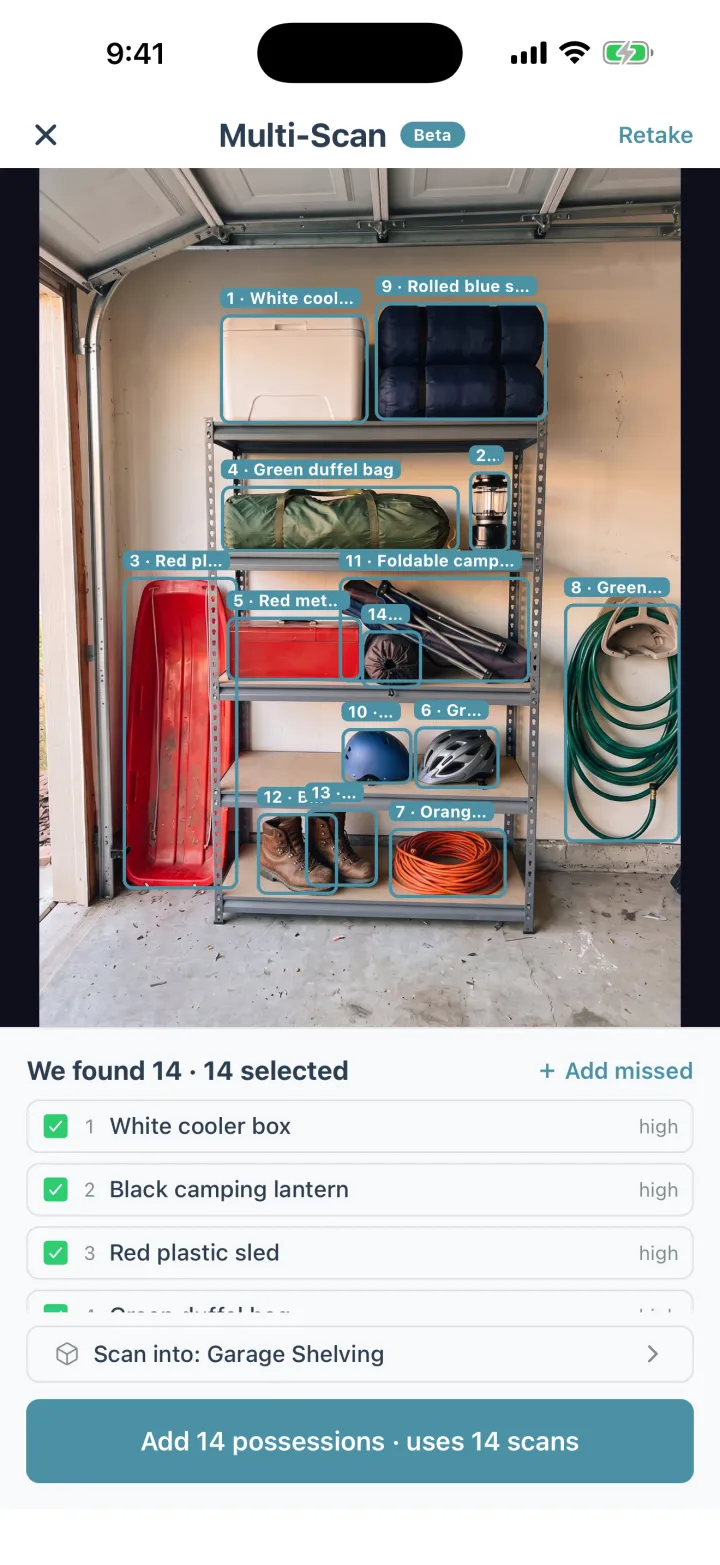
Multi-Scan names up to 15 possessions from one photo.
Search draws on each possession's details and the container it sits in, so typing extension cord tells you which box under the stairs it is in before you start unloading. A QR label on each box ties it back to the same record: scan it and the contents appear on your phone. When the folding chairs come out for a holiday dinner, marking them temporarily removed, with a note, keeps the list honest until they go back.
A twice-a-year reset
Under-stairs storage drifts because it is easy to push one more possession in and close the door. Put two dates on the calendar, one in spring and one in fall, and spend twenty minutes on each: swap the seasonal shelf, pull out whatever has crept in since the last reset, and update the list. A closet that gets a short reset twice a year never needs another full afternoon.
The short version
Sort by how often you use each possession. Give the tall front to weekly tools, the middle shelves to the season and the low back to once-a-year boxes. Leave a path, add a light, and keep a list of what is in every box. If a list like that would help, Cratify is free to try.
Know what is in every box under the stairs
Photograph what goes into each box, then search the whole closet from your phone. Cratify is free to try.