How to Organize Spices and Stop Buying the Same Jar Twice
Pull every jar out, smell-test what has faded, give spices one home away from the stove's heat, sort them in four groups, and check a short list before you shop.

On this page
- Take every jar out first
- Check what's still worth keeping
- Give spices one home, away from the heat
- Choose an order you'll actually keep
- Labels you can read without lifting a jar
- Keep backup stock somewhere else
- Check the list before you shop
- A twenty-minute version for today
- Where an app helps
- The short version
It's Thanksgiving morning, and the recipe calls for a teaspoon of ground sage. You open the spice cabinet and start turning jars. Two jars of cinnamon, both half full. A paprika with a price sticker from a store two moves ago. Three jars of bay leaves. No sage. Someone gets sent to the store on a holiday, and two weeks later you find a full jar of sage in the drawer by the stove, behind the vanilla.
Spices are hard to keep organized because they're small, they look alike, and most of them get used a pinch at a time, so a jar can sit at the back for years without anyone noticing. A working spice setup doesn't need matching jars or a label maker. It needs three answers: where the spices live, what order they're in, and what you already have before you buy more. Here's how to set that up in about an hour, plus a twenty-minute version if the oven is already on.
Take every jar out first
Spices spread out. Pull every one from every place it hides: the cabinet by the stove, the drawer, the pantry shelf, the basket of baking supplies, the top of the fridge, and the packet of taco seasoning that ended up in the junk drawer. Line them all up on the counter, grouped by name.
This is the step that pays for the rest. Most kitchens turn up two or three jars of the same spice, opened at different times, kept in different spots. You can't stop buying duplicates until you can see the ones you already have.
Check what's still worth keeping
Spices don't spoil the way food does, but they fade, and a faded spice just adds color. A common rule of thumb:
Ground spices like cumin, paprika and cinnamon are at their best for about two to three years after opening.
Whole spices like peppercorns, cloves, cinnamon sticks and cumin seed hold their flavor longer, often three to four years.
Dried leafy herbs like oregano, basil and thyme fade fastest, usually within one to three years.
The dates are a guide. The better test is your nose. Rub a pinch between your fingers and smell it. If the scent is faint or dusty, the flavor is too, and the jar can go. If two jars of the same spice are both still strong, combine them into one and keep the empty for a refill.
While the jars are out, write the month and year you opened each one on a small piece of tape on the lid. Next year's check takes five minutes instead of an afternoon.
Give spices one home, away from the heat
The best spot is close to where you cook and away from heat, steam and light, the three conditions that fade spices fastest. That usually rules out the cabinet directly above the stove, the shelf next to the oven, and the sunny windowsill, even though all three look convenient.
Three setups work in most kitchens:
A drawer near the stove, with jars lying flat and labels on the lids. It's the easiest to scan, because you see every jar at once from above.
A cabinet with a tiered riser or a turntable, so the jars in the back row are as visible as the ones in front.
A rack on a wall or on the inside of a pantry door, for a small kitchen with no spare drawer.
Pick one home for the spices you cook with and keep them all there. Two half-collections in two cabinets is how the third jar of bay leaves happens.
Choose an order you'll actually keep
Any order works if it's one you'll keep up after a busy week. Most people do well with four groups:
Daily spices up front: salt, pepper, garlic powder, and the three or four you reach for every week.
Savory spices in alphabetical order, from allspice to turmeric. Alphabetical sounds fussy, but it means you know where the cumin is before you open the drawer.
Baking spices together at one end: cinnamon, nutmeg, cloves, ginger, cardamom. If you keep a separate baking shelf, they can live there instead.
Blends and packets standing upright in one small box, so taco seasoning and gravy packets don't scatter across the drawer.
If you bake a lot, the guide to organizing baking supplies covers the flour, sugar and sprinkles that sit next to those baking spices.
Labels you can read without lifting a jar
A label only helps if you can see it from where you stand. In a drawer, put the name on the lid. On a rack or a riser, put it on the front, facing out. Use the same handwriting or the same printed size for all of them, so your eye can run down the row.
Store-bought jars are fine to keep. Matching jars look tidy, but they're optional, and transferring every spice into new glass is an afternoon most people don't need to spend.
Keep backup stock somewhere else
Bulk bags and unopened spare jars belong outside the spice drawer, in one spot: a labeled box on a pantry shelf works well. Keep one open jar of each spice in the drawer and refill it from the backup. When you open the last spare of a spice, that's your cue to add it to the shopping list.
The pantry runs on the same rule, and the guide to organizing a pantry shows how to set up the shelves that hold that backup box.
Check the list before you shop
The most expensive spice habit isn't buying good spices. It's buying the same one twice. A short list of the spices you own, kept where you'll see it, fixes that. Before a big cooking day, read through the recipes, check the list, and buy only what's missing. A sheet of paper taped inside the cabinet door is enough for most kitchens.
A twenty-minute version for today
If guests are arriving and there's no hour to spare, do the short version:
Pull every jar from the main spice cabinet onto the counter.
Smell and toss the ones that have faded.
Put the spices for today's recipes together at the front.
Write down what's missing before anyone heads to the store.
The full setup can wait for a quiet weekend in December. The guide to organizing a kitchen covers the cabinets and drawers around the spices when you get there.
Where an app helps
A paper list works well for a small kitchen. If you'd rather keep it on your phone, here's how it works in Cratify. Each spice can be a possession of the Consumable type, which carries a quantity, a unit and a note on when to restock. Two jars of cinnamon are one entry with a quantity of two, rather than two separate entries. Photograph a jar and AI identification suggests a name and category, and you can correct any field it gets wrong.
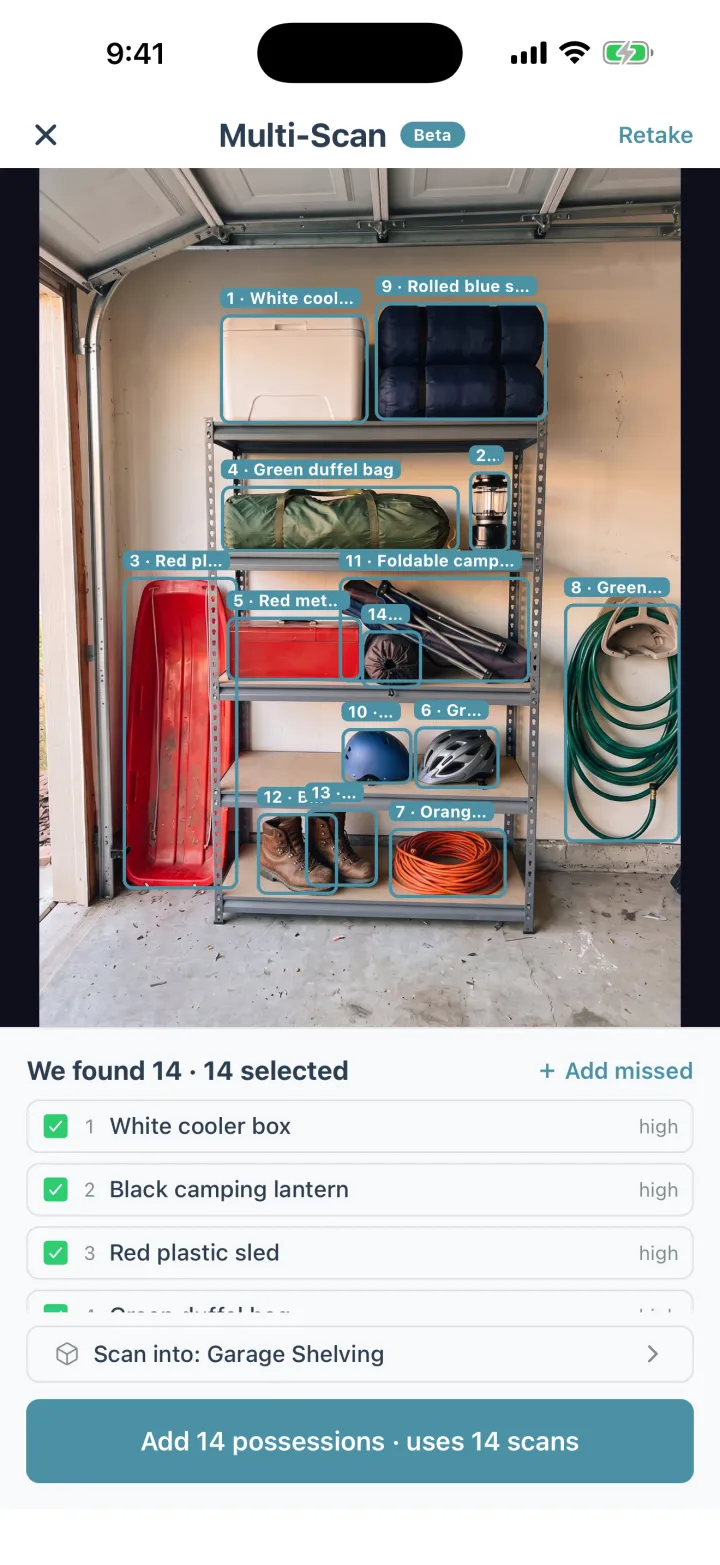
Multi-Scan names up to 15 possessions from one photo.
Containers in Cratify can be a Drawer, a Cabinet or a Shelf, so the drawer by the stove and the backup shelf in the pantry are each recorded where they actually are. Search draws on each possession's details and the container it sits in, so searching for sage in the store aisle shows whether you already have it and which drawer it's in. A collection with check-off works as the shopping list: add what's running low, and check each one off as it goes in the cart.
The short version
Pull every jar out, smell-test what's left, and combine the duplicates. Give spices one home near the stove but not above it, sort them in four groups, and label the lids or fronts so you can read them without lifting a jar. Keep backup stock in one box on a pantry shelf, and check your list before you shop. Cratify is free to try.
Know which spices you already have
Record each spice, how much is left and which drawer it's in. Cratify is free to try.